The Nasdaq rose 1%: Chipmakers helped U.S. stocks snap a three-day losing streak

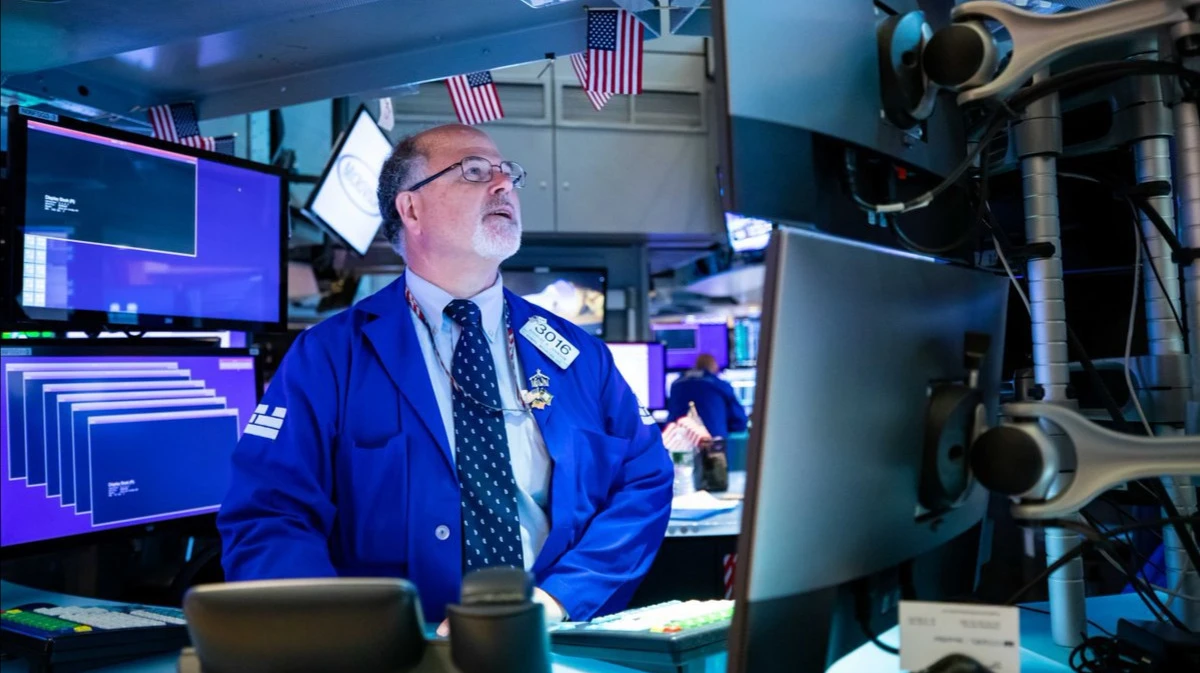
Photo: X / NYSE
Major U.S. stock market indices rose on Tuesday, July 21, thanks to a rally in semiconductor stocks: investors were buying up assets that had fallen in price, according to Bloomberg. The market ignored the latest developments in the U.S.-Iran conflict and focused on corporate earnings, CNBC notes. As a result, the Dow Jones, S&P 500, and Nasdaq snapped a three-day losing streak, MarketWatch points out.
Details
— The S&P 500 broad-market index rose 0.89% on July 21.
— The Dow Jones Industrial Average, a "blue-chip" index, rose 0.74% on Tuesday.
— The Russell 2000 Small- and Mid-Cap Index rose 1.38% over the course of the day.
— Brent crude oil futures rose 2.51% to $91.46 per barrel, while WTIcrude oil futures rose 2.11% to $85 per barrel.
— The price of gold rose 1.81% to $4,088 per ounce.
— Bitcoin rose 2% over the past 24 hours, reaching $66,420.
What Affected Stock Prices
The market returned to growth as investors bought stocks following the recent decline, according to Bloomberg. Investors continued to build positions in undervalued semiconductor stocks, causing the Philadelphia Semiconductor Index to gain 5.2% on Tuesday. Shares of Marvell Technology jumped more than 6%, Astera Labs rose 3%, Micron Technology gained 12.1%, Intel rose 8.6%, AMD rose 8.1%, and Nvidia rose 2%. One reason the semiconductor sector may be “bottoming out” is that a significant portion of speculative positions has already been closed out, according to Bloomberg.
Market growth was bolstered by the start of earnings season: of the approximately 66 S&P 500 companies that have already reported results, nearly 88% beat earnings estimates, according to FactSet data. 3M shares jumped 7.3% after the industrial giant reported second-quarter earnings that beat expectations. General Motors also reported better-than-expected results for both revenue and earnings, sending its shares up 4.9%.
The resurgence of risk appetite came despite rising oil prices, which heightened inflation fears and pushed bond yields higher, Bloomberg notes. Oil prices fluctuated on Tuesday as Wall Street monitored renewed diplomatic efforts to facilitate talks between the U.S. and Iran, according to CNBC: mediators are proposing a ten-day ceasefire to the parties. However, U.S. President Donald Trump maintains that the United States is still “far from finished” with its operation in the Middle East. On Tuesday, the U.S. president threatened Iran with another strike on a nuclear facility.
What Analysts Are Saying
— “The long-term outlook for AI appears to remain unchanged,” Bloomberg quotes Adam Turnquist, chief technical strategist at LPL Financial, as saying. — “The recent correction looks more like a healthy pullback following parabolic growth than a fundamental breakdown of the AI investment theme.”
— “We see potential for further growth in global equities amid a strong increase in corporate earnings,” said Mark Haefele, Chief Investment Officer at UBS Global Wealth Management, in an interview with Bloomberg. — “However, significant variation in the performance of individual stocks, as well as ongoing geopolitical and inflationary risks, mean that investors should ensure their portfolios are sufficiently diversified.”
— “The next two weeks will be decisive for earnings season, and not just for the tech sector,” CNBC quotes Bret Kenwell, eToro’s U.S. investment analyst, as saying. — “The main signal is already clear: companies that fail to meet Wall Street’s high expectations are being sold off.”
This article was AI-translated and verified by a human editor