Food for Thought: Seven Energy Companies Peter Thiel Has Invested In
More than 70% of Thiel's portfolio is now made up of stocks in companies that are benefiting from the growing demand for electricity for data centers


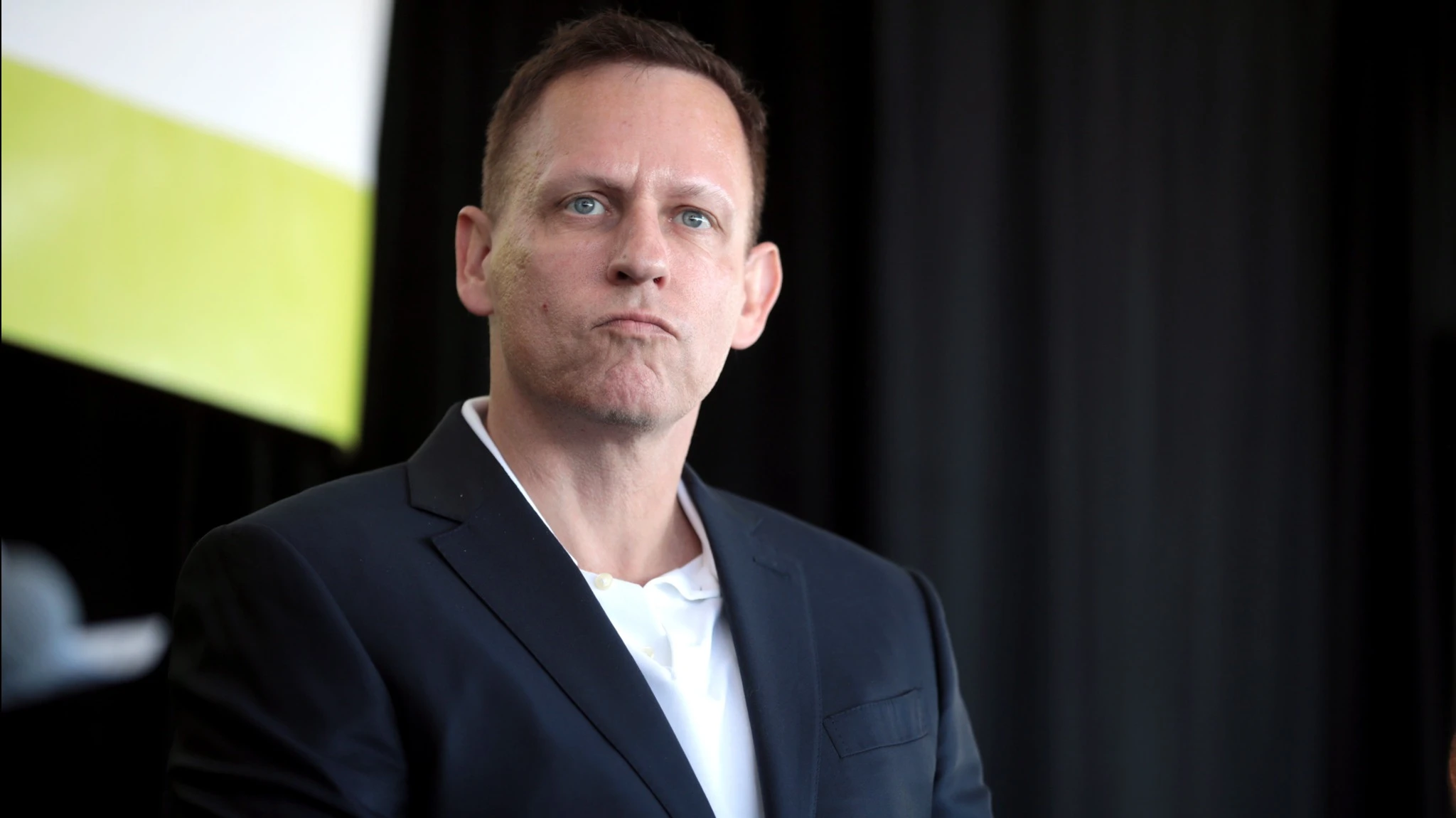
Peter Thiel is betting on rising demand for artificial intelligence power and investing in power grids and nuclear power plants / Photo by Marco Bello/Getty Images
Peter Thiel, co-founder of PayPal and Palantir Technologies and widely regarded as one of the most influential investors in the tech sector, has resumed investing in U.S. stocks. Thiel Macro, the billionaire’s hedge fund, purchased nearly $419 million worth of stocks from March through June, following two consecutive quarters out of the market, according to a filing with the U.S. Securities and Exchange Commission. Which stocks did he buy?
What the Thiel Foundation's report revealed
Thiel Macro invested in U.S. stocks for the first time since the third quarter of 2025, and the focus of its investments has shifted. As of the end of September 2025, Thiel’s hedge fund held only three stocks—Tesla, Microsoft, and Apple—worth $74 million. Then, for two consecutive quarters, the fund did not list any U.S. stocks in its portfolio in its public filings.
Upon returning to the market in the second quarter of 2026, Thiel shifted his focus from the largest tech companies to the energy infrastructure necessary for AI growth. Among the big tech companies, he bought only Amazon shares, worth nearly $118 million. As of June 30, this was the fund’s largest position, accounting for 28% of the portfolio.
Instead of other market giants, Thiel chose to add power producers, grid operators, and nuclear power companies to the portfolio. These now account for seven of the fund’s eight holdings and nearly 72% of its value. What is known about them?
Vista Energy
The second-largest position in Thiel’s portfolio, after Amazon, turned out to be the Argentine company Vista Energy. In the second quarter, the billionaire’s hedge fund purchased 1.2 million of the company’s depositary receipts for $75.9 million. As of the end of June, they accounted for 18% of the portfolio.
Vista is an oil and gas producer whose main assets are located in Argentina’s Vaca Muerta shale basin. The company is rapidly increasing production: in 2025, output rose by 66% to 115,500 barrels of oil equivalent per day, while proven reserves increased by 57%.
This investment is not directly related to artificial intelligence: Vista does not generate electricity or operate data centers. However, the increase in energy consumption by data centers may support demand for natural gas as a fuel for power generation.
Vistra Corp
One of the largest independent power producers in the U.S. rounds out the top three positions in the portfolio. Last quarter, Thiel Macro purchased 372,800 shares of Vistra for $59.1 million, representing 14% of the portfolio. Thiel is familiar with this company—his hedge fund had already invested in Vistra in 2025.
In 2024, Vistra acquired Energy Harbor, an American nuclear power plant operator and retail electricity supplier. According to the company, the deal made it the owner of “the second-largest fleet of competitive nuclear power plants in the U.S.”
The rise in data center energy consumption is already securing Vistra major long-term contracts. The company has signed a 20-year agreement with Amazon Web Services (AWS) to supply up to 1.2 GW of nuclear power from the Comanche Peak plant. The company has also signed 20-year contracts to supply more than 2.6 GW of nuclear power to Meta.
American Electric Power
Thiel Macro has invested just over $42 million in American Electric Power (AEP). As a result, the company accounts for 10% of the portfolio. AEP is one of the largest energy companies in the U.S.: it generates, transmits, and distributes electricity and serves 5.6 million customers in 11 states.
AEP owns and operates the grid infrastructure through which new data centers connect to the power grid and receive the power they need: the company operates approximately 65,000 km of high-voltage lines and more than 400,000 km of distribution lines. By 2030, the company expects to connect 69 GW of additional load, about 90% of which will come from data centers—including cryptocurrency projects—and 10% from industrial facilities. The bulk of these connections is expected to take place between 2028 and 2030.
To support this growth, AEP has planned capital expenditures of $78 billion for 2026–2030. The largest portion of the program—$33 billion—will be allocated to transmission networks, while the company will allocate another $17 billion to distribution networks and $24 billion to generation.
DTE Energy
DTE Energy accounts for 9.6% of Thiel Macro's portfolio: the fund has invested $40.3 million in the company's stock. DTE supplies electricity to approximately 2.3 million customers in southeastern Michigan and is also involved in power generation and the development of the region’s energy infrastructure.
In 2025, DTE closed its first major deal with a hyperscaler: it signed an agreement to supply 1.4 GW of power to an Oracle data center in Michigan. Construction of the data center has already begun. In March 2026, the company signed another agreement—to supply 1 GW of power to Google. In addition, DTE is in discussions with data center operators regarding new connections totaling 5–6 GW. Negotiations on projects totaling approximately 2 GW are at an advanced stage.
At the same time, DTE is expanding its capacity to help the power grid cope with rising demand. In 2026, the company announced a $1.6 billion investment in eight battery storage projects in Michigan with a total capacity of 1.5 GW.
FirstEnergy
Thiel Macro invested another $39.9 million, or 9.5% of its portfolio, in FirstEnergy. The company serves approximately 6 million customers in six U.S. states, and its core business is the transmission and distribution of electricity.
FirstEnergy estimated potential demand from data centers at approximately 25 GW—a 30% increase from the previous quarter. Of this total, 6.4 GW is already secured through contracts with commissioning dates through 2035, but FirstEnergy has not disclosed which companies it is partnering with.
To expand and modernize the power grid, FirstEnergy is implementing the Energize365 program. Between 2026 and 2030, the company plans to invest $36 billion in distribution networks, high-voltage transmission lines, substations, system reliability improvements, and connecting new large customers.
CMS Energy
Thiel Macro invested $39.6 million, or 9.4% of its portfolio, in CMS Energy. Its main asset is the Consumers Energy division, which generates and distributes electricity, supplies natural gas to customers, and manages energy infrastructure in Michigan. Gas forms the basis of the company’s own power generation, while it obtains a portion of its electricity from renewable sources—wind, solar, and hydro.
In July 2025, CMS announced the signing of a 20-year contract to supply electricity to a data center with a load of up to 1 GW. The company did not disclose the client or the exact location of the facility, but it appears to be Microsoft—the tech giant was named as a bidder for a site to build a data center in local government documents. In addition, CMS is in discussions regarding new connections totaling approximately 9 GW with data centers, industrial facilities, and semiconductor manufacturers.
To handle this load, CMS will have to expand its generation capacity and transmission networks: according to the company’s estimates, each additional gigawatt of capacity could require $2–5 billion in investment in generation and transmission. CMS’s baseline investment program for 2026–2030 totals approximately $24 billion: 36% of this amount is allocated to generation and power grids, and another 28% to gas infrastructure.
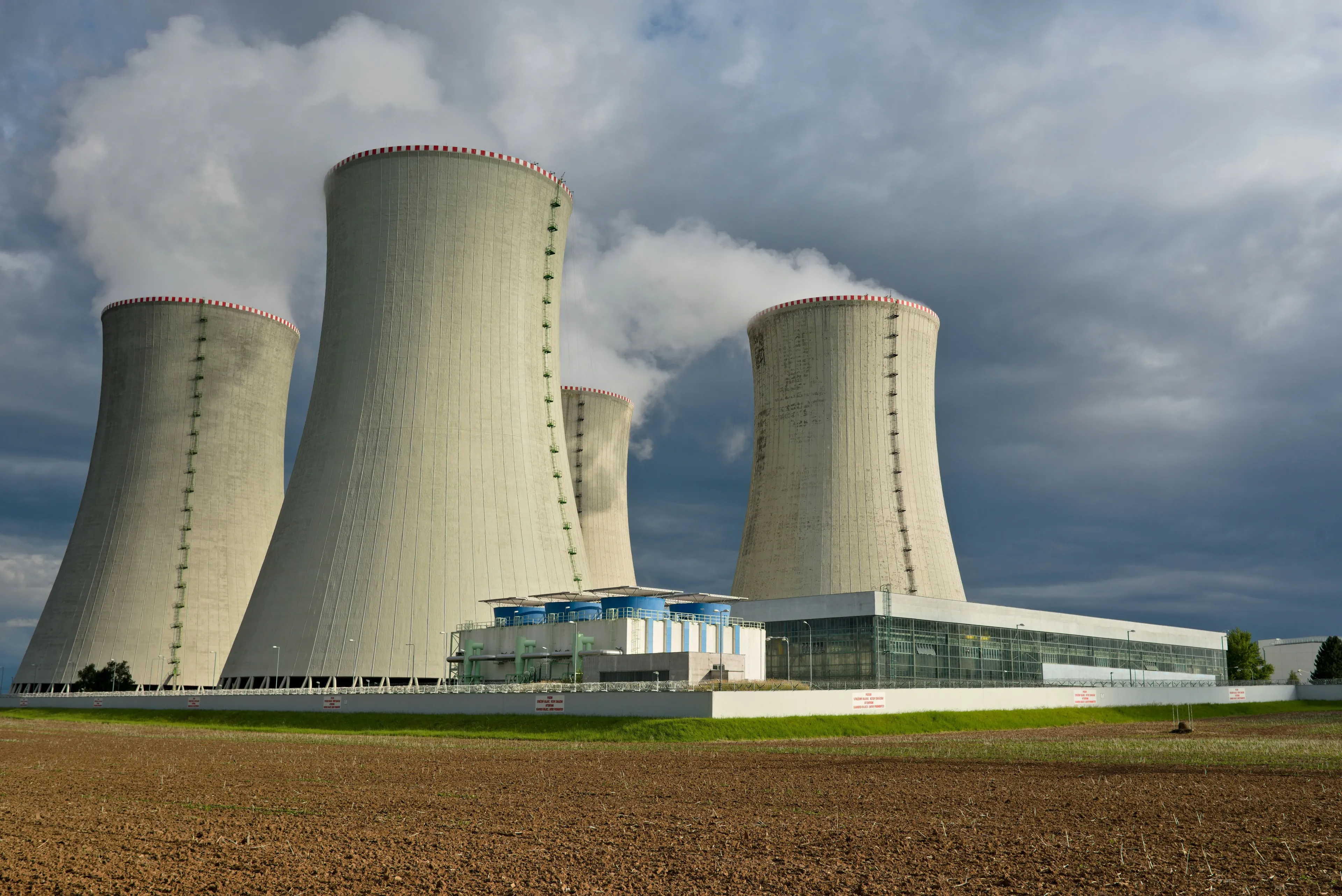
X-Energy Inc.
X-Energy, whose shares have been traded on the stock exchange since April 2026, is developing the Xe-100, a new-generation small modular reactor. In February 2026, the company received a license to produce nuclear fuel. Thiel Macro has invested $3.67 million in the company, or 0.9% of its portfolio—this is the fund’s smallest holding.
The Xe-100 has not yet entered commercial operation. X-Energy is carrying out its first project involving these reactors in partnership with Dow Chemical: four Xe-100 reactors are set to supply the company’s plant in Texas with electricity and industrial steam. Operations are scheduled to begin in 2027. In addition, X-Energy is building a nuclear fuel fabrication plant for the Xe-100 in Tennessee.
In 2024, Amazon led a Series C-1 funding round for X-Energy worth approximately $500 million. As part of this partnership, the companies plan to deploy more than 5 GW of nuclear capacity based on the Xe-100 technology by 2039. Amazon plans to use a portion of this electricity for its own operations, including AWS data centers.
______________________
In the “Guru Portfolios” section on Oninvest, you can track the composition and changes in the portfolios of the world’s largest investors and funds. The service allows you to analyze the largest holdings, new ideas, and changes in asset allocations based on 13F filings, as well as compare portfolio performance over time.
This article was AI-translated and verified by a human editor