The new James Bond has sparked intrigue in the world of watches. Why might Swatch suffer as a result?
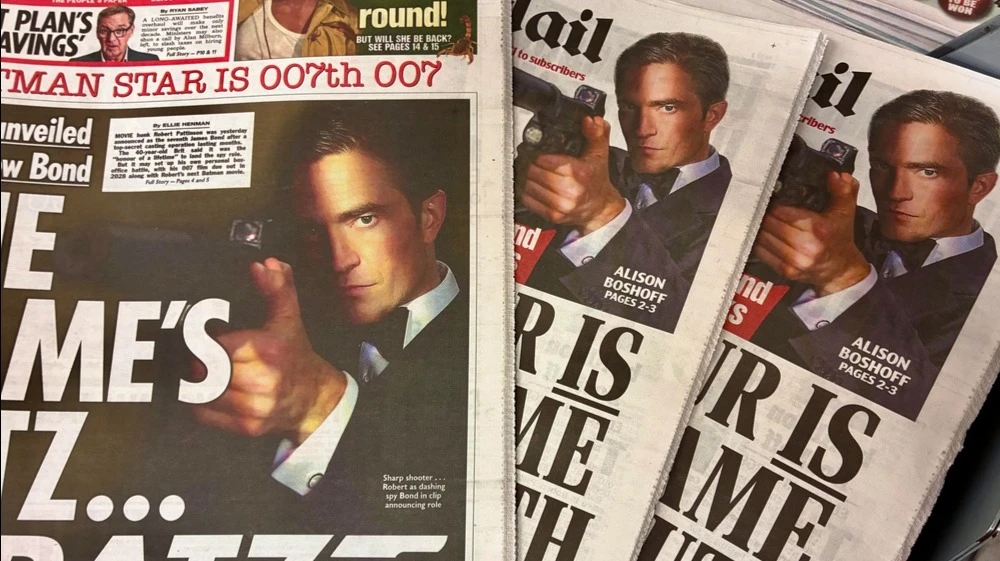
An image of Robert Pattinson with a bare wrist on a promotional poster for the new Bond film has sparked rumors of a change in the film franchise’s partner, which could negatively impact the financial situation of Omega’s owner

Sales of Omega Seamaster watches increased fivefold after their first appearance in a James Bond film in 1995 / Photo: Steve Travelguide / Shutterstock.com
The next James Bond could spark a new round of rivalry among competing Swiss watch brands, according to The Wall Street Journal. In promotional photos from Amazon MGM Studios, actor Robert Pattinson, who was cast as Agent 007, appeared with a bare wrist. This has led collectors to speculate that the Bond franchise may switch from Omega to Jaeger-LeCoultre, the publication reported.
Bond has worn an Omega Seamaster watch in every film in the franchise since 1995. Pattinson, meanwhile, became an ambassador for Jaeger-LeCoultre—a brand owned by the jewelry giant Richemont—in September.
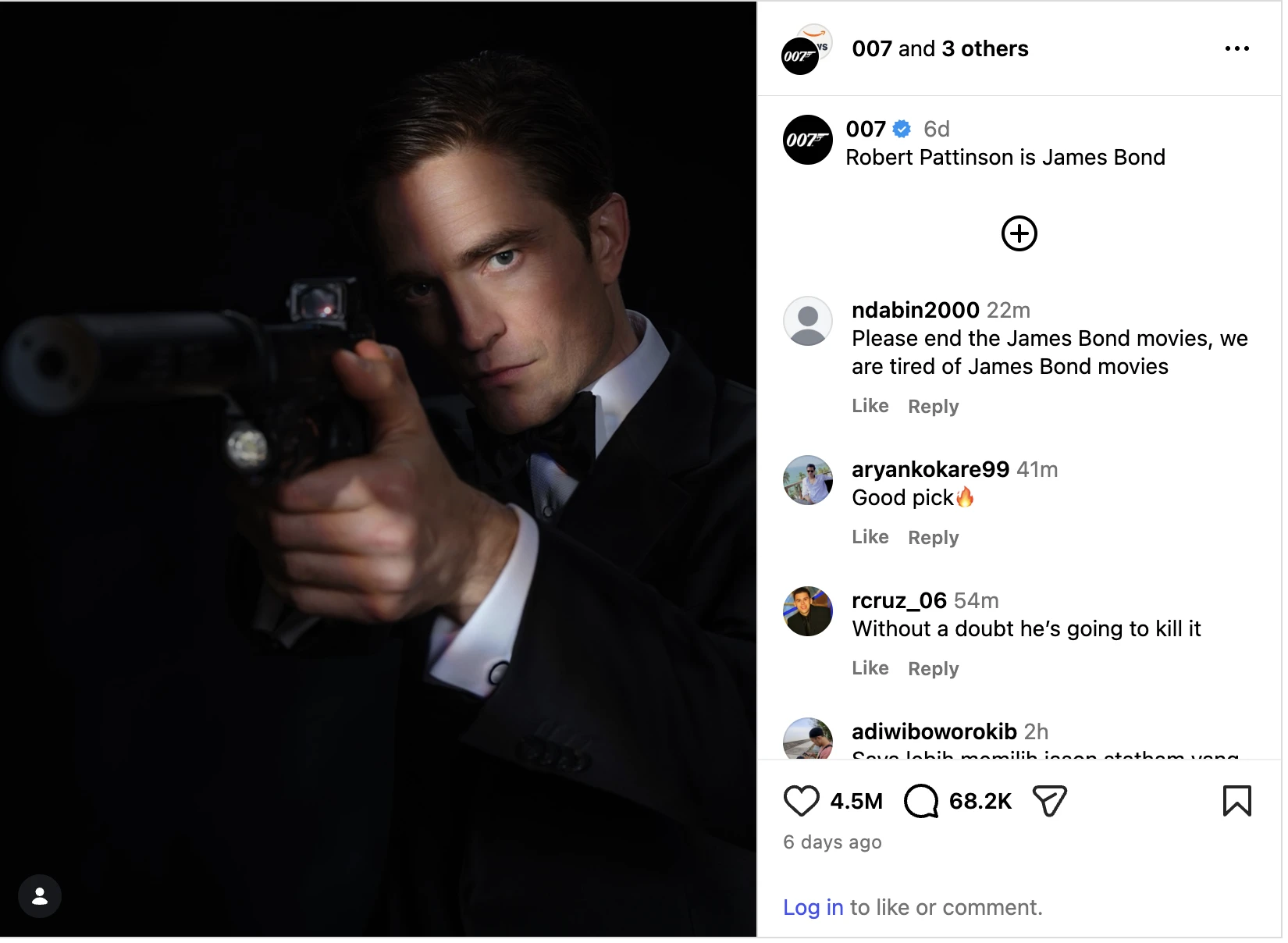
Robert Pattinson Cast as James Bond / Instagram / 007
Why Does Bond Need an Omega?
For the Swiss watch brand, the 30-year partnership with the James Bond franchise was extremely profitable. Following the release of the film *GoldenEye* in 1995, sales of the Omega Seamaster Diver 300M model increased approximately fivefold, recalls Oliver Müller, founder of the consulting firm LuxeConsult, who worked at Omega from 1997 to 2001. Two years later, sales stabilized at a level 30–40% higher than before the film’s release.
Pattinson’s casting as Bond is expected to attract a new, younger audience to the franchise. If Omega maintains its association with Bond, it could expand the brand’s customer base, the WSJ reports. But replicating the success of the 1990s will be more difficult: Omega already sells more than $2 billion worth of watches annually.
If Bond were to stop wearing an Omega, it would be a blow to the brand’s owner—the Swiss conglomerate Swatch Group—which is already under pressure, the WSJ notes. Omega accounts for nearly half of the conglomerate’s operating profit, says Bernstein analyst Luca Solca. But according to Morgan Stanley’s estimates, the brand’s sales fell by 8% in 2025. Swatch shares fell 3% in the latest trading session in Switzerland.
Why Are Omega's Sales Falling?
Omega models are primarily priced between $8,000 and $10,000. Jaeger-LeCoultre models are slightly more expensive but also fall into the mid-luxury category. This is a complex segment of the luxury watch market, the publication notes: it has been severely affected by uneven growth in the population’s wealth.
For example, watches priced above 50,000 Swiss francs (about $59,000) continue to enjoy steady demand: according to Morgan Stanley, this segment accounted for 89% of the Swiss watch industry’s total growth last year, even though it represented only 1.4% of watches sold by volume. At the same time, the middle class—which used to be willing to spend $8,000 on an Omega watch for a special occasion—is switching to more affordable brands like Grand Seiko, with models priced at $3,000–5,000. And Generation Z shoppers are increasingly choosing Cartier, where the most affordable watches cost $3,800.
An additional challenge for both Omega and Jaeger-LeCoultre is their weak position in the secondary market: in September, Omega watches were resold at an average of 32% below the retail price, according to WatchCharts. Watch collectors are increasingly checking resale values before deciding which Mark to buy on the primary market, the WSJ reports.
What the New Bond Can Bring to Richemont
If Jaeger-LeCoultre enters into a partnership agreement with Bondiana, the brand could become widely known. JLC needs to sell more watches due to its costly manufacturing infrastructure. Prestigious Swiss watch companies are typically vertically integrated and manufacture watches and components in-house, in their own workshops. This structure is effective only when a company sells watches in large volumes and can spread costs across a large number of products.
Currently, however, JLC’s production is declining: according to estimates by Müller of LuxeConsult, the brand sold 78,000 watches last year, compared to 110,000 in 2017. This may explain JLC’s modest operating margin of 3.6%, according to Morgan Stanley’s estimates.
Omega’s decline was even steeper: 460,000 watches last year compared to 730,000 in 2017. And while for Richemont, appearing on Bond’s wrist would be a nice bonus, for Swatch it is now more important than ever, the WSJ notes.
Jaeger-LeCoultre is just one of Richemont’s smaller brands; the group also includes the fast-growing jewelry brands Cartier and Van Cleef & Arpels. The jewelry business offsets the weakness of the watch brands: over the past three years, Richemont’s stock has risen by more than 50%, while Swatch’s stock has fallen by about 20%.
This article was AI-translated and verified by a human editor