The Nvidia CEO's Favorite, Backed by Milner: What Makes the Startup Acquired by SpaceX So Notable?
Cursor, the world's fastest-growing startup, is developing a "Google Docs" for programmers, which is used by more than 60% of Fortune 500 companies

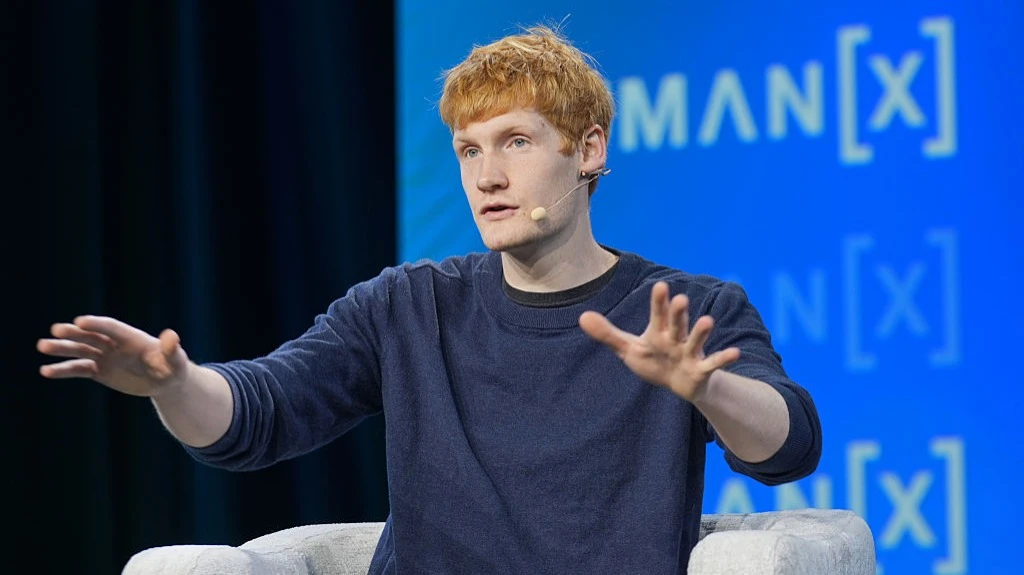
Cursor co-founder Michael Truell, 25, makes the Forbes list with a net worth of $1.3 billion / Photo by Big Event Media/Getty Images for HumanX Conference
SpaceX is acquiring Anysphere—a startup that develops Cursor, a popular AI code-writing assistant—for $60 billion. The deal will be paid for with SpaceX stock and is scheduled to close in the third quarter of 2026. How did a company founded four years ago by MIT graduates challenge OpenAI and Anthropic, land more than half of the Fortune 500 as clients, and catch Elon Musk’s attention?
What Is Known About Cursor and Its Founders
The startup has four founders who all attended the Massachusetts Institute of Technology together—Michael Truell, Sualeh Asif, Aman Sanger, and Arvid Lunnemark. Truehall, who took on the role of CEO at Cursor and has effectively become the face of the startup, began programming at age 12 and, while still in school, released an educational game that taught the basics of coding to thousands of users. At MIT, Truell caught the attention of business angel Ali Partovi by completing a programming test in just ten minutes instead of the allotted hour. After that, Partovi promised the aspiring entrepreneur that he would invest in any of his projects—and ultimately became one of Cursor’s first investors.
The co-founders of Cursor can also be called child prodigies. Sualeh Asif represented Pakistan at the International Mathematical Olympiad from 2016 to 2018. Before launching Anysphere, he helped develop an IBM cloud service and launched the AI search engine Metaphor. Aman Sanger has also been writing code since high school. While studying at MIT, he interned at the hedge fund Bridgewater Associates and at Google, and also developed his own AI consulting firm. At the company, he is responsible for product development. Arvid Lunnemark has won the International Mathematical Olympiad and computer science competitions. However, in October 2025, he left Cursor and founded Integrous Research—a startup focused on developing safe AI.
Initially, Cursor’s founders tried to create an AI tool for engineering design, but they quickly realized they lacked expertise in mechanical engineering. They shifted their focus to what they knew best—software for developers. In March 2023, the team launched Cursor—an AI agent for writing code, or “Google Docs for programmers,” as Truewell himself called it. The company is now known by the name of its flagship product.
Six months later, Cursor raised its first $8 million in a seed round from the OpenAI Startup Fund, the venture capital arm of ChatGPT’s developer. By the end of 2025, Cursor’s valuation had grown to $29.3 billion, and the total amount of investment raised had reached approximately $3.3 billion. Investors in the project included Yuri Milner’s DST Global, Google, Nvidia, Thrive Capital, and other major investors.
In 2025, Bloomberg named Anysphere the fastest-growing startup in history—after its revenue grew from $1 million in 2023 to $100 million in just 12 months. According to a Forbes source, shortly before the deal with SpaceX, the startup’s annual revenue exceeded $4 billion. Anysphere sells individual subscriptions (Pro plan—$20, Ultra plan—$200 per month) and enterprise plans, the cost of which varies depending on the feature set and company size. In July 2025, the Cursor product line was expanded to include Bugbot, an AI tool for automated bug detection, priced at $40 per month per user.
In 2026, the company made the Forbes AI 50 list, which features the world’s most promising private AI companies, and its founders became billionaires. The net worth of 25-year-old Michael Truewell is now estimated at $1.3 billion.
Product Anatomy
In its early stages, the Cursor AI assistant simply suggested the next line of code to the programmer. Now, the startup’s flagship product is a standalone AI agent for writing code, which has transformed the very logic of development. Now, instead of writing code, the programmer acts as a project manager: setting tasks, checking results, and providing feedback. According to Truewell, at Anysphere, the autonomous AI agent Cursor already accounts for 30% of code changes.
“This works not only in startups or medium-sized companies, but also in the large corporate sector. I think that just over a year ago, only about 15–20% of the code in the corporate sector was generated by artificial intelligence. Now that figure is already around 75%: the code is written entirely by AI, and people don’t touch the syntax at all. Instead, they delegate tasks to agents.”

Initially, Cursor relied on third-party AI models, including OpenAI’s GPT-4 and Anthropic’s Claude. This allowed Anysphere to bring the product to market quickly, but it made the company dependent on potential competitors. In the fall of 2025, Cursor launched its own AI model, Composer. It is built on technology from the Chinese company Moonshot AI, but the company claims that the latest version , Composer 2.5, released in May, consists of more than 85% of the team’s own work.
How Cursor Is Conquering the Fortune 500
The company is implementing Cursor because of its clear , measurable impact: with this tool, developers produce more code in the same amount of time (on average , nearly 2.5 times more ), which enables the company to achieve its goals faster and bring products to market more quickly.
“The University of Chicago published a study on how switching to our agent affects productivity,” Truell said in November 2025. “It showed that such companies produce 40% more code and subsequently complete 40% more tasks from their roadmap.”
By the end of 2025, the service was generating more than 100 million lines of code daily. Anysphere’s software is integrated into the operations of 64% of Fortune 500 companies. Anysphere’s clients include Adobe, Samsung, and BP. Nvidia CEO Jensen Huang has called Cursor his favorite enterprise AI service. By the spring of 2026, Cursor had managed to turn its major corporate contracts into a profit. Reuters estimates the company’s annual revenue in this segment at $2.6 billion.
The Synergy of Code and Capabilities
According to Business Insider, the acquisition of Cursor should help Elon Musk strengthen his position in software development. Currently, his AI model, Grok, lags behind Anthropic, OpenAI, and Google, particularly in code generation. On the social network X, Musk wrote that new versions of Grok began performing better after being trained on a “large amount” of Cursor’s data. Instead of investing years into developing a competitive AI agent, Musk’s company is acquiring a mature product, a stable developer base, and established trust among corporate clients.
For Cursor, the acquisition solves a fundamental problem—its reliance on third-party computing infrastructure. Previously, the startup had been forced to rent computing power from its direct competitors—Google, Anthropic, and OpenAI. In April 2026, when news broke of Musk’s plans to acquire the startup, SpaceX announced that Cursor would gain access to the Colossus supercomputer, powered by hundreds of thousands of top-of-the-line Nvidia AI chips.
What Could Pose a Threat to Cursor
The startup is facing pressure from IT giants. Its main competitors—Anthropic, OpenAI, and Google—are actively developing their own AI tools in an effort to replace third-party interfaces. After Anthropic released Claude Code in 2025, developers began posting that they were canceling their Cursor subscriptions in favor of Claude Code. Unlike Cursor, which helps users write code, Claude Code does all the work: it creates and edits software based on a text description. Cursor’s share of companies’ AI coding spending fell from 41% in June 2025 to 26% in May 2026, according to data from the fintech platform Ramp, as reported by CNBC.
There are also operational risks associated with the quality and control of autonomous agents. Because AI has direct access to critical infrastructure, any error can paralyze business processes. In April 2026, PocketOS faced this issue: a SaaS platform for car rentals: the AI agent Cursor deleted the company’s database and its backups in nine seconds. As a result, the service lost access to reservations, payments, and customer profiles, and people on the ground were unable to pick up their cars.
This article was AI-translated and verified by a human editor