SpaceX Shares Fell 8% After First-Quarter Earnings Report: Online

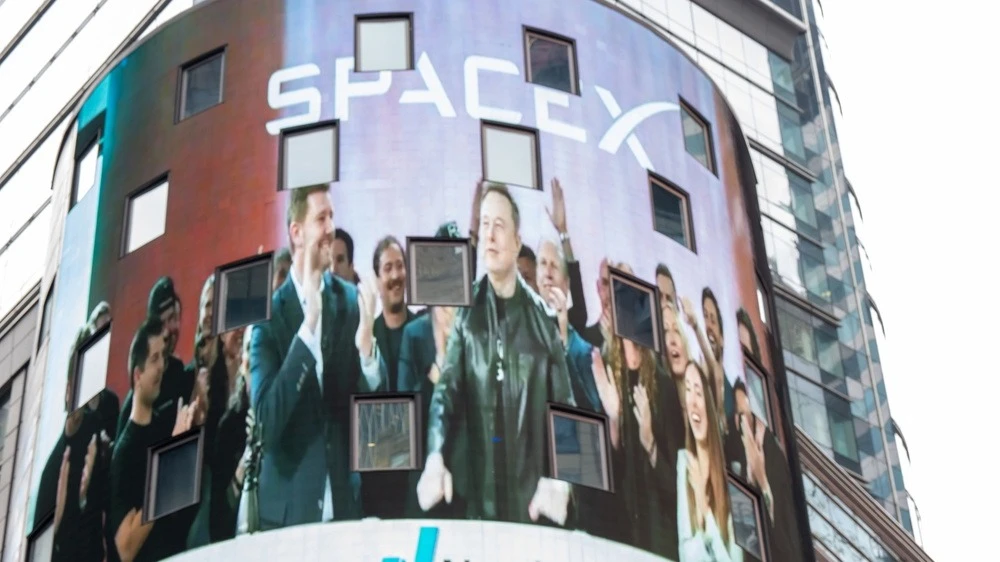
Wall Street analysts warned ahead of the earnings report that SpaceX shares would likely come under pressure / Photo: Ron Adar / Shutterstock.com
After the market closed on August 4, the space company SpaceX reported a 92% increase in quarterly revenue, significantly exceeding expectations. However, capital expenditures on artificial intelligence turned out to be substantially higher than Wall Street analysts had forecast. SpaceX shares plummeted in after-hours trading.
This is SpaceX's first quarterly report since its record-breaking initial public offering in June. In this live text coverage, Oninvest followed the release of the report and the conference call, during which Elon Musk answered questions from investors.
00:02 CET: Wall Street analysts' initial reaction to SpaceX's earnings report. Brian Mulberry, chief market strategist at Zacks Investment Management, said he was most impressed by the doubling of Starlink subscribers and the 350% increase in revenue from artificial intelligence in SpaceX’s earnings report.
“Artificial intelligence is already being monetized. They no longer rely on Starlink to fund this initiative. In my view, this is a key part of the whole story,” noted the strategist, as quoted by Reuters.
If SpaceX can maintain this pace of growth and continue to successfully monetize its AI business, it will significantly alleviate investors’ concerns about excessively high capital expenditures, according to Malberry.
23:50 CET: SpaceX CFO Bret Jonsen clarified that the company is on track to reach an annualized revenue run rate of $100 billion by the end of 2026. The annualized revenue run rate is not actual annual revenue: it reflects the revenue the company could generate over the next 12 months if the business growth achieved by the end of the year were to continue at the same pace, Reuters explains.
According to Jonsen, the forecast anticipates contributions from all three of SpaceX’s key business areas—space services, artificial intelligence, and communications. Cloud services are expected to make the largest contribution. The calculation also includes expected revenue from the acquisition of the AI startup Cursor—the company announced the purchase in June.

Capital expenditures over the next two quarters will remain roughly at the same level as in the second quarter, Jonsen said.
23:39 CET: SpaceX executives have not commented on a possible merger with another publicly traded company founded by Musk—Tesla. Wedbush Securities has predicted that such a merger could take place in 2027.
In July, during a Tesla conference call, Musk left the question of a potential deal open, citing its irrelevance, but noted that the synergy between the two companies continues to grow.
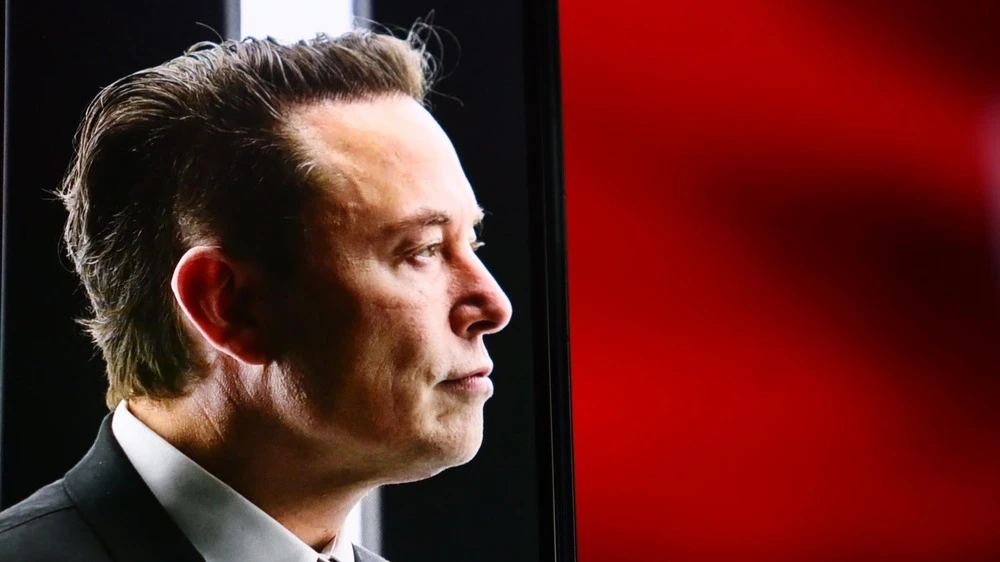
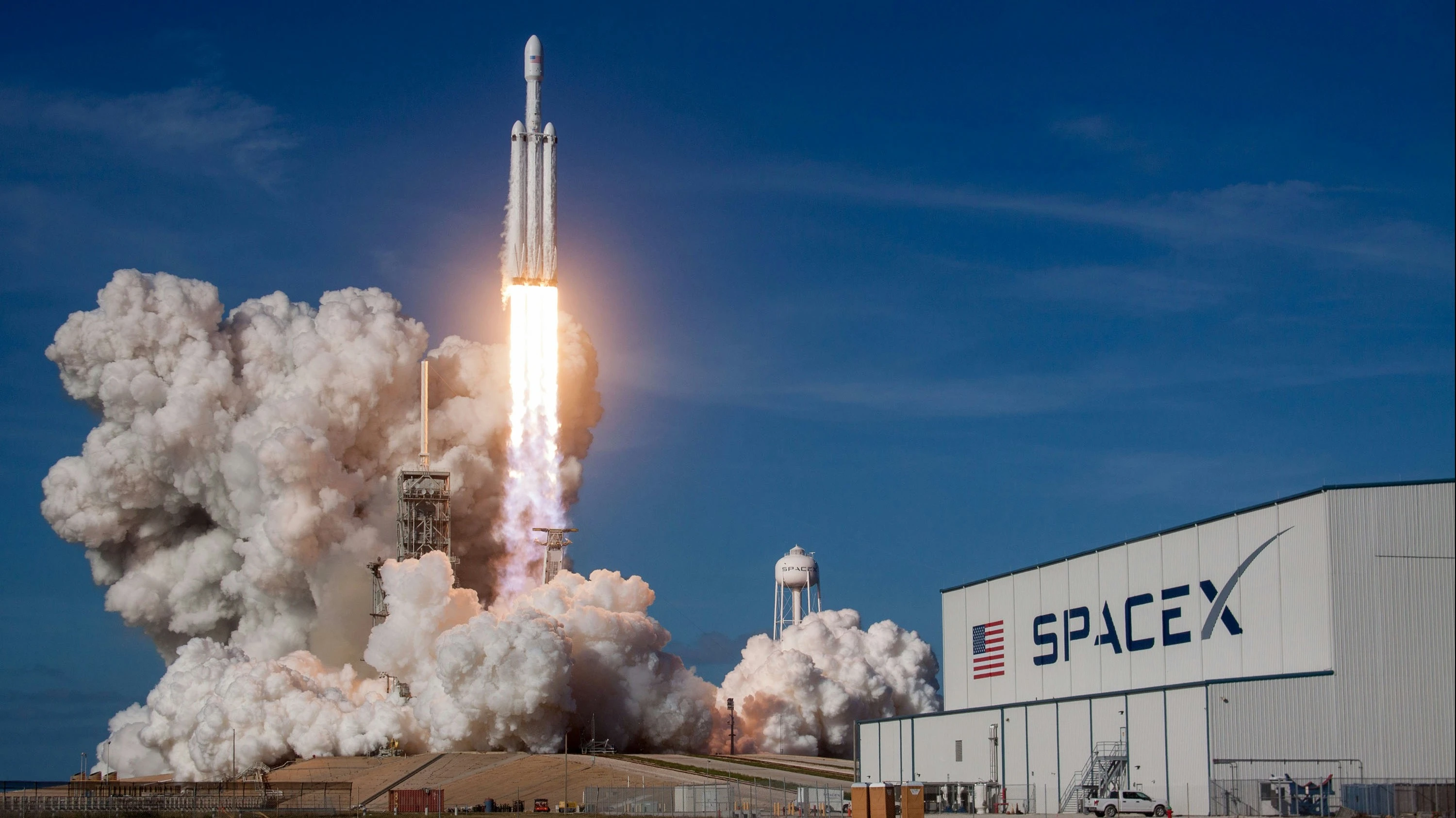
23:36 CET: During a conference call, Musk announced that, provided the necessary regulatory approvals are obtained, the next test flight of Starship—the largest rocket ever built—could take place in late August. During the mission, SpaceX will attempt for the first time to recover the Starship upper stage using a launch tower—this is one of the key steps toward achieving full reusability of the rocket.
According to Musk, SpaceX expects to conduct at least one Starship launch per day within a year, which will be an important step toward the large-scale deployment of the space transportation system.
Musk said that, in his opinion, Starship will be safe enough for crewed flights by the end of next year.
11:30 p.m. CET: The conference call has ended; it lasted just one hour. SpaceX shares are down nearly 8.5%.
November 23, CET: Musk stated that SpaceX expects to increase its annual revenue from $100 billion in 2026 to $1 trillion by 2030. According to him, the company’s internal forecast has been revised: while the original plan was to reach this milestone in 2031, the target has now been moved up to 2030. Musk also noted that there is a “non-zero probability” of reaching $1 trillion in revenue as early as 2029.
Elon Musk’s forecast appears significantly more ambitious than Wall Street’s expectations. Of the 39 analysts whose estimates Bloomberg tracks, 30 recommend buying the company’s stock. However, even they do not expect such rapid revenue growth. According to Bloomberg’s consensus forecast, SpaceX’s revenue in 2029 will average $208.3 billion—more than four times lower than Musk’s target, as he aims to reach $1 trillion by 2030.
10:45 p.m. CET: Elon Musk delivered a prepared speech via conference call before the question-and-answer session began. Here’s what he said:
Starlink's business of providing internet access via satellites in low Earth orbit is greatly "underestimated"—it may well be the one to provide internet access to the majority of the world's population.
SpaceX is scaling up its AI computing power at an unprecedented rate and refining its AI models. The new Grok 4.6 neural network model may be released next week, followed by Grok 4.7 in another three to four weeks. The release of the Grok 5 model, which will incorporate all data ever collected by SpaceX, is planned for the end of the year.
10:30 p.m. CET: SpaceX shares are down 4%.
10:15 p.m. CET: Highlights from the SpaceXreport :
Revenue: $7.8 billion, up 92% year-over-year. This is significantly higher than expected—analysts had forecast $6.81 billion, according to Bloomberg data.
Capital expenditures in the second quarter totaled $18.4 billion, which is roughly in line with the average forecast ($18.58 billion). However, AI spending significantly exceeded expectations—$15.8 billion versus the projected $13.09 billion. A year ago, when SpaceX was still a private company, its AI-related capital expenditures totaled $749 million, Business Insider notes.
The net loss in the second quarter decreased from $1 billion a year ago to $541 million.
Starlink remains the company’s main source of revenue—it generated $4.3 billion, a 66% increase from a year ago. The number of subscribers reached 12 million in the second quarter—twice as many as a year ago. However, analysts had expected growth to 12.19 million.
By comparison, revenue in the AI segment more than tripled to $2.6 billion. Revenue in the space services segment increased by 29% to $962 million (+29%).
The artificial intelligence segment's operating loss was nearly half of what Wall Street had forecast: $1.26 billion actually reported, compared with the expected $2.39 billion.
At the end of the second quarter, SpaceX had $100 billion in cash, cash equivalents, and securities.
May 22, CET: Investors' initial reaction—SpaceX shares rose 1% in after-hours trading. By the market close, they had risen more than 9%.
10:00 p.m. CET: SpaceX released a report:
Revenue: $7.8 billion, up 92% year-over-year;
net loss: $541 million, compared with $1 billion a year ago;
Adjusted EBITDA: $3.5 billion, a 191% increase year-over-year.
21:45 CET: Regardless of the financial results SpaceX reports today, its stock will remain under pressure at least until December, when the bulk of the restrictions on insider sales are lifted, according to analysts at Bernstein.
SpaceX's lock-up release schedule is quite unusual—instead of unlocking the majority of its shares all at once 180 days after the IPO, the company decided to release the shares in nine stages.
"We see that many investors are not yet ready to buy SpaceX shares, even though the company's fundamentals look attractive, because the stock will remain under pressure—at least through December—due to the gradual release of shares."
21:35 CET: Another issue being closely watched on Wall Street is spending on artificial intelligence development. In its IPO prospectus, SpaceX warned that it expects a significant increase in the future in the costs of building new satellites and rockets, as well as computing infrastructure and data centers.
In the first quarter of 2026, SpaceX’s capital expenditures totaled $10.1 billion, with more than 76% of that amount going toward AI investments. According to analysts’ forecasts, SpaceX will spend more than $45 billion this year alone—more than double last year’s total spending, Bloomberg notes.
21:20 CET: What are investors expecting from SpaceX’s first earnings report as a public company? Analysts at Morgan Stanley believe that SpaceX’s financial results will fall slightly short of Wall Street’s expectations. According to the bank’s estimates, the company’s revenue will total $6.75 billion, compared to a consensus forecast of $6.9 billion, while its loss will be $1.7 billion, versus $1.6 billion.
Morningstar analyst Nicholas Owens advises keeping an eye on revenue growth and subscriber numbers for the Starlink satellite network. So far, this is the only SpaceX business segment that is turning a profit. In the first quarter, Starlink’s operating profit totaled $1.19 billion. Owens forecasts that Starlink’s subscriber base will grow by 93% this year, following a 229% surge in 2025 and nearly double-digit growth in 2024.
21:10 CET: SpaceX’s quarterly results are set to be released two days before the end of the so-called lock-up period, during which restrictions on the sale of shares by investors and early investors are in effect. Starting August 6, they will be able to sell nearly one billion shares on the market, which will significantly increase the number of shares in free float. This could put additional downward pressure on the stock price.
Updating...
This article was AI-translated and verified by a human editor