A Market That Can't Lose: Michael Burry on What's Preventing Stocks from Falling
An investor from "Betting on a Downturn" believes that a 25% drop in the indices over a period of more than 400 days could help the market recover

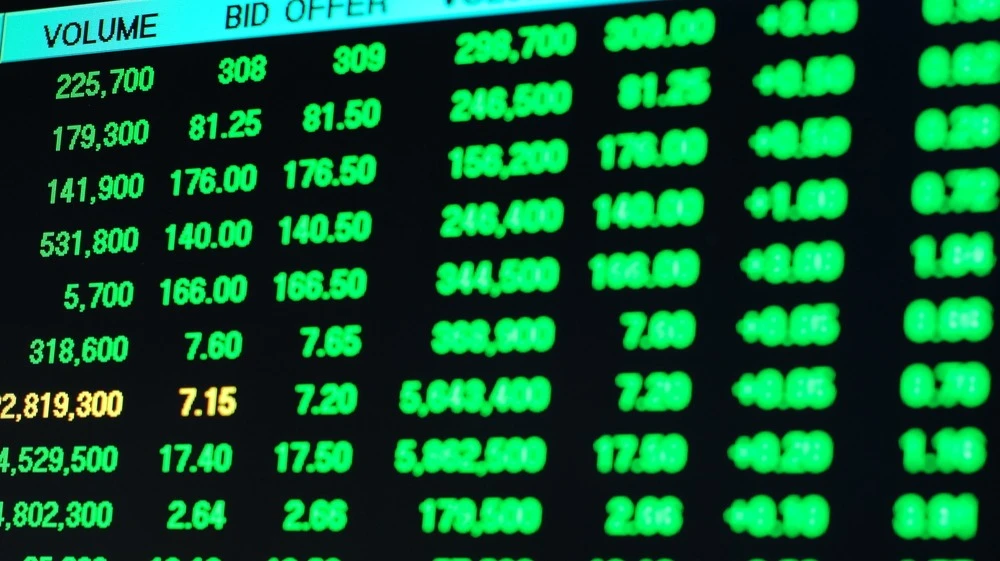
According to Burry, the market is currently rebounding from declines faster than investors can truly assess the risks / Photo: Shutterstock.com
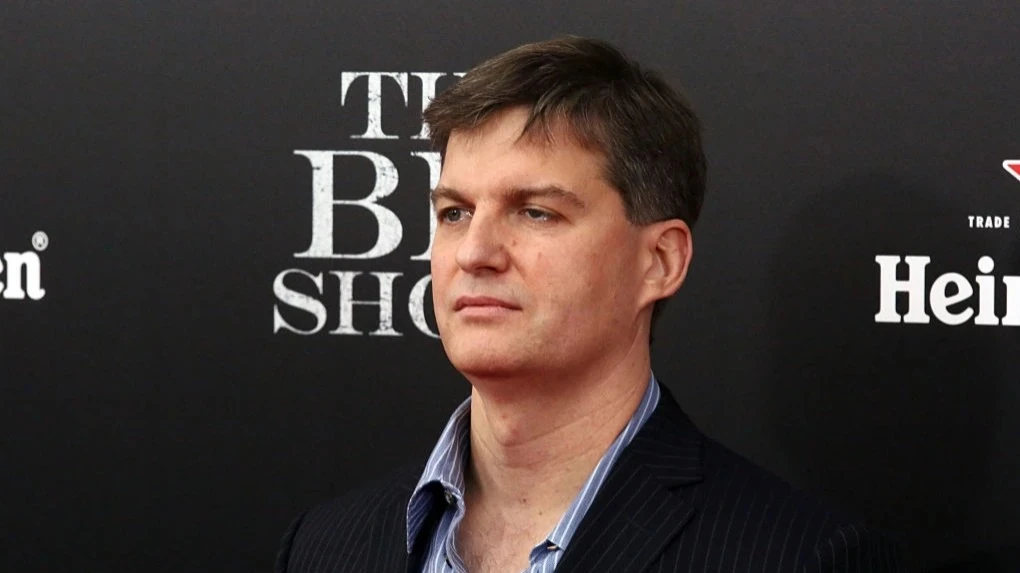
The July sell-off in the U.S. stock market is unlikely to herald a prolonged decline, according to legendary short-seller Michael Burry, known as the inspiration for the character in *The Big Short*. In his view, the defining characteristic of today’s market is that it is virtually invulnerable to defeat. In his blog Cassandra Unchained on Substack, Burry described the forces preventing prices from collapsing and what could shift investor sentiment.
A Market That Can't Lose
"The market has never been as resilient as it is now," writes Burry. He highlights three key features:
Over the past 15 years, U.S. stocks have rarely experienced prolonged sharp declines. According to the investor’s calculations, during this period, the S&P 500—the main U.S. stock market index—traded more than 20% below its previous high on only 1.96% of trading days. By comparison, if we consider all 15-year periods since 1928, the median proportion of such days is 17.7%.
"If sharp declines do occur, stocks recover much faster than they used to," the investor continues. In 1987, the S&P 500 index lost 33.5%, and it took 414 trading sessions to reach a new high. During the coronavirus-stricken year of 2020, stocks fell by nearly the same amount but recovered after just 103 sessions.
Despite all this, every major market decline triggers even sharper spikes in volatility—“nearly four times as much chaos” as in 1985–2000, writes Burry. Despite growing nervousness, if the market falls by more than 2% during the day, investors are more likely to buy stocks at their lows than to continue selling off until the close of trading, Burry notes. In his assessment, residual fear caused by a decline dissipates roughly twice as fast as it did in 1985–2000, leading to a rapid rebound.
"How could a market like this possibly fail? It's literally incapable of doing so."

Interestingly, internal market signals seem to no longer be working, writes Burry. His data show that the market now appears to react more nervously to relatively small sell-offs than to truly large ones. Furthermore, assets in a falling market are being forced into sell-offs at the end of the day less frequently than before.
“In fact, the data suggest that today’s investor is more likely to be upset by a smaller loss than by a larger one; is more likely to average down during intraday price swings; and is more likely to experience intense anxiety in the process. At the same time, such an investor will recover from those losses about twice as fast—even though they were upset about four times as much as investors in the past.”

What's behind this?
"No individual invests this way," Burry notes. "And it certainly isn't people who are causing the market to behave this way today. All of this points to the presence of players with inflexible, strictly defined rules," he writes.
According to the investor, it’s not even a matter of a single type of organization—to create such a market, a whole range of diverse institutional investors is required. One source of heightened nervousness during market downturns is funds that automatically adjust the size of their positions based on volatility. When volatility rises, they reduce their positions, primarily through the most liquid instruments, including S&P 500 futures. Banks and insurers react similarly to rising volatility, notes Burry. Therefore, even a 2–3% decline in stocks can trigger large-scale simultaneous selling: rising volatility forces many market participants to reduce their positions, and their actions exacerbate the further decline.
Another force driving the market is multi-strategy hedge funds. The largest of these are Millennium, Citadel, Point72, Balyasny, and others. They are structured so that capital is distributed among portfolio managers, who are supposed to invest independently of one another. In practice, writes Burry, their strategies are not particularly unique: long-term investments are typically directed toward deals related to artificial intelligence. When losses occur, managers are forced to reduce their positions under threat of having their allocated capital cut. And since they hold the same positions, the simultaneous reduction of positions by multiple teams amplifies the volatility of individual stocks. According to Burry’s estimates, these hedge funds account for more than 30% of exchange trading volume on many trading days.
Why Is the Market Continuing to Grow?
A forced sell-off usually ends quickly, writes Burry: volatility-focused platforms and funds reduce their positions to the required level and stop putting pressure on prices.
"By the time the market drops by more than 3%, <...> both groups act fairly quickly and then disappear, leaving a void behind them. This void is filled by mechanical demand, which continues to buy and helps the market either rise more strongly or fall less."

By "mechanical demand," he means passive investments—primarily pension plans that automatically purchase stocks, as well as buyback programs.
“Added to this is the retail crowd, conditioned to buy into any pullback, and the resulting surge in popularity of one-day options. But perhaps the most powerful factor is simply the long-standing trend of capital flowing into passive investing through indices and exchange-traded funds, which are completely indifferent to the price at which they buy when funds are flowing in.”

When these purchases halt the decline and volatility subsides, volatility-focused funds begin to build up their positions and leverage again. Next, hedge fund platforms that have completed their sell-off return to the market, and the recovery accelerates.
A Drop That Could Change the Market
This mechanism prevents the market from remaining in a downturn for long and becoming cheaper in terms of multiples, notes Burry. Since downturns end quickly, investors simply don’t have time to reassess their risk appetite, and stock valuations relative to earnings and revenue continue to rise.
“In my estimation, it will take a 25% drop in the indices—one that lasts longer than 400 days—to bring investor sentiment back to something more level-headed and, ultimately, more exciting. This would flush out the crowd of multi-strategy funds and volatility traders from the market, and might even force this passive investment machine to reallocate capital—for example, into those very same 6% ten-year bonds that ruined the whole party on Wall Street.”

Last week, Treasury yields soared to multi-year highs amid a sell-off in the stock market. By the end of the week, stocks had recouped some of their losses. Nevertheless, both the S&P 500 and the Nasdaq Composite ended July in the red.
But Burry is confident that the July sell-off will not turn into a prolonged decline. In his view, the steady inflow of money into passive investments will support stock prices. For a deeper decline, he writes, there would need to be a fundamental reason—one substantial enough to prompt passive investors to start pulling money out of stocks.
How Does Burry Himself Invest in a Market Like This?
Burry builds his own portfolio by betting against common market strategies. For long positions, he selects undervalued, “unpopular” stocks that have been trading near their lows for a long time and whose total trading volume during that period has exceeded the number of shares outstanding many times over.
According to Burry, most people shouldn't short stocks—but he does it himself.
"I'm shorting this whole AI craze, the memory chip market cycle, and other overvalued market favorites. Let me repeat: shorting isn't for everyone. For most investors, the first part of the strategy—buying a great business at a low price and holding it for many years—is enough.”

This article was AI-translated and verified by a human editor