The S&P 500 index is less than 1% away from a correction

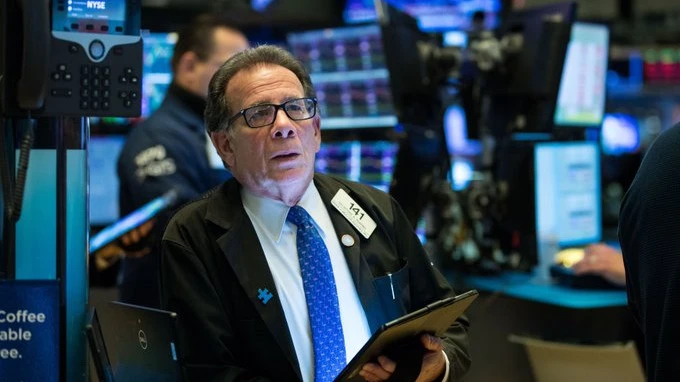
U.S. stocks failed to sustain gains following Donald Trump's announcement that the U.S. is negotiating with a "new and more reasonable regime" in Iran. and closed Monday trading mostly lower. The main U.S. market index, the S&P 500, fell to its lowest level since last August and is now less than 1% away from a correction.
Details
- The S&P 500 broad market index fell 0.4% on March 30. The index was 9.3% away from its intraday high for the last 52 weeks, that is close to correction, notes CNBC.
- The blue-chip index Dow Jones Industrial Average added 50 points, or 0.1%.
- The Nasdaq Composite Technology Sector Index fell 0.7 percent.
- The CBOE VIX Volatility Index, known as the "Wall Street Fear Index," closed trading above 30 points, indicating high market volatility. VIX values above 30 in the past have often coincided with market corrections or declines, Investing.com explains.
- Brent crude futures added 1.5%, rising above $114.2 per barrel. WTI oil rose 4.9% to $104.5 per barrel. Benchmark U.S. crude oil futures in the U.S. closed trading above $100 for the first time since 2022.
What influenced the stock
Fed Chairman Jerome Powell said Monday that even as energy prices rise, he believes inflation expectations are "well anchored beyond the short-term horizon." He also emphasized that the central bank "may eventually face the question of what to do in this situation." That said, Powell noted that "that question is not really on the table yet" because the Fed does not yet know what the economic consequences will be. After these comments, the yield on 10-year U.S. Treasury bonds fell, CNBC writes.
US President Donald Trump has given investors some hope that the war with Iran may soon be over. He wrote in Truth Social on Monday that the US is in "serious negotiations with a new and more reasonable regime" to end US military operations in Iran. However, the president also said that if a peace agreement is not reached "soon" and the Strait of Hormuz is not "immediately" opened, the US could strike at the oil infrastructure on Hark Island.
Traders are also concerned about statements by the heads of U.S. oil companies, The Wall Street Journal writes. Last week at S&P Global's CERAWeek conference, they warned that the blockage of the Strait of Hormuz, through which about 20% of the world's oil supplies pass, has squeezed the physical oil market much more than financial players realize, and that prices for futures contracts do not reflect how expensive crude is actually becoming.
Last week, the DJIA and Nasdaq Composite entered correction territory, meaning they fell below 10% of their recent highs.
What the analysts are saying
- "Fed Chair Powell's calm tone and the market's belated focus on the risks to economic growth from more expensive oil over the longer term are helping to shift traders' expectations for Fed Funds rates," Evercore ISI strategist Krishna Guha told Bloomberg. - The likelihood of one or more rate cuts is much higher than the likelihood of a rate hike."
- Most geopolitical shocks have a relatively short-lived impact on the market, Chris Larkin of E*Trade Morgan Stanley reminded Bloomberg. At the same time, he emphasizes that as long as there is no clear understanding of how the war with Iran may end, it will be difficult for the stock market to ignore the current volatility.
- "The market is still living from headline to headline as the Trump administration sends a variety of signals - both de-escalation and a new escalation of war with Iran," Wolfe Research analyst Chris Senick told Bloomberg. - So we continue to maintain a defensive strategy."
- There are growing signs that the sell-off that recently hit stocks is "nearing its final stages," said Michael Wilson, chief strategist at Morgan Stanley Bank. For an example, he recalled past waves of investor anxiety about a slowing economy that were not accompanied by either a recession or a rate hike. "The stock market is far less ignoring the risks to growth than consensus thinks," Wilson said.
This article was AI-translated and verified by a human editor