The success of the Starship tests failed to boost SpaceX's stock price. What are people saying on Wall Street?
SpaceX shares fell 1.3% amid a broader market decline and a downturn in the technology sector in particular

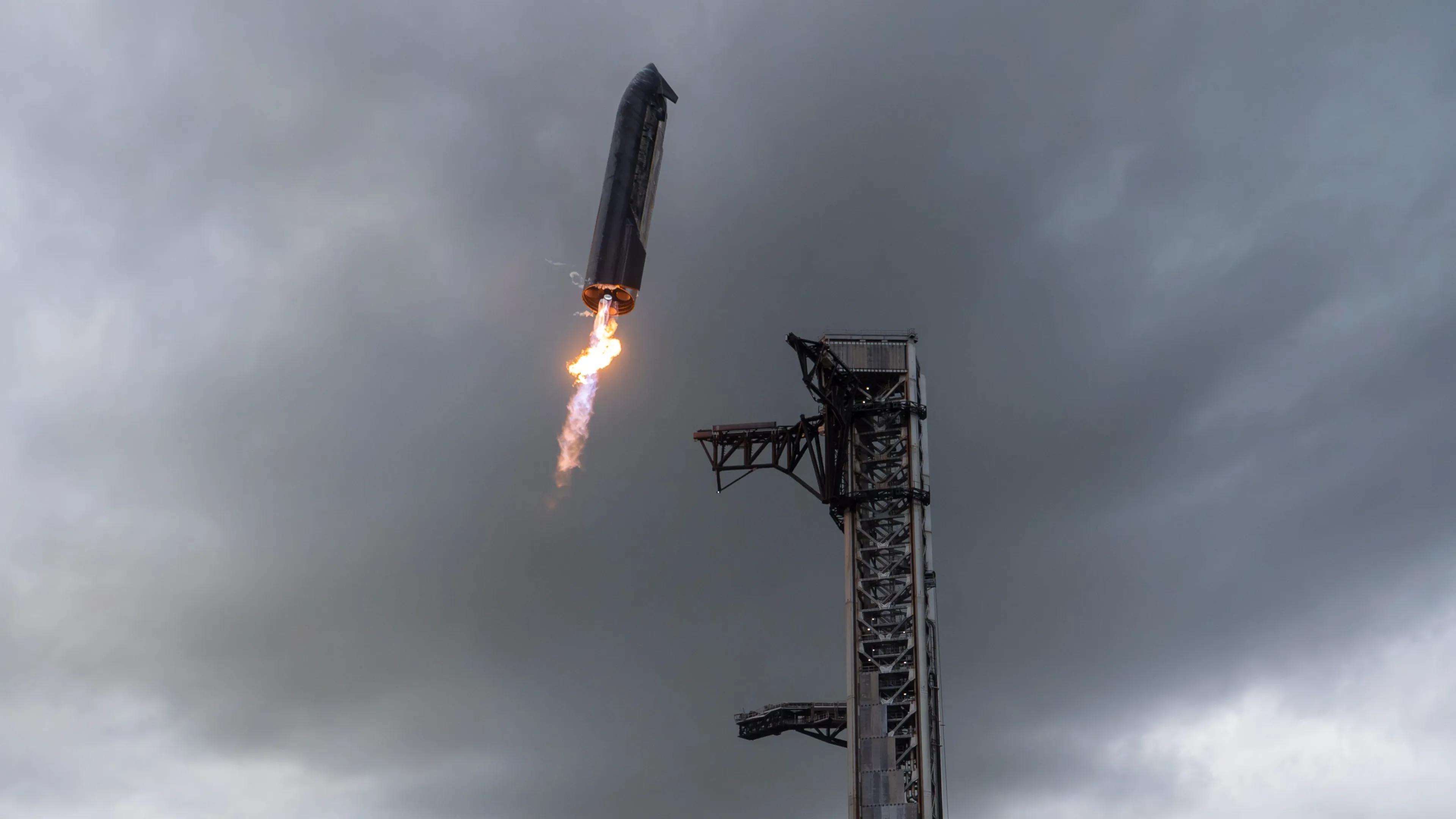
SpaceX successfully recovered a Starship that had returned to Earth for the first time / Photo: X / SpaceX
Elon Musk’s space company, SpaceX, has demonstrated for the first time that its heavy-lift Starship rocket can be reused: this will reduce the cost of sending cargo into orbit and may bring the company closer to using it for flights to the Moon. However, shares of Elon Musk’s space company reacted only slightly to this development: they fell by more than 1%, though less than the market as a whole. According to Barron’s, several factors not directly related to space are putting pressure on SpaceX’s stock price.
How are Wall Street analysts currently assessing SpaceX's prospects, and what are their forecasts for its stock?
Details
SpaceX shares fell 1.3% at the close of trading on November 16, although they had actually been trading slightly higher at one point during the day. Overall, the stock outperformed the rest of the market: the S&P 500 index lost nearly 2% that day, and the Nasdaq 100 “tech” index plummeted 2.7%.
It was the first trading day after SpaceX successfully returned the upper stage of its super-heavy Starship rocket to Earth for the first time and captured it using the launch tower’s mechanical “arms.” This was a remarkable engineering feat: the ability to capture the rocket upon its return to Earth will speed up its preparation for subsequent flights. But a single successful recovery does not yet mean that the company has proven the feasibility of rapid and cost-effective rocket reuse, notes Seeking Alpha. In addition, the company failed to recover the Super Heavy rocket’s booster, even though it had previously managed to do so: this time, it exploded. SpaceX initially attributed the failure to a fuel shortage, according to MarketWatch.
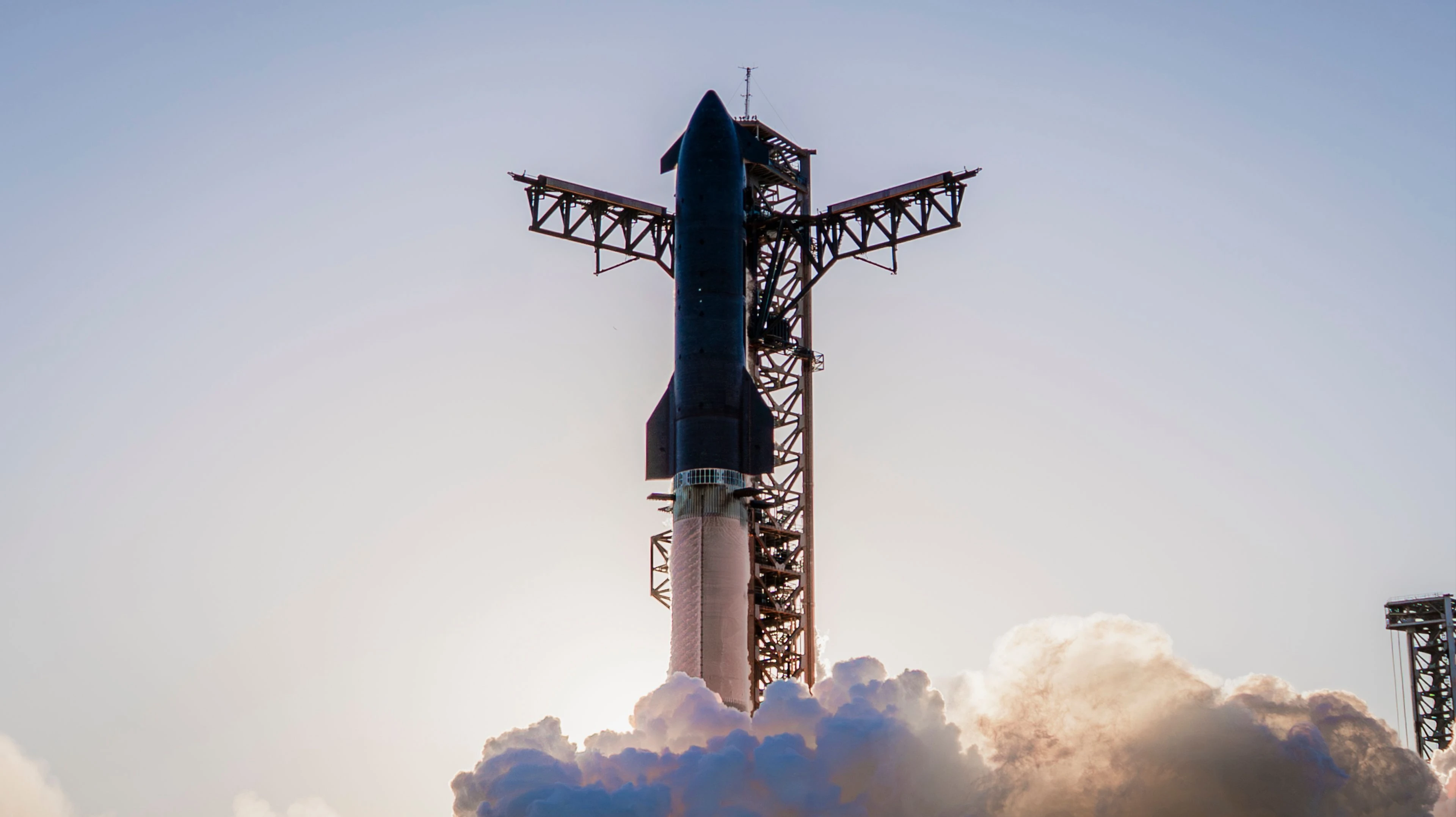
Starship is the largest rocket ever built by humans: its payload capacity will help significantly reduce the cost of launching cargo into orbit. SpaceX plans to leverage these cost savings to advance satellite communications and AI technologies in space, and to use the rocket for missions to the Moon and Mars, among other things.
What analysts are saying about this
— “The historic recovery of the Starship upon landing brings SpaceX closer to full reusability,” Barron’s quotes Pivotal analyst Jeffrey Wlodarczyk as saying. He recommends buying SpaceX stock and maintains a price target of $260, which is 90% higher than Monday’s closing price.
— “SpaceX has, in our view, achieved one of the most significant technological milestones in the modern history of the aerospace industry,” wrote Raymond James analyst Brian Jezuale in a note cited by MarketWatch. He called the test flight and subsequent recovery of the spacecraft “an important milestone that significantly reduces risks” for SpaceX stock. The analyst views the failure to recover the Super Heavy booster as a problem the company is capable of overcoming.
— The successful flight serves as a reminder to investors: SpaceX remains, first and foremost, a rocket and space company, despite investors’ discussions about its expansion into the telecommunications market and the development of its business providing computing power for artificial intelligence, noted Evercore ISI analyst Kutgun Maral.
— Mizuho analyst Brett Linzi called the test results “clearly positive” for SpaceX shares.
— “Given the recent failure of the competing Vulcan rocket to reach orbit, we view SpaceX’s continued successful execution of its plans and the deployment of its Starlink V3 satellites as an additional positive factor,” — MarketWatch quotes RBC analyst Ken Herbert as saying.
— UBS analyst Gavin Parsons called Starship’s successful return “a crucial step toward rapid rocket reusability, lowering launch costs, and providing faster and cheaper access to space,” according to Seeking Alpha. However, SpaceX is still far from the bank’s forecast of more than 1,500 launches in 2031, the analyst noted. He believes the company’s next goals are the successful recovery of the booster, shortening the intervals between launches, operating from multiple launch sites, and reusing the Ship 42 spacecraft.
— “While a single successful recovery does not in itself prove the feasibility of rapid reuse, it significantly reduces the risks associated with one of the most technically challenging components of SpaceX’s long-term strategy,” — wrote KeyBanc Capital Markets analyst Michael Leshok, whose note is cited by Seeking Alpha.
— “Overall implications for stocks: very positive, although the market may not recognize this on the very first day,” Seeking Alpha quotes Morgan Stanley analyst Adam Jonas as saying.
What's weighing on stocks
Democrats in Congress intend to launch investigations into restrictions on Starlink communications in Ukraine when a device with an antenna is moving faster than 160 kilometers per hour, The Wall Street Journal reported on November 13. Elon Musk has stated that Starlink should be used exclusively for defensive purposes, and that the use of the military version of the service—Starshield—is controlled by the U.S. government.
SpaceX did not respond to Barron’s request for comment regarding the Democrats’ investigations. The publication believes that the situation in Ukraine could put pressure on investor sentiment toward SpaceX.
Artificial intelligence was another negative factor. Shares of AI companies came under pressure following the unexpected resignation of Nvidia CEO Jensen Huang amid a spy scandal involving China. His departure came at a time when investors were already concerned about the capital markets’ ability to finance a trillion-dollar program to develop the AI industry, as well as the implications of the Democrats taking control of Congress. Democratic policies could slow the development of AI, Barron’s notes.
This article was AI-translated and verified by a human editor