"A Wolf in Sheep's Clothing": How the Market Reacted to Anthropic's CEO's Call to Slow Down AI
Michael Burry, the investor from *The Big Short*, believes that the statements made by the head of Anthropic are self-promotion ahead of the IPO

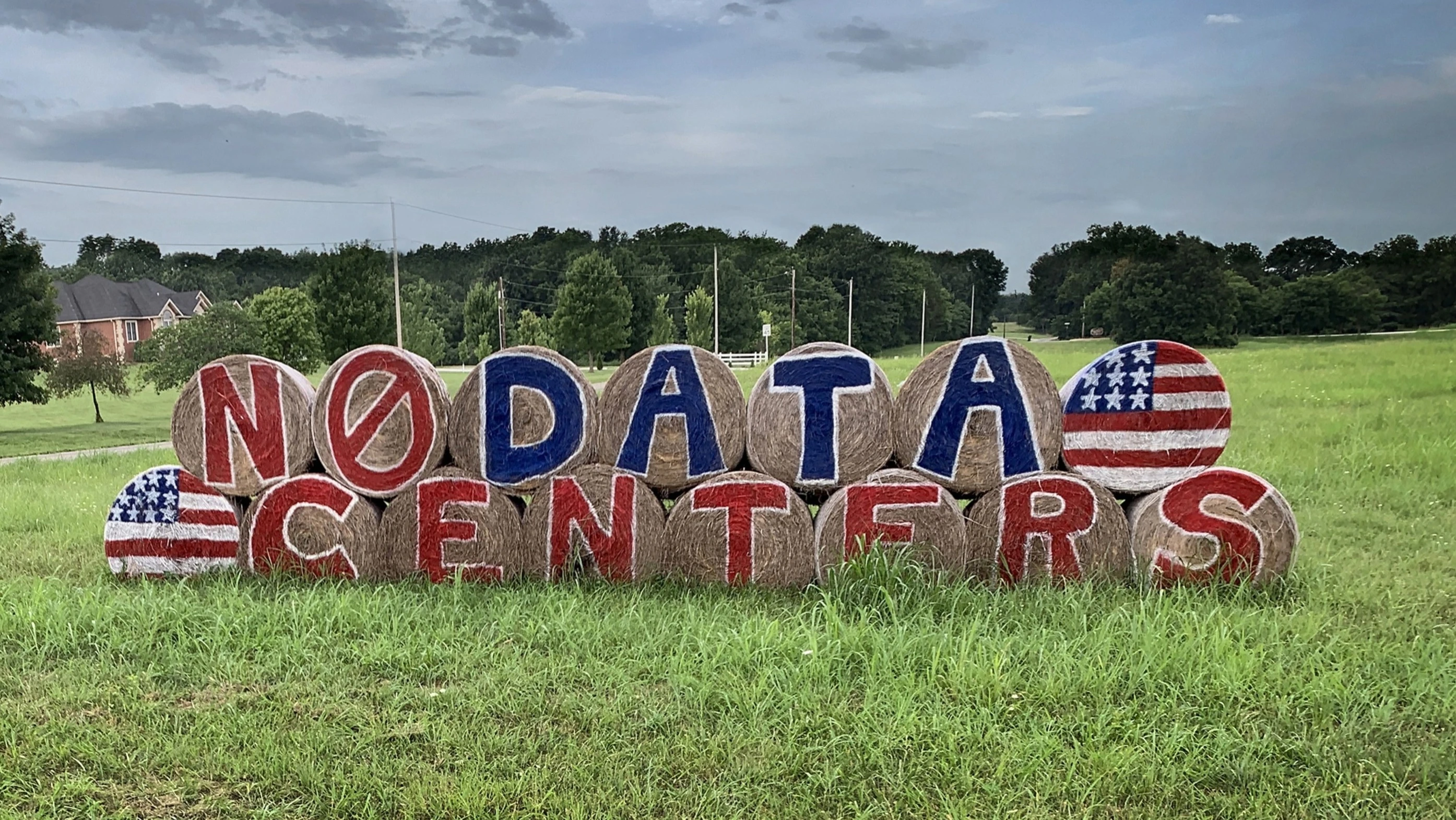
Calls to slow down AI development could put temporary pressure on the stocks of AI companies and chip manufacturers, according to Saxo Bank strategist Charu Chanana / Photo: damann/Shutterstock.com
Anthropic CEO Dario Amodei proposed slowing down the development of advanced AI models to allow more time to mitigate the risks associated with them. In his essay, Amodei also called on the U.S. to tighten restrictions on chip exports to China and to put a stop to the alleged use by Chinese AI labs of others’ models to train their own. He was supported by OpenAI CEO Sam Altman and SpaceX founder Elon Musk.
However, some investors did not take the warnings from Anthropic and OpenAI seriously, while others viewed them as a factor putting pressure on the market, Reuters notes. According to critics, Amodei’s proposals are aimed as much at strengthening Anthropic’s market position as at improving AI safety, Axios reports.
Iconic short seller Michael Burry, who was one of the first to predict the global financial crisis and profit from it, believes that AI company executives’ talk of a slowdown serves their own interests. In his view, competition is intensifying rapidly, and slowing down the pace helps the current leaders. “IPOs require hype and self-promotion; ‘we’re so cool that it could be dangerous’—that’s hype and self-promotion,” he wrote on X. Burry also called calls to slow down AI development “a cover-up for the real, uncontrollable slowdown in growth” of AI companies ahead of their IPOs.
Venture capitalist Chamat Palihapitiya stated on X: “Dario [Amodei, in his essay] makes the case for halting the development of open models and concentrating immense technological and economic power in the hands of Anthropic.”
Investor Jason Calacanis accused Anthropic and OpenAI of attempting to use government regulation against competitors who are developing open AI models—ones that are available for study and refinement. Meanwhile, Anthropic’s and OpenAI’s own most advanced models remain proprietary. “If you want safety, you need transparency, and open-source code is the most complete form of that transparency,” Kalakanis wrote. “Don’t run to the government crying and begging it to slow down the development of open models,” he added.
Gary Marcus, a critic of modern AI technologies, believes that AI, in its current form, does not pose a major threat. The main cause for concern, in his view, is general-purpose AI agents connected to the internet: most of them are unreliable and incapable of consistently following instructions. He sees the problem as being that they are “too dumb,” not “too smart.” “There’s no need to slow things down just yet. And there’s certainly no need to panic. We just need to remove the unsafe product from the market,” Marcus said.
“Should a handful of select Silicon Valley companies, which hold a dominant position in the AI market, be the ones to set the rules and safety standards for a technology that will shape an entire generation around the world?” — asked Aidan Gomez, CEO of the Canadian AI startup Cohere. “Today, these oligopolies are demanding that competition rules be changed to allow them to dictate terms to everyone else. It’s a wolf in sheep’s clothing—in other words, a cartel,” he added (quoted in The New York Times).
“If we’re going to start regulating [the AI industry], it shouldn’t be done by people they [top executives at leading U.S. AI labs] know, nor should they be the ones writing the rules,” — remarked venture capitalist Bill Gurley.
Saxo Bank investment strategist Charu Chanan acknowledges that calls to slow down development could still put pressure on the stocks of AI companies and chipmakers in the short term, according to Reuters. “Their stock valuations reflect both strong demand and an unabated pace of technological progress,” she said. “When expectations are this high, even a potential delay could trigger profit-taking.”
Dan Ives, founding partner of Yorkville Ives, told Yahoo Finance that he expected a slight decline [in the U.S. stock market] at the start of trading on September 14 in New York due to Amodei’s essay and the discussions over the weekend, but suggested that a quick rebound would follow. “Investors will quickly realize that, despite all this drama, the plans to spend $5 trillion on AI over the next few years remain unchanged,” he said.
What They're Saying in Washington and Beijing
The Donald Trump administration has repeatedly made it clear that it is not interested in regulating the development of AI, as it strives to keep pace with China. David Saks, the U.S. President’s Science and Technology Advisor and former White House AI coordinator, responded to Amodei and Altman’s proposals to slow down the pace: “My answer may surprise you: go ahead. But stop pretending you need someone’s permission.”
The pro-government Chinese newspaper Global Times identified “Cold War-era tactics” in Amodei’s essay, aimed at curbing China’s technological development, Reuters reports. “This ‘quiet Cold War in the field of AI’ is hypocritical and short-sighted,” the publication stated, noting that excluding China from global AI innovation would significantly increase “the costs of trial-and-error development and the risks of losing control” over the technology on a global scale.
This article was AI-translated and verified by a human editor