"The worst of two evils": what brings Russia closer to stagnation
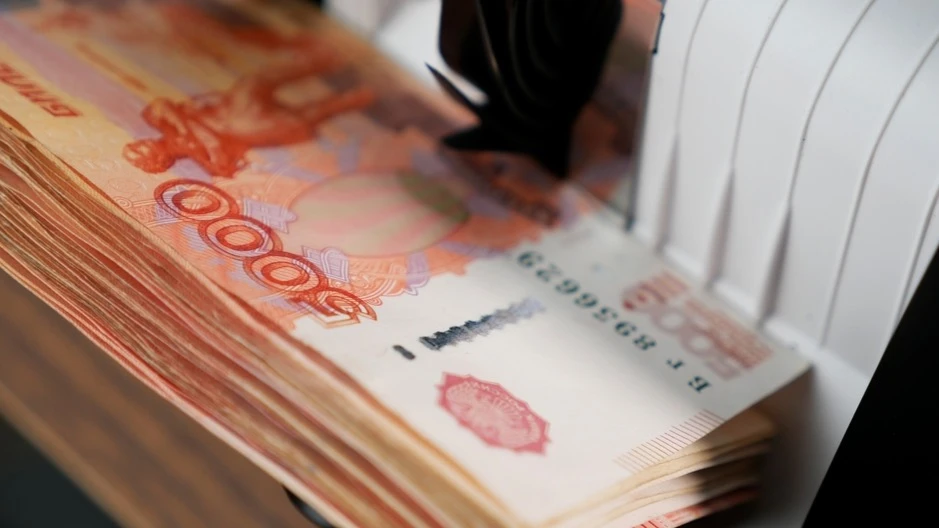
Weak dynamics of industrial production and too strong ruble, according to exporters, are among the factors bringing Russia's economy closer to stagnation / Photo: Semyon Prudiy / Shutterstock.com
Russia is one step away from stagflation, according to the Center for Macroeconomic Analysis and Short-Term Forecasting, an organization that researches the state of the Russian economy. According to the researchers, inflation in Russia remains high, while the economy has gone into recession and most civilian industries are stagnating. How fair this assessment is, wrote Natalia Milchakova, lead analyst at Freedom Finance Global.
Who has experienced stagflation and when
Stagflation is defined as a decline in the economy or a significant slowdown in its growth with a simultaneous high inflation, which is often accompanied by a spike in unemployment. British Conservative politician Ian MacLeod is credited as the author of this term. He stated in 1965 that the UK is experiencing "the worst of two evils: not only inflation on the one hand or stagnation on the other, but both together".
Later, this concept was recognized by scientists as one of the characteristics of a crisis or pre-crisis situation in the economy. In the early 1970s, the term was used not only in the UK, but also in all countries affected by the OPEC embargo on oil supplies to the US and its allies. It led to a sharp rise in fuel prices in the United States and Western Europe, a spike in inflation and a subsequent economic slowdown.
In 1992-1998, Russia experienced pronounced signs of stagflation in the form of hyperinflation, economic recession and a sharp rise in unemployment. It was a full-scale recession, especially given the 1998 default and sharp devaluation of the ruble.
The global economic crisis caused by the bankruptcies of major US investment banks in 2007-2008 led to stagflation in both developed and developing countries, including Russia. In 2022-2024, due to the consequences of the COVID-19 pandemic, disruptions in the supply of goods and anti-Russian sanctions in the energy sector, the US, Japan, the UK and European countries will face signs of stagflation.
As a rule, the population suffers most from stagflation in any country. High inflation and the fact that businesses cut production costs leads to increased unemployment, collapse of nominal and real wages, slowdown in lending and falling effective demand. The consequence of this is a reduction in retail sales and a decline in living standards. This often leads to increased social tensions and political crises.
"Red flags" statistics
The current situation in Russia's economy is considered by the experts of the Center for International Monetary Policy as close to stagflation (the main conclusions were recounted by the Izvestia newspaper), most likely because both the population and businesses from 2022 have gotten used to living and operating in a completely different economic model than before. Russian raw materials are not supplied to the West, cars and consumer goods of well-known Western brands are not imported into Russia as they used to be. The local manufacturing industry has benefited from this, plus the government is promoting an import substitution strategy.
Against this background, the slowdown in economic growth to 1%, according to Rosstat's first estimate for 2025, is perceived as a serious problem, rather than something minor compared to other problems - the persistence of the raw material structure of the Russian economy and its high dependence on imports.
But what do the available statistics say? Russia, judging by it, is far from showing all the signs of stagflation. In Russia, real incomes of Russians have been growing since 2023. But the main drivers of growth in the last three years have been the growth of nominal wages in a number of professions, primarily in those where there is a shortage of highly qualified personnel, as well as the growth of property income - mainly interest income on deposits in banks. At the same time, the growth of wages and incomes is not observed in all industries and not in all regions of the Russian Federation - wage differentiation between industries and regions remains at a high level.
Stagflation at the beginning of 2026 was indicated by the acceleration of inflation from December's 5.6% to 6% in January, with a simultaneous decline in GDP - according to the Ministry of Economic Development and Trade, by 2.1% in annualized terms after growth of 1.9% in December. In February, inflation fell slightly to 5.91%.
Industrial production declined by 0.8% in January, according to Rosstat, and increased by 3.7% year-on-year in December.
The manufacturing industry, which has been the main driver of industrial production growth and the economy as a whole over the past three years, showed a 3% year-on-year decline in January after a 3.7% increase in December. The Ministry of Economic Development attributes the drop in Russian production in January to the fact that there were two fewer working days in the month than in the same period a year earlier.
Despite high inflation, Russia is close to full employment, and many sectors, especially in industry and construction, are experiencing staff shortages. According to Rosstat, from December 2025 to February 2026, unemployment was 2.2% of the able-bodied population, and in November 2025 it fell to 2.1% - the lowest level in the history of observations since 1991.
How not to slip into stagflation
So, as of the beginning of March 2026, the Russian economy has not formally entered the stagflation stage. However, alarming signals that it is not that far away have already appeared.
It is worth paying attention to a number of factors bringing the economy closer to this state. Among them is the still high key rate - at its last meeting on March 20, the Russian Central Bank lowered it, as it did at its February meeting, by 0.5 percentage points - and it now stands at 15%. Other factors include volatile oil prices, weak industrial production since the beginning of the year, and a ruble that exporters believe is too strong. For example, in June last year, Severstal CEO Alexander Shevelev did not rule out that the strong ruble could lead to a possible shutdown of some metallurgical facilities in Russia, as this exchange rate does not allow to cover variable costs for most steelmakers.
In our opinion, the most critical point, when the risk of sliding into stagflation was maximum, was passed in the fall of 2025. At that time, Rosstat recorded a noticeable slowdown in economic growth - plus 0.6% in Q3 2025 after growth of 1.1% in Q2 and 1.4% in Q1 - and inflation in the range of 7-8%. However, by the end of December, consumer price growth slowed down to 5.6%, although the Central Bank forecasted that it would amount to 7-8% by the end of the year.
The moderate easing of the CBR monetary policy played a certain role in preventing stagflation, which helped to support the weakening industrial production and reduce inflationary pressure on the economy and the incomes of Russians. According to our assessment, the optimal range of the CBR key rate, which ensures a balance between curbing inflation and supporting investment activity, is 11-12% per annum.
The combination of tight monetary policy and a strong ruble creates difficulties both for capital investments due to the high cost of borrowing and for exporters. The strengthening of the national currency makes their products less competitive in international markets due to high prices in dollar terms, especially when markets are in recession and demand is low. And this is taking into account the fact that many markets of the countries that joined the anti-Russian sanctions are closed for raw materials and products from Russia.
Until the key rate drops to at least 12%, the dynamics of industrial production and consumer activity will remain subdued. According to our forecasts, retail sales growth in 2026 will not exceed 3-4%, while industrial production will increase by about 2% over the same period. By comparison, industrial production growth in 2025 was 1.3%. And in 2024 - 5.1%.
The alarms of leading economists play an important role in planning for future government revenues and expenditures and business income.
However, in our opinion, on a national scale, it is much more important what conclusions will be drawn from the incoming signals. In order to achieve an upturn in sectors oriented towards foreign markets, it is necessary to ensure a decrease in the average annual exchange rate of the national currency to the level of 83-85 rubles per dollar. For comparison, since the beginning of 2026, the average ruble-dollar exchange rate has been 78 rubles.
Active government support is important: grants, soft loans or direct financing would help to curb stagflation.
But Russia is preparing to cut government spending this year. As Reuters wrote earlier, the cuts may affect infrastructure projects. In order to grow the economy by 3-4% per year, it is necessary to increase investment in fixed capital by 5-8%. How to achieve this in the current conditions, without a big "budgetary impulse", relying only on the initiative of the already borrowed business is an open question.
This article was AI-translated and verified by a human editor