Top Stories This Morning: U.S.-Iran Talks, a Major Pharmaceutical Deal, and a Market Correction in Asia

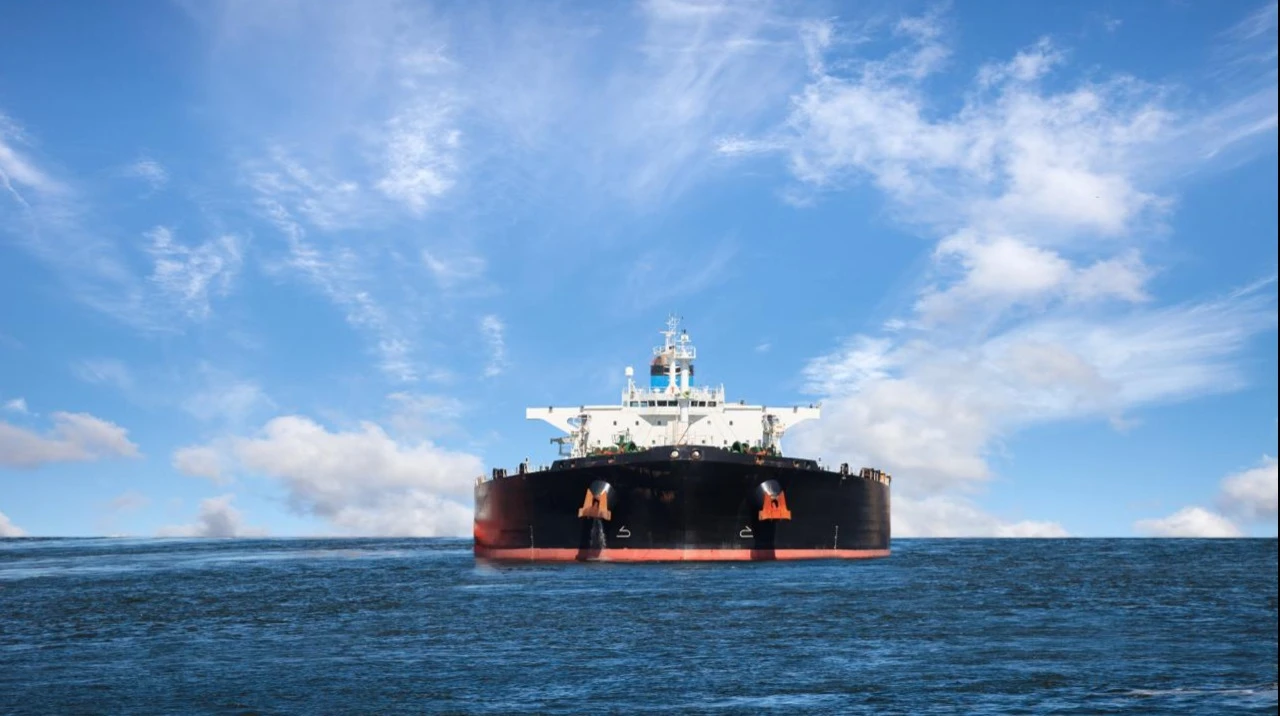
Trump's announcement of new negotiations with Iran has boosted market optimism regarding a potential resumption of shipping through the Strait of Hormuz / Photo: Shutterstock.com
Oil prices fell after Donald Trump announced the cancellation of a planned strike on Iran and the start of negotiations between Washington and Tehran. Britain’s AstraZeneca is in talks with U.S.-based Bristol Myers Squibb regarding a merger that could become one of the largest deals in the industry’s history. Read about these and other topics in our roundup of key events as of the morning of August 3.
Oil prices fell after Trump's announcement that he was calling off the strike on Iran
Oil prices fell during Asian trading after U.S. President Donald Trump announced that he had called off a planned strike on Iran, according to CNBC. Brent fell more than 5% to $83.4 per barrel, while WTI dropped 6% to $79.6. Trump also said that talks between the U.S. and Iran would begin on Monday, calling an agreement on the Strait of Hormuz and Iran’s nuclear program “inevitable.”
According to Trump, the decision to call off the strike was made following appeals from Iran and other Middle Eastern countries amid discussions of a possible deal that would include opening the Strait of Hormuz. Officials in Tehran stated that they take all threats seriously.
AstraZeneca and Bristol Myers Squibb are discussing a merger worth nearly $400 billion
Britain's AstraZeneca is in merger talks with U.S.-based Bristol Myers Squibb, the Financial Times reports, citing informed sources. The deal could value the combined company at nearly $400 billion and make it the world’s fourth-largest drugmaker by market capitalization. Talks have been ongoing for several months and could result in an agreement in the near future, although a final decision has not yet been made, the newspaper’s sources said.
The merger will allow AstraZeneca to strengthen its position in the U.S. market, but it may face political and antitrust obstacles due to the overlap in the companies’ oncology portfolios. The potential deal would be the largest in AstraZeneca’s history, surpassing its $39 billion acquisition of Alexion in 2021.
The Korean market fell following a record rally at the end of last week
South Korea’s Kospi index fell more than 5% on Monday, while shares of Samsung Electronics and SK Hynix dropped about 9%, partially erasing the 27% and 30% gains, respectively, they had posted on Friday, according to Bloomberg. Analysts attribute the correction to profit-taking, the unwinding of leveraged positions, the strengthening of the won, and news of China’s progress in the fields of AI and semiconductors.
Foreign investors sold more than 1 trillion won ($698 million) worth of shares during the first few hours of trading. Despite the sell-off, Morgan Stanley raised its recommendation on South Korean stocks to “outperform,” noting that after speculative positions are reduced, the index could rise by about 36% to a target level of 9,000 points.
For the first time in a long while, Japan and the U.S. have jointly supported the yen
Japan’s Ministry of Finance announced on Monday that it had conducted a currency intervention on Friday in conjunction with the U.S. Treasury Department to support the yen amid its sharp decline, according to CNBC. Following this, the exchange rate strengthened from 163.73 to about 157.6 yen per dollar. Tokyo stated that it is prepared for further joint interventions if necessary, and Washington confirmed its support for these actions.
According to U.S. Treasury Secretary Scott Bessent, the measures were aimed at countering “chaotic” exchange rate fluctuations, while Donald Trump described the U.S. involvement as a gesture of support for an ally. However, Robin Brooks, a senior fellow at the Peterson Institute, believes that such intervention could undermine confidence in the yen, since, according to the Financial Times, the U.S. sold euros—not dollars—to prop up the Japanese currency.
What's Happening in the Markets
— Japan's broad-based Topix index fell 1.1%, while the Nikkei 225 fell 1%.
— Hong Kong's Hang Seng Index remained virtually unchanged, while mainland China's CSI 300 Index fell 0.7%.
— In South Korea, the KOSPI fell 5.1%, while the KOSDAQ rose 2.8%.
— Australia's S&P/ASX 200 remained virtually unchanged.
— Nasdaq Composite futures rose 0.9%, S&P 500 futures rose 0.6%, and Dow Jones Industrial Average futures rose 0.6%.
This article was AI-translated and verified by a human editor