The Nasdaq Composite had its worst July in 20 years due to a plunge in chipmaker stocks

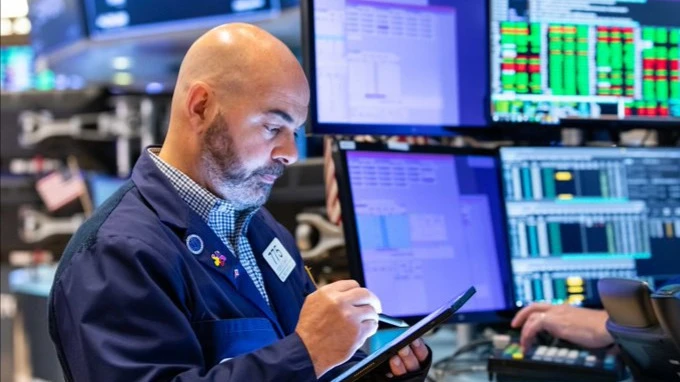
The Nasdaq Composite lost more than 3% over the past month / Photo: X / NYSE
The Nasdaq Composite lost 3.2% in July, closing at 25,373.85 points heading into August. This is the index’s worst July since 2006, when it fell 3.97%, according to Barron’s. For the Nasdaq Composite, this is the biggest decline this year since March, when the index dropped 4.8% following the outbreak of the U.S.-Iran conflict.
The decline in chipmakers did not have as strong an impact on the other two major U.S. stock market indices. The broad-market S&P 500 index lost just 9 points (0.1%) in July and ended the month at 7,489.8 points. The Dow Jones Industrial Average, an index of blue-chip stocks, rose 0.3% over the month to 52,485.74 points.
The Semiconductor Crash
The biggest factor affecting the technology sector in July was the decline in chipmakers’ stock prices. The Philadelphia Semiconductor Index plummeted 20% over the month, marking its worst performance since 2008. The VanEck Semiconductor ETF, which tracks chipmaker stocks, lost 17.2% over the month. Micron shares fell 28.7% during this period, Western Digital shares fell 14.7%, Sandisk by 46.6%, and SK hynix American Depositary Receipts (ADRs), which debuted this month, have lost more than 15% since their IPO. AMD shares fell 18% over the month, Intel shares fell 35.4%, and Marvell Technology shares fell 37%.
This month’s plunge in chipmaker stocks led to the emergency liquidation of positions held by the popular Situational Awareness fund, managed by Leopold Aschenbrenner. He had been actively investing in AI using leverage. At its peak, just before the July sell-off began, according to CNBC, the fund managed $45 billion in assets; after the stock decline and the sale of depreciated assets to billionaire Ken Griffin’s Citadel, approximately $10 billion in securities remained under management. Aschenbrenner himself blamed his failure on short sellers who were betting against the stocks in the fund’s portfolio and promised that Situational Awareness would no longer use borrowed capital.
Will the AI rally continue?
In late July, the market was buoyed by the start of the corporate earnings season. The four hyperscalers that have already released their financial results reported record spending on AI. Alphabet, Meta, Microsoft, and Amazon have already committed nearly $2.4 trillion, including data center construction, rent, power, and equipment purchases, according to Bloomberg. Alphabet, Microsoft, and Amazon also reported impressive revenue growth for their cloud services.
Despite a difficult July, the S&P 500 remains close to its all-time high. “I find it encouraging that the market isn’t falling sharply, but has simply paused its upward momentum for the time being. The bull market is essentially taking a breather before making another attempt to climb higher,” Barron’s quotes Ryan Detrick, chief strategist at Carson Group, as saying. He added that a slight pullback following the S&P 500’s gains in April and May seems entirely natural.
“The key question for investors is whether the weakness in AI-related sectors marks a long-term reversal or is merely a result of portfolio rebalancing, — wrote strategists at Bespoke Investment Group in a note to investors cited by Bloomberg. “Earnings reports have once again been very strong. However, seasonality remains a factor of uncertainty.” August is traditionally considered a weak month for stocks, and the situation usually gets even worse in September, Bespoke added.
This article was AI-translated and verified by a human editor