A Blow to Elon Musk, “Guppy Fry” in the Ocean of AI, Kazakhstan’s Radioactive Armor

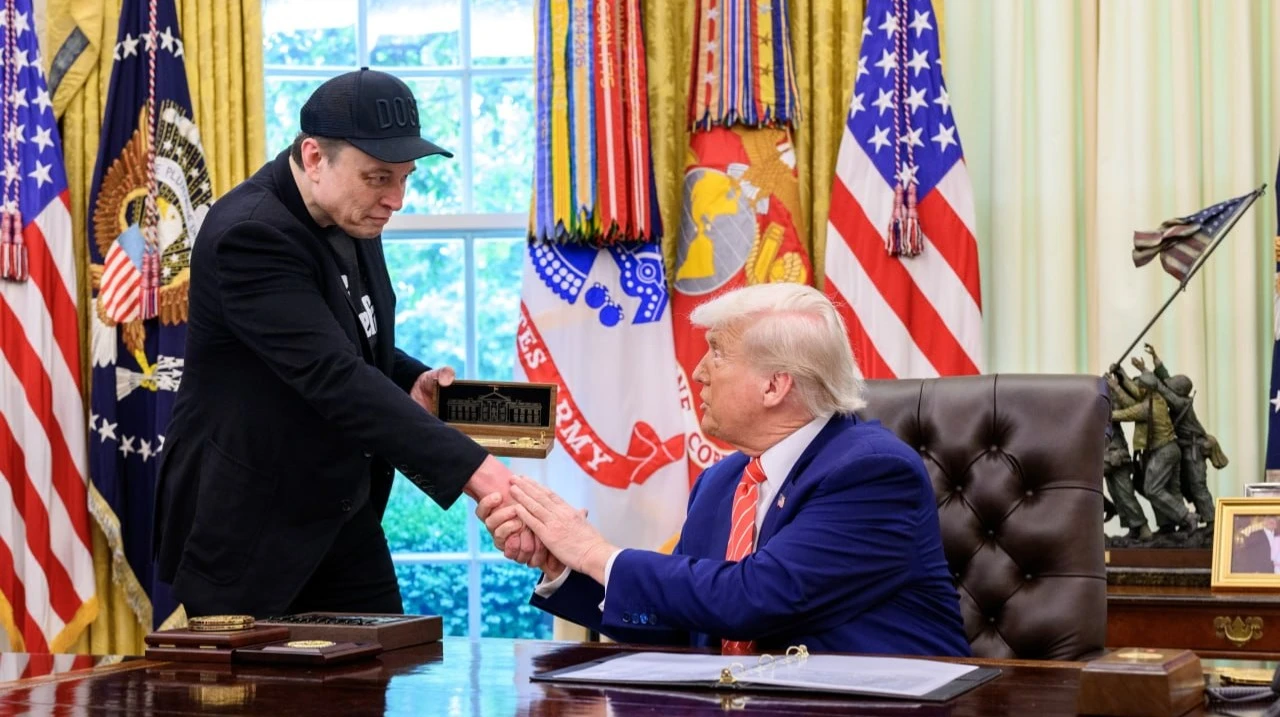
Elon Musk, who donated nearly $0.5 billion to the Republican campaign, is being called the biggest loser of the Democrats' victory in the U.S. election. Photo: Shutterstock.com
The main event of the past week was the U.S. midterm elections. It was considered unlikely that the ruling Republican Party, with its leader Donald Trump’s approval ratings at a record low, would be able to retain its majority in the House of Representatives and the Senate. The main question, as political analyst and author of the Telegram channel One Big Union, Yan Veselov, emphasized in his column for Oninvest, was simply how large the opponents’ lead would be.
AI-gloom
The Democrats have gained control of both houses of Congress. This means that Trump has some tough days ahead. The party has planned a series of congressional investigations into the 47th president’s business empire. Incidentally, Oninvest has published a series of articles on the financial situation of virtually his entire family, which has grown by leaps and bounds. We’ve reported on the earnings of his wife Melania, his eldest son Donald Trump Jr., his eldest daughter Ivanka and her husband Jared Kushner, his son Eric and his wife Lara, as well as his youngest son Barron, who, according to Trump, introduced his father to the world of cryptocurrency.
The victorious Democrats are promising a stricter regulatory environment for the tech sector, which is why market sentiment regarding the future of AI was negative. For example, on Asian stock exchanges, investors were shifting their focus from chipmakers to consumer companies and automakers, while in the U.S., Tesla and SpaceX shares were falling.
Elon Musk, who donated nearly $0.5 billion to the Republican campaign and moved virtually his entire business to the once-Republican state of Texas, is being called the biggest loser of the election. The new Democratic governor has promised to review Texas tax breaks for both Musk’s companies and data centers in general. According to Goldman Sachs analysts, this could increase capital expenditures for hyperscalers, who will postpone investments until 2027 in order to complete their data centers while existing permits remain valid.
Neocloud-doom
Elon Musk has warned 200 companies in the AI sector that they face “consolidation or death.” According to him, “neo-clouds have proliferated like guppy fry,” and most of them won’t survive to reach maturity. The reason for this prediction: lenders are no longer willing to lend to companies that cannot demonstrate significant revenue outside of data centers. Coreweave’s stock plummeted by 40%. Arkady Volozh’s Nebius lost just as much. And Microsoft pulled out of a deal with Nscale, the most valuable British AI startup, right before its IPO.
Oninvest Editor-in-Chief Elena Tofanyuk explained on our Instagram why these events are unrelated to Musk’s tweet and how the closure of traditional financing markets could affect the profitability of neo-clouds.
Coreweave and Nebius will report their quarterly results next week, and investors will be able to assess how successfully these companies are managing rising costs and meeting investor expectations. Oninvest guest columnist Mikhail Overchenko examined what fears are driving investors and creditors and whether hyperscalers will find themselves in a similar situation.
Echoes of the Election
The U.S. elections also had a tangential impact on Kazakhstan. The U.S.-based company Cove Kaz, which owns 70% of a project to develop tungsten deposits in Kazakhstan, has abandoned its merger with the Hong Kong-based construction contractor Skyline Builders and will go public on its own. According to the WSJ, this sudden change in the deal’s structure may be linked to senators’ concerns about a potential conflict of interest involving the Trump family. Aldiyar Anuarbekov and Daniil Zhelobanov examined how the project’s investment potential will change and what role Eric and Donald Trump Jr. play in this.
Another important development from Kazakhstan is the decision to establish a strategic uranium reserve for domestic needs. Over a 100-year period, this would amount to hundreds of thousands of metric tons of uranium, and if the country were to physically accumulate such a volume, it would require diverting between a quarter and a half of its production from exports. In a column for Oninvest, Freedom Broker analyst Daniyar Orazbaev examined how Kazakhstan’s plans will affect the global uranium market and the business of the national corporation Kazatomprom.
The outcome of another parliamentary election—in Serbia—has sent shockwaves through the country’s financial markets. The ruling Serbian Progressive Party of former President Aleksandar Vučić lost the election. Shortly thereafter, Alta Banka—Serbia’s ninth-largest bank by net assets and closely tied to Vučić’s party—had its license revoked. Most of its customers were Russians. They lost access to their funds. Mikhail Tegin investigated what happened to the bank and how politics played a role.
What should I read this weekend?
If you haven’t grown tired of the AI hype, we have a review of American journalist Kevin Roose’s book *The AGI Chronicles: An Insider’s Account of the Race to Create Artificial Superintelligence*. It chronicles the decade-long race to create Artificial General Intelligence—a form of artificial intelligence capable of surpassing humans in any intellectual task. This New York Times bestseller compares what’s happening in Silicon Valley to the development of the atomic bomb in the 20th century. If AI advocates had become obsessed with supersonic aircraft or regenerative agriculture back then, we might be living in a world without ChatGPT, Claude, or Gemini—a world where AI would still mean robot vacuum cleaners and recommendation systems.
This article was AI-translated and verified by a human editor