U.S. national debt weighs on the market; top model joins a Kazakhstani AI company; Nasdaq to open at night
Market Highlights for the Week
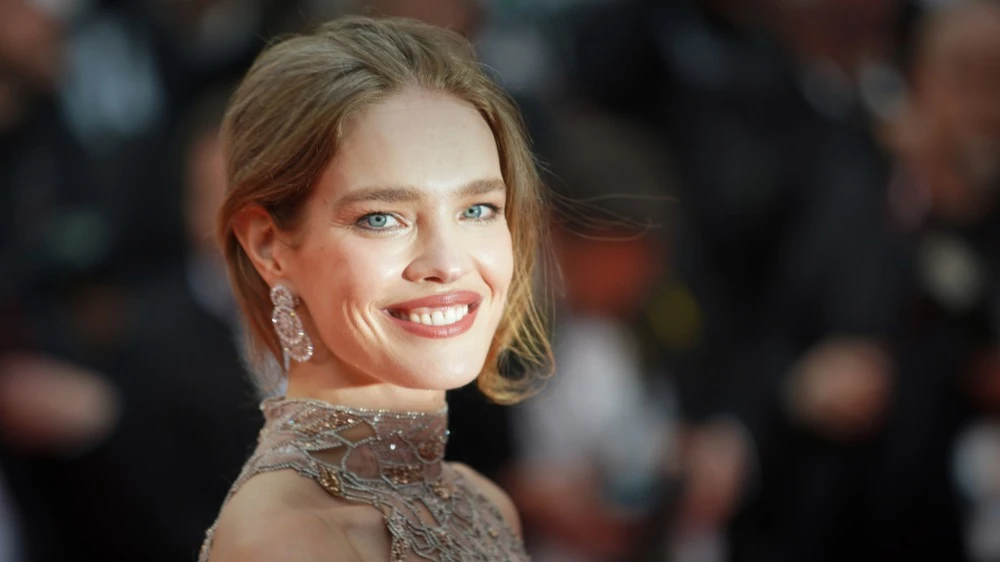
Supermodel Natalia Vodianova has joined Higgsfield's roster of investors and has also been appointed as an advisor to the company. Photo: Denis Makarenko / Shutterstock.com
The week brought several notable stories for investors: breakthroughs in biotech, Unitree’s record-breaking debut, and a new funding round for Higgsfield. At the same time, rising Treasury yields weighed on tech stocks, and U.S. national debt surpassed $40 trillion for the first time.
Good news
Moderna conductedsuccessful trials of a cancer vaccine. Its stock soared 120%. However, this isn't great news for short sellers: Moderna's stock surge resulted in $5.5 billion in losses.
Roman Kutuzov wrote about yet another medical breakthrough: a substance has been discovered that may be able to treat ADHD and depression—and definitely treats narcolepsy, also known as pathological sleepiness. Analysts are confident that the market for such drugs will only continue to grow. Who should we keep an eye on in this race?
By the way, Andrei Doronichev, a former top manager at Google and co-founder of Bioptic, also spoke to us about promising biotech companies. His startup focuses on accelerating and automating the development of new drugs using artificial intelligence. Yulia Petrova spoke with Andrei Doronichev about the future of AI-driven pharmaceuticals (and much more).
Bad news
U.S. national debt has exceeded $40 trillion.
The main risk is not the record-high amount itself, but the rising cost of servicing it. Treasury yields are at multi-year highs, interest expenses in the budget are rising, and the increasing debt burden could force investors to demand an even higher premium for U.S. debt. Albert Fakhrutdinov examined how this vicious cycle threatens the economy and the markets.
High Treasury yields have already taken a toll on stocks. When yields on long-term Treasuries rose to multi-year highs, investors began selling tech stocks. Micron fell 4.8%, AMD fell 5%, Nvidia fell 2%, and the Nasdaq dropped 1.2%.
Independent expert groups have already called on the government to develop measures to stabilize the debt-to-GDP ratio. CRFB Director Maya McGinnis warned that the issue should not be put off indefinitely: “No one knows how many more debt milestones America can withstand.”
What else interesting happened this week?
The Chinese company Unitree Robotics made its debut on the Shanghai Stock Exchange: its shares soared 460%—at the peak of the day’s trading, the growth rate exceeded 600%. The company raised more than $900 million, and Unitree Robotics CEO Wang Xingxin’s net worth grew nearly 20-fold—to $20.6 billion. He plans to distribute approximately $6.5 billion of that amount to the company’s employees. You can check out Unitree’s robots and learn more about the company’s investment details on our Instagram.
Higgsfield, a Kazakhstani AI startup that uses artificial intelligence to create videos, has raised $400 million to develop its service. The company was valued at $5.4 billion; investors included DST Global, Goldman Sachs, Liberty Global, and Intel—as well as supermodel Natalia Vodianova. Vodianova has been appointed an advisor at Higgsfield, where she will focus on social projects. The company gained fame after the Cannes Film Festival, where it presented the sci-fi action film *Hell Grind*, created entirely by artificial intelligence. The startup’s corporate clients include 390 companies from the Fortune 500 list. AI startup founder Alexander Mashrabov’s stake in Higgsfield may be as high as 20%. Given the company’s valuation of $5.4 billion, Mashrabov is likely to join the Forbes list of billionaires.
Nasdaq plans to launch night sessions: trading on the exchange will be available 23 hours a day. This is good news for international investors: access to the market will become easier. However, trade execution quality during nighttime hours may be poorer due to low liquidity, wider spreads, and sharp price movements.
About Financial Fraud
News stories about fraud, money laundering, and market manipulation appear almost every day. But behind the large sums of money, sensational headlines, and court cases, it’s not always clear how these schemes actually work (or why they manage to stay hidden for so long!).
Mikhail Tegin spoke with Mark Beranzoni, founder of FinCrime Agent and an expert with nearly 20 years of experience at major banks. In an exclusive interview, Beranzoni discussed how financial crime schemes are evolving, why banks don’t always manage to detect them, and whose side AI is on.
By the way, in the coming days we’ll be publishing a historical column about a businessman who pulled the wool over investors’ eyes for more than 20 years. In the 1930s, Ivar Krüger controlled 75% of the global match market, lent money to European governments—and built a massive Ponzi scheme on top of this very real and profitable business.
This article was AI-translated and verified by a human editor