'New leaders will rise from the ashes': An interview with Andrey Doronichev
The ex-Google executive and cofounder of Silicon Valley start-up Bioptic discusses AI, biotech, bubbles, and the firms that will power the economy moving forward
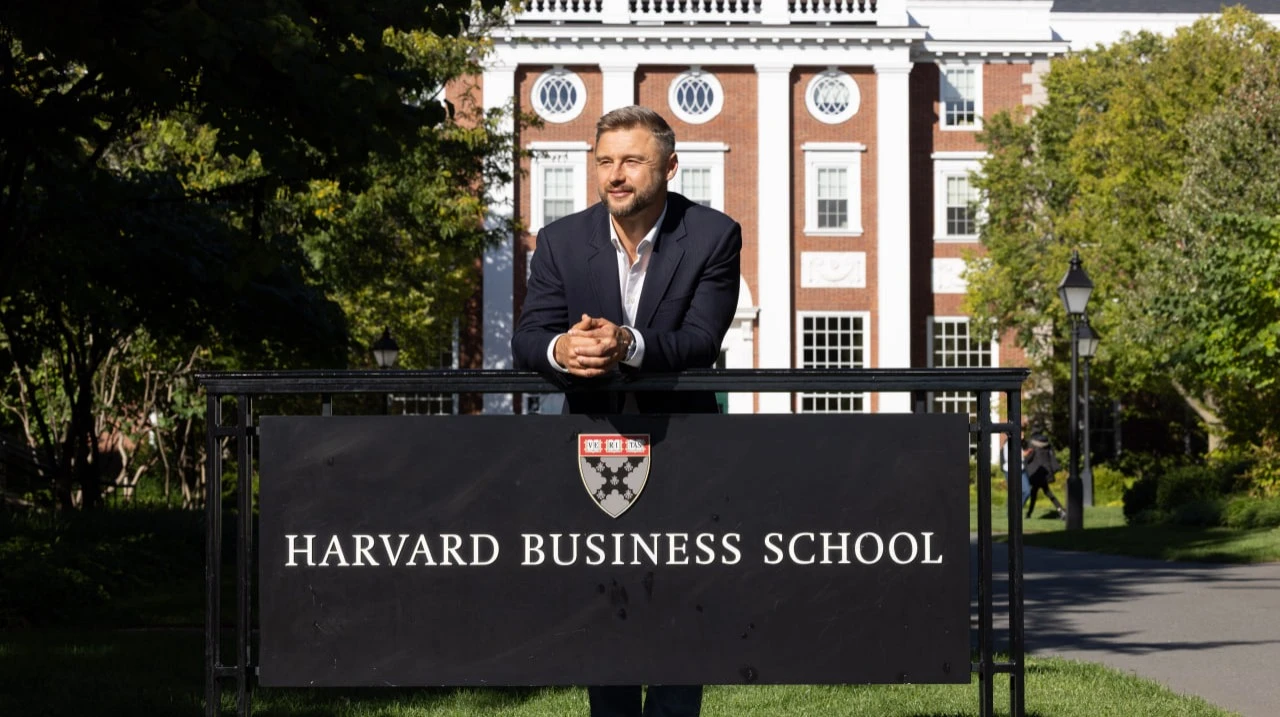
Photo: Evgenia Eliseeva / Andrei Doronichev's personal archive
Entrepreneur, venture capital investor, former Google executive, and now cofounder of Silicon Valley biotech start-up Bioptic Andrey Doronichev has published a book this summer called "A New Version: Change Yourself Without Betraying Yourself." Oninvest spoke with him about the book, investing, and the future of industries and companies supporting or applying AI.
On the new book: How to measure success and personal transformation
Do you expect to make money from your new book? How will you measure its success?
Thank you. When I sat down to write the book, I did not fully realize just how complicated everything would be. Finishing the manuscript is not the end of working on a book. You have to translate the finished text into other languages, print physical copies, set up distribution channels, and so on. All of that involves expenses, payments, and taxes. But I was pleasantly surprised by the sales. For example, just outside of the CIS countries, excluding the Russian-speaking segment, I have already sold 5,000 copies. So, financially speaking, I have basically broken even. I am glad I had this experience, but I do not think I will be ready to go through such a journey again anytime soon.
I believe the most important metric for this project is not money made, but rather how many people who read this book will take that first step and eventually discover a new version of themselves.
How does one measure the success of their own transformation? Are there qualitative or quantitative KPIs for each person?
A serious mistake many people make – and I am no exception – is that we often copy other [people’s] models of behavior and measures of success and begin following them doggedly. Instead, you need to listen to yourself, understand your own desires and goals, and use that knowledge to devise your own starting framework and establish your own metrics. That is exactly what I write about in the book. So whatever personal KPIs I might name, they would be bad advice for others.
What questions have you attempted to answer in the book?
Over the last year, many people have told me or written to me about the anxiety caused by the spread of AI and its impact on their lives and professions. In addition, after the start of Russia’s war with Ukraine, my readers from both countries found themselves forced to emigrate. Throughout this period, they shared their stories and asked essentially the same questions: “what should I do?”, “how can I reinvent myself in this new life?” I tried to answer these questions by inviting readers to treat themselves as a start-up and apply a structured product approach to their personal transformation.
On venture investing: How to pick a start-up and the right sectors
In the book, you write that you set yourself investment KPIs. The first was to learn how to pick start-ups and make investments in 25 companies. What is your record on that?
Yes. For example, I started investing in Coda, Grammarly, PandaDoc, Titan, Reface, and other start-ups. With the first 10 checks, I was just learning how to make angel investments and, by paying for other people’s mistakes with my own money, gaining experience in what not to do.
I was interested primarily in early-stage tech companies. Two things are important with them. The first is who the founders are and whether they have had projects before. If they are serial entrepreneurs, that means for their mistakes someone else has already footed the bill. The second thing is what problem they are solving by building the start-up.
There are different types of founders. There is the solution-driven founder – an entrepreneur who starts with a particular technology or idea; then there is the problem-driven founder – someone who tries to find a solution to a particular market problem. In my experience, the former are often good at doing only one thing or technology and are just trying to sell it. The latter often come from the industry in which they want to build their start-up and have firsthand knowledge of all its pain points.
I believe in problem-driven founders more than solution-driven founders: ideas, technologies, and solutions become obsolete quickly, but problems remain.
I assess how large a start-up’s market will be. If a start-up, even one with the best founder in the world, is tackling a small problem in a niche segment, it will not make much money. For me, that is just a waste of money and time. After all, angel investment is a bet for at least 10 years. But if a project aims to solve a problem in a vast market – for example, as we are doing at Bioptic in a $4 trillion industry – and achieves even a modest improvement in the efficiency of one function within this enormous machine, it will ultimately create billions of dollars in market capitalization.
What is the key start-up metric for you?
Probably the founders’ flexibility and adaptability. A start-up’s true success is measured not by how much venture money it has or how long that money will last if it receives no new investments, but by how many pivots (changes to the business idea) the founders have the resources to make.
Even if they have only a small financial cushion, if they can quickly and easily test another 3-4 new hypotheses, I believe they have a better chance of success than a slow-moving team that stubbornly keeps trying to break down a wall to prove that a single business idea is viable.
This philosophy comes from a personal experience. In 2022, after raising $11 million, we launched the AI lab Optic, which built a digital-fake detection service and got off to a strong start in the non-fungible token market. But in late 2022, FTX, one of the largest crypto exchanges, collapsed, dragging the entire crypto industry down with it. Then Silicon Valley Bank, Silicon Valley’s leading bank, collapsed. We had around $10 million there – almost all our money. It was time to look at new ideas. One of them gave rise to Bioptic, a platform for developing drugs with the help of AI.
By resources, do you mostly mean willpower?
It is rather a unique combination of qualities, like those of a martial arts fighter. A founder must simultaneously be as strong as stone and capable of instantly turning into water.
Do you advise start-ups in which you have invested?
Not always. For example, Shishir Mehrotra, a cofounder of the start-up formerly known as Coda and now called Superhuman, was himself my mentor at YouTube.
I usually help founders with the things I know how to do well. The first area is developing a product strategy. That is what I have worked on professionally throughout my career at Google and at my own companies. The second is corporate governance and the challenges of growth. Properly managing a team that has grown and allocating responsibilities is a painful process that not every start-up survives.
What other sectors besides early-stage tech start-ups do you consider for angel investments?
Biotech, medicine, and pharma. But the period of my life when I was primarily an angel investor is over. Since 2022, I have been a founder fully focused on my start-up and obsessively pursuing the goal I have set – to develop therapies for cancer.
On investing in the financial market: Idols and robots
Another investment goal you write about in the book was to build a portfolio that returns 10% a year. Did you achieve that?
Yes. Market conditions in recent years have made it possible to earn 10% and more. But we will see what happens over the long term.
How do you currently allocate your capital? What assets do you have in your portfolio?
The structure of my portfolio has changed significantly since I founded Optic. A huge concentration of my capital is now in the start-up. On paper, that stake is worth far more than all my liquid assets, but it is largely illiquid itself. All my risk is concentrated there as well.
As for the liquid part of my portfolio, I am an extremely conservative investor: I keep around 40% in real estate, another 40% in the financial market, 10% in my angel subportfolio, and 10% in cash and cash equivalents, such as T-bills and deposits. Of the portion invested in the financial market, around 70% is in stocks and 30% in bonds, although that proportion is becoming riskier.
Which sectors and public companies do you watch?
I personally watch pharma and tech firms because those are the stories that interest me most. But my portfolio is not concentrated in the sectors that interest me. On the contrary, it is highly diversified and, I would even say, spread throughout the market. It is hard to list the companies in the portfolio because it is managed by a robot that rebalances it daily.
Do you trust robo-advisors?
Yes, much more than I trust people. First, people in the financial market, even professionals, often act spontaneously and emotionally, sometimes making decisions that have no mathematical justification. A robot manager is at least immune to those kinds of mistakes.
Second, active trading in the financial market is ultimately a lottery. Imagine gathering the world’s best traders in one place – say, 40,000 people in a single stadium. A referee flips a coin an agreed number of times, and the traders place bets. The choice is simple: heads or tails. Half of them lose after the first toss. This continues until only a few remain who happened to guess every toss correctly. They leave the stadium and begin writing books, giving interviews, and explaining how some idea or system led to their victory, even though the outcome was actually determined by a series of random events.
I graduated from the Haas School of Business of the University of California Berkely. One of the professors who taught economics there – I will not name him – once admitted to us, his students, that he did not have much faith in the ability to beat the market, to guess the perfect time to buy or sell a security consistently. He therefore chose a different solution for himself: tracking the market by investing in indexes.
My strategy is similar. I prefer to invest actively in a start-up because I can influence the situation there and bring success closer through my own actions. In the financial market, I am more or less passive.
Does that mean you have no idols in the investing world?
Not in the financial market. In investing generally, I would say an idol is Naval Ravikant, a U.S. investor and the founder of AngelList. AngelList is a platform that revolutionized the venture market, allowing start-ups to find their first angel investors through a kind of venture marketplace. Ravikant saw the potential of Uber, Twitter, and other successful start-ups and invested in them at an early stage. He made a fortune and became a guru to many people in Silicon Valley. I think any start-up would dream of having him as one of its main investors. Some people may find his ideas controversial, but I share much of his philosophy on wealth and happiness.
On biotech: The limits of AI, Big Pharma as an investment bank, and the search for cancer therapies
Bioptic’s AI agents are searching for molecules that could be developed into cancer drugs. How complete, free of “noise,” and accessible is the cancer data humanity has accumulated?
All the data humanity has accumulated on cancer, as well as on any other subject, is inherently dirty, noisy, and inconsistent. Sometimes it is simply the result of trial and error by scientists testing hypotheses. Sometimes it is outright falsification. For example, when researchers “tweak” results so they better “fit” a flawed theory. Meanwhile, the results of millions of failed experiments have disappeared altogether – few people want to share their failures with the world.
So everything we have now partly owes to survivorship bias.
At Bioptic, we are building neural networks that can work with “garbage,” “noise,” and inconsistency. They learn to generalize the available data and transfer identified patterns from one domain of knowledge to another, like the human brain. Overall, the ability to generalize was a breakthrough moment for large language models.
But specifically in chemistry and biology, there has not yet been a breakthrough in neural networks’ ability to generalize knowledge and use it to generate new knowledge.
Even AlphaFold, Google DeepMind’s neural network-based program, is good at generalizing only things it has already encountered. When it encounters unfamiliar protein structures, its ability to generalize declines severalfold.
Why? Let me give you an example. For GPT-3, ChatGPT’s predecessor, to learn to generalize, its training data set contained around 1 trillion tokens. In chemistry and biology, the training data set is only around 20 million tokens. That is how much data we are lacking!
Adding a single data point to a molecular data set means conducting an experiment that costs at least $50,000. Projects like these should therefore be undertaken either by companies with bottomless budgets, by state-funded institutions, or by large foundations such as the Chan Zuckerberg Initiative of Mark Zuckerberg and Priscilla Chan. It is currently building a global network of Biohub laboratories and using AI to try to create digital twins of human cells and proteins, allowing some clinical trials to be moved from laboratories to computers.
Otherwise, we will see cases like Recursion, whose AI learned to find candidate molecules for treating orphan diseases, but the resulting drug failed during human trials. Investors then accused the company of burning through enormous amounts of cash, which caused its stock to plummet and prompted a change in the company’s business model.
How much time and investment do you think will be needed to teach chemistry and biology models to generalize?
A great deal. But what is really needed is a couple of real scientific or technological breakthroughs.
Imagine you have a magic wand. What breakthrough would you bring about?
I would learn how to simulate human clinical trials in their entirety. Science has not come anywhere close to that yet. The frontier of biology is the simulation of a single human cell. Even that is considered science fiction by many people, although I am optimistic.
But there are hundreds of problems in the pharma sector that can already be solved without a magic wand. For example, there are still no drugs for around 10,000 diseases, even though dozens of teams have worked on developing them at different times. They collected data, tested hypotheses, and published papers but, for various reasons, were unable to proceed further. A lack of funding is not the only thing that can kill a project. Sometimes everything can grind to a halt because of plain inefficiency by the team or legal delays. There are actually hundreds or thousands of these cases.
Our models at Bioptic help pharma giants find these promising studies and therapeutic developments and acquire them from their creators so the work of others can be put through the mill of clinical trials and regulatory reviews.
Of course, we are still picking the low-hanging fruit. But ridding science and the pharma sector of inefficiency is already a major step that will allow patients to obtain the drugs they need sooner, make treatment cheaper, and save hundreds of lives.
When will the first cancer drug created entirely by AI come out?
If we are talking strictly about an AI-native drug, where AI independently identified the target, generated the candidate molecule, and even wrote the clinical trial protocols, you cannot buy one at a pharmacy yet. Clinical trials take many years. The molecules now approaching the end of phase III trials were generated by the first neural networks back in 2015-2017.
Insilico Medicine has a chance to be the first company to release a fully AI-native drug. Its therapy for idiopathic pulmonary fibrosis started phase III patient trials in July.
This is the biggest AI story in the pharma market. If they succeed, I will applaud them. But Big Pharma is also completing phase III trials of its AI-native drugs and preparing to submit results to the U.S. Food and Drug Administration. So we will not have to wait long – only a few years.
How has Big Pharma’s attitude toward AI start-ups like Bioptic changed? For you, are they competitors or partners?
Big Pharma has changed. Pharma giants have finally acknowledged that they are not tech companies or pioneering scientists, and they have cut R&D spending.
They now act like investment banks, looking for biotech start-ups to merge with, acquire, or buy the rights to products from.
Big Pharma now grows primarily by providing millions of dollars in funding and access to the largest markets for externally made innovations. Pharma giants are willing to work independently only on an extremely lucrative blockbuster drug with annual sales potential above $1 billion, for example, on something like Ozempic. If a drug’s potential is below $1 billion, it is easier for them to wait for start-ups to do most of the work. So pharma giants are now more like partners for biotech firms, assuming the functions of a clinical back office, regulatory lobby, and global distributor.
In AI, Bioptic is inevitably emerging as a competitor to AI giants such as OpenAI and Perplexity. How do you think this competition will play out?
They have ambitions in scientific AI and enormous budgets. It is hard for us to compete with them on capital-intensive projects. But this market also offers many opportunities for start-ups. At Bioptic, we have built perhaps the best agent for finding drugs at every stage of development. Large pharma companies came to us for this instead of OpenAI or Anthropic.
Here is another real-world example. Google was and remains the undisputed leader for internet search. But there have also been vertical search engines such as Kayak, which was designed for travel planning, and Expedia, a full-fledged trip planner. They have always beaten Google on their own turf. There is nothing stopping a biotech start-up from finding a highly specialized but sufficiently large market segment and becoming the leader there.
Which companies in biotech and pharma do you watch?
Among European companies, I watch Cradle.bio, which uses generative AI to develop software for protein engineering and programming. LabGenius, which generates data for molecular biology, is also interesting. Chai Discovery, which creates AI models for computer-aided drug design and programming molecules from scratch, is on everyone’s radar. I admire what Insilico Medicine is doing, and I closely wacth Google’s “behemoth,” Isomorphic Labs, which works with AlphaFold.
How do venture capitalists view AI pharma? Are they willing to provide money and wait a long time for returns? How difficult was it for Bioptic to raise its first venture capital?
How does a seed round usually work for a tech company? The lead investor buys 10% of the start-up, while 90% remains with the founder. In each subsequent round, the founder gives up another 10-20% of the company. Multimillion-dollar checks are written for a great idea. The investor’s logic is simple: I will invest in four companies; three will fail, but one will turn out to be a unicorn and return everything the others did not.
Biotech is different. It is not uncommon for an investor to receive 95% of a company in the very first round because this is an extremely capital-intensive space: you need a laboratory, materials, and clinical trials, and financial returns take years. Investors are willing to wait after acquiring substantial control over the business. We raised our first $11 million round as a tech company.
Will you seek another round?
We are raising a new round right now, and it is very tough going. We are a start-up focused on problems at the intersection of AI and pharma. If we approach funds that invest in the tech sector, they start comparing us with every other AI start-up, for example, those that use AI to generate content and will earn their first $1 million in three months. Biotech investors, meanwhile, meticulously examine how many publications and molecules you have. No matter what, investment committee meetings will not be easy for us.
Will you approach the investors who participated in your last round?
We now need a new lead investor with pharma expertise who can help us grow, open the right doors, and attract major clients from the industry.
So you are ready to give up 95% of the company?
No. We will look for a compromise.
Are you considering an IPO scenario for the future?
Yes, we are keeping that scenario in mind. An IPO is a good way to make stock liquid.
What advice would you give retail investors in public AI biotech who want to invest for the long term?
The most important thing is to understand that biotech is fundamental science, which by definition involves enormous risk. A huge number of biotech firms will never be commercially successful. Moreover, the AI industry in medicine is still too young and is changing rapidly. In this market, you must be prepared to play the long game and take tactical losses. But if you are just throwing money at stocks that catch your eye, like chips on a casino table, and banking on good luck, you are better off looking at other spaces. Blind luck almost never works out in AI biotech.
On AI: The AI bubble, where to get more energy, and microchips
You talk a lot about the future of AI in your interviews. Will technological progress be halted by a simple lack of electricity?
Technological progress will not stop completely because of the energy shortage, of course. More than one bottleneck will certainly emerge along the way. In fact, the AI industry is already facing a shortage of grid capacity. Power companies were unprepared for the speed at which the AI sector is developing. I think that if we want to accelerate progress without overheating the planet, we need to restart nuclear power projects. Nuclear is undergoing a renaissance around the world. Countries are restarting old nuclear reactors.
Are chips approaching their physical limit? Which microelectronics technologies could push that limit further?
In recent decades, the computing industry has grown primarily by shrinking transistors and placing ever more of them on a single chip. Today, this route is increasingly difficult and expensive: individual transistor components are approaching the size of atoms, with leakage, heat, and quantum tunneling limiting further size reductions.
Scaling has not stopped, but growth in computing power is being driven more and more by new transistor architectures, three-dimensional packaging, chiplets, and specialized processors. A good example of such a specialized chip is an ASIC (application-specific integrated circuit) designed specifically to operate neural networks. In short, the growth potential for microelectronics through hardware-software optimization is now truly enormous.
Will markets face a new global crisis if investors begin demanding rapid returns from AI start-ups?
The market is currently being fueled by extraordinary expectations for the AI transformation. People caught up in this kind of frenzy behave predictably. Consider the internet bubble. It inflated in exactly the same way. Does that mean we should not have developed the internet? The internet is a technology that transformed how humanity lives. We work, study, communicate, and meet people online. But the dot-com bubble was caused by the irrational behavior of investors who manically poured money into anything labeled “internet.”
AI is a technology leading us toward a new transformation. But I see no grounds for a global crisis in the technology itself.
Its progress could perhaps be slowed by suffocating regulation, stopped only by military conflicts on a global scale. But the financial bubble around AI could indeed burst.
Many equity investors in AI have already been through multiple crashes this year. What would you say to them?
Markets will inevitably adjust their expectations for AI. A global crash will happen sooner or later – that is a medical fact. But let’s separate the wheat from the chaff.
The reactions of investors and the development of the technology are not correlated. The inflation of a financial bubble does not mean there is an inflating technological bubble.
A great many companies will leave the market because of the crash. But new leaders will rise from the ashes. We have already brought up the dot-com crash – today’s largest and fastest-growing companies, including Google, Amazon, and Facebook, emerged from it. The same thing will happen again: a huge number of pointless companies will be washed away, while those that survive and grow in the aftermath will power the economy for decades to come.