U.S. October inflation comes in hot. How will this affect the December Fed decision?
The October CPI report included no year-over-year reading because a U.S. government shutdown halted data collection last year

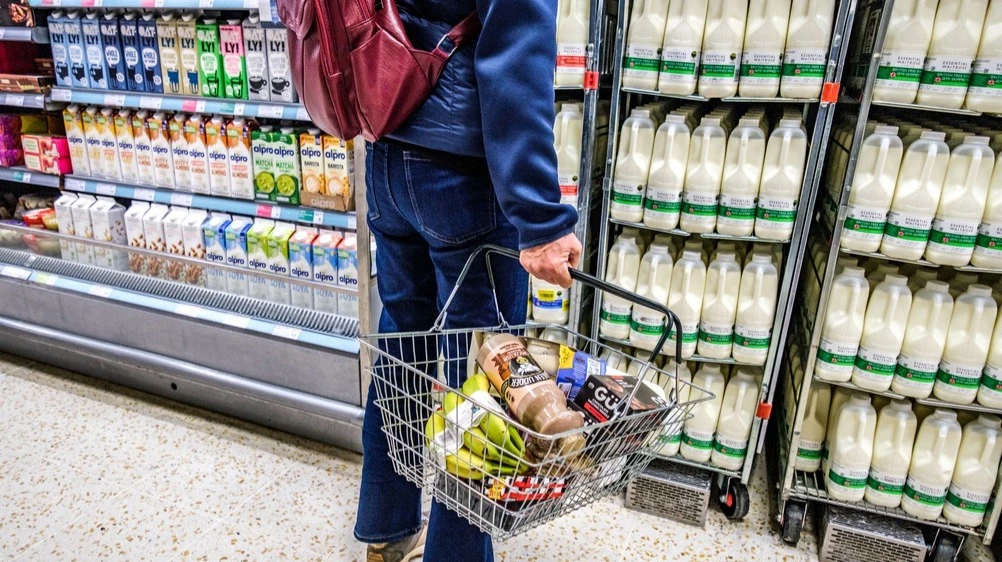
The core U.S. consumer price index rose 0.3% in October / Photo: Richard M Lee / Shutterstock
The U.S. consumer price index rose 0.4% month over month in October, the U.S. Bureau of Labor Statistics reported. That exceeded the 0.3% increase ING analysts had forecast. Still, price growth slowed from 0.6% in September.
The core CPI, which excludes volatile food and energy prices, was up 0.3% in October, also above the consensus forecast of 0.2%, CNBC reports. The 0.3% core increase was the same as in September.
The bureau omitted year-over-year figures because last autumn’s government shutdown prevented it from collecting data for October 2025. Annual consumer inflation jumped to 3.7% in September, and economists saw no reason to expect it to ease in October even if the monthly increase was smaller, Reuters reports. Inflation remains well above the Fed’s 2% target.
The gap in last year’s CPI data does not affect the calculation of the personal consumption expenditures price index, which the Fed tracks to gauge progress toward its inflation target. Both headline and core PCE inflation are running above 3%, Reuters notes.
Market reaction
With 20 minutes to go before U.S. markets opened, S&P 500 futures were down 0.7%, Nasdaq 100 futures were off 1.1%, and Dow Jones Industrial Average futures gad slipped 0.2%.
Treasury yields jumped on the inflation numbers. The two-year yield added about 17 basis points to reach an intraday high before paring the uptick slightly. The 10-year yield was up 9 basis points, hovering around 4.96%.
What to expect from the Fed
October’s CPI print all but sealed a rate hike at the Fed’s December meeting, with the size of the move still in question, Bloomberg reports. Traders put the odds of a 25-basis-point increase, to a range of 4.00-4.25%, at 89%, with an 11% chance of a 50-basis-point hike, according to CME FedWatch. Markets are no longer pricing in any chance that the Fed will leave rates unchanged.
Fed Governor Christopher Waller said Tuesday that a December rate hike was likely and raised the possibility of a half-percentage-point increase, CNBC reports. “While the precise timing of the hikes doesn’t matter, ensuring that the promised hikes are implemented in a reasonable period of time does,” Waller said.
“The higher-than-expected CPI print across the board puts Waller’s 50-bp December on the table, so the knee-jerk bear flattening not a big surprise. We think the curve will continue to flatten until such time the Fed stops. If it does go 50 bps in December, we think the odds they finish with a March increase is extremely high,” said Ira Jersey, chief U.S. rates strategist at Bloomberg Intelligence. The Fed has two more decisions before March, in December and January.
“The main risk for Fed officials not following through on a December rate hike would be a further substantial correction in equity markets or widening credit spreads,” Citigroup economist Veronica Clark told Reuters before the CPI release.