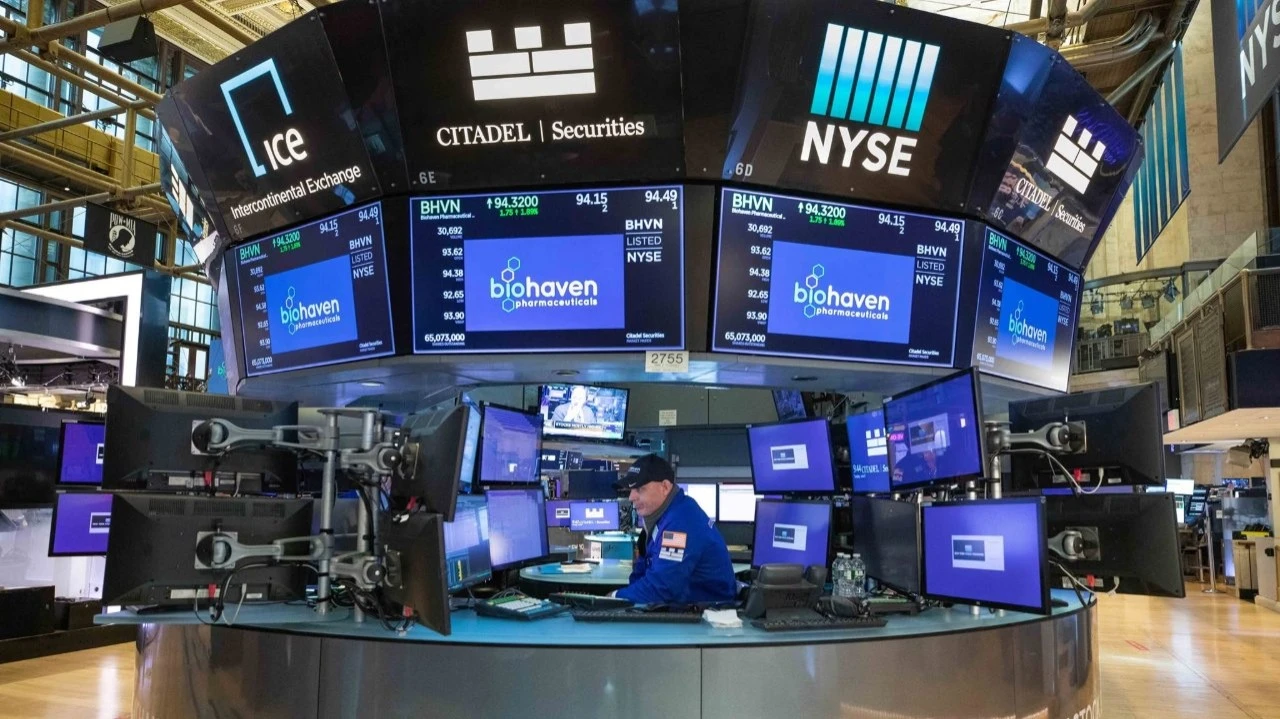
Space stocks are outperforming the market. What does Goldman Sachs expect from the sector?
As in the artificial intelligence sector, the winners will include not only the direct operators of space launches, but also suppliers of equipment, components, and communications


Goldman Sachs' basket of space stocks has returned more than 360% over two years / Photo: X / SpaceX
Space stocks are outperforming the broader U.S. stock market: since the start of the year, Goldman Sachs’ thematic portfolio has gained about 13%, compared with 9.8% for the S&P 500 index. Goldman Sachs analysts believe this sector is poised for a capital rotation similar to the one that occurred in the artificial intelligence segment: that is, long-term potential may lie not only with launch service providers, but also with companies that provide satellite communications, defense solutions, and the manufacture of equipment and components.
Space Stocks: From Speculation to Growth
Until 2025, the space sector was viewed primarily as a speculative sector, and its stocks performed much like those of companies working with breakthrough technologies, according to Goldman Sachs. But now the situation has changed.
“Over the past year, this sector has outperformed the market amid growing attention to key areas of the space industry: rocket launches, satellites, and global communications. In addition, investors have recognized the potential of future markets that these technologies will help create,” says Louis Miller, head of the custom stock portfolio division at Goldman Sachs.

Stocks in the sector surged amid the buzz surrounding SpaceX’s IPO. In addition, media coverage is fueling interest in the space and satellite industry: according to Miller, the intensity of news coverage on the topic has more than doubled since the beginning of the year. The rally has swept up companies from various segments of the industry—from satellite manufacturers and orbital broadband operators to companies engaged in space exploration.
Over the past two years, the rally in space companies has yielded returns of more than 360% for investors. However, according to the bank’s analysts, this sector is characterized by extremely sharp fluctuations: the index is about five times more volatile than the broader market.
Where Should Investors Look for Space-Age “Pickaxes and Shovels”?
Goldman Sachs sees investment opportunities across the entire space industry ecosystem and supply chain.
"Investors who focus exclusively on launch service providers may be overlooking a significant portion of the opportunities available in the market."

Revenue growth for space companies will be driven by the expansion of the market for services built on space infrastructure, according to analysts at an investment bank. For some companies, this process has already begun: sales are growing thanks to U.S. government defense contracts for satellite imagery and communications, as well as for drones and sensors.
Other initiatives are still in the early stages. Starlink is developing broadband connectivity from orbit, and SpaceX plans to build orbital data centers. Investors are watching to see whether these projects will become new sources of revenue for the sector.
Companies across the entire space industry ecosystem and supply chain—including communications infrastructure operators, manufacturers of semiconductors, electronics, software, and advanced materials, as well as industrial enterprises—may be of interest to investors.
“The greatest long-term potential lies in identifying the ‘pick-and-shovel’ companies that make the commercialization of these technologies possible,” Miller says. “Remember how AI investors shifted en masse from model developers to infrastructure beneficiaries—semiconductors, power grids, and data centers. In the space market, we can expect a similar shift in capital toward related industries and suppliers.”

The Economics of the Space Basket
According to Goldman Sachs analysts, the weighted net loss for the space and satellite sector fell from $200 million in 2023 to approximately $90 million in 2025 and is expected to be around $80 million in 2026. In 2027, the figure is expected to turn positive and reach $200 million in 2028.
“The long-term outlook looks extremely promising,” says Miller, “but investor enthusiasm will at times outpace the fundamentals. As a result, market performance will be uneven, even if the overall structural trend remains positive.”

This article was AI-translated and verified by a human editor