Wall Street warned against buying back U.S. stocks on the downturn because of the threat of $100 oil
The risk of oil price rise to $100 per barrel is now considered real even by stock "bulls", notes Bloomberg


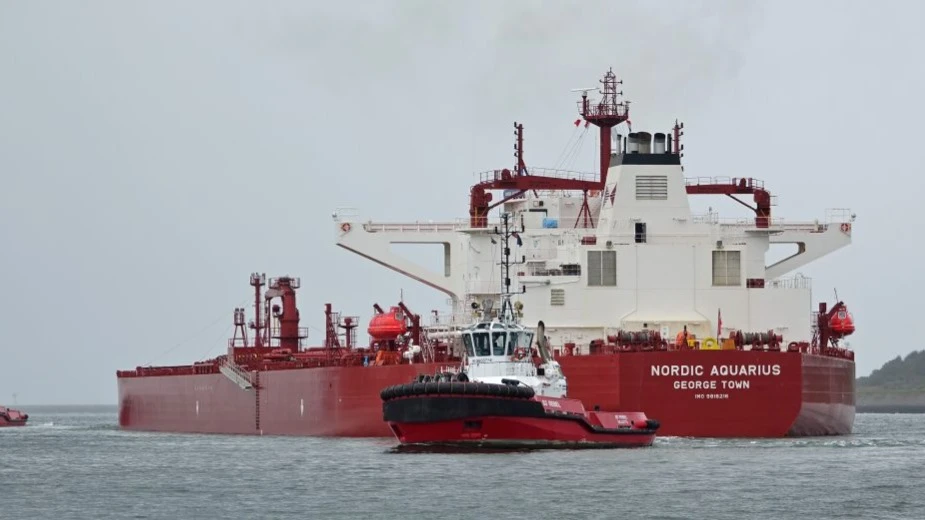
Oil at $100 per barrel and above has historically led to the collapse of U.S. stocks / Photo: X/NYSE
Investors' desire to buy out drawdowns in U.S. stocks after the escalation of the conflict in the Middle East may prove to be an unjustifiably bold move because of the real risks of oil prices soaring to triple digits, Wall Street and Bloomberg analysts warned. A protracted conflict with Iran is capable of raising the cost of a barrel to $100, which has historically led to a decline in the U.S. stock market.
Details
Although a jump in oil prices to $100 per barrel is not currently the consensus forecast among oil analysts, it is a risk that stock bulls are now taking into account, Bloomberg writes. A prolonged surge in energy costs could jeopardize the main driver of the U.S. economy - consumer demand.
In addition, oil above $100 could trigger a new round of inflation and lead the U.S. Federal Reserve to raise interest rates, slowing economic growth, the agency warned. "Inflation concerns could start to boil over if there is an extended period of high oil prices," Freedom Capital Markets chief global strategist Jay Woods wrote to clients. That would be a "colossal and unexpected tax" on consumers, he said - a problem the Fed has absolutely no reason to face amid pressure from the U.S. president to cut rates.
When oil prices exceeded $100 a barrel, they created problems for the U.S. stock market: since 1983, the benchmark S&P 500 stock index has fallen an average of 1.6 percent per year following periods with oil over $100, Bloomberg analyst Nathaniel Welnhofer calculated. Oil at $100 and above is the only price segment at which there has historically been a subsequent stock market decline, he emphasized.
What other analysts are saying
Morgan Stanley also points to oil at $100, or a 75-100% year-over-year jump in oil prices, as a possible bearish scenario for the stock market. This scenario would be more likely if the U.S. economy was in the late stages of a macroeconomic cycle. However, "today we are in the early stage of the cycle as the recovery in corporate profits accelerates," stated Michael Wilson, an analyst at the bank.
The United States, thanks to its technological orientation and status as the largest oil producer, is better able to withstand global hydrocarbon price shocks than in past decades, says Joseph Brusuelas, chief analyst at RSM US. "In today's U.S. economy, oil price spikes do not pose the same significant downside risk to key indicators of economic growth or inflation as they did half a century ago," the expert said. In his opinion, Americans will start saving money no sooner than oil rises to $120-130.
Context
The announcement of Iran's closure of the Strait of Hormuz, the world's main oil artery, brings to mind the shocks experienced during the 1973 Arab oil embargo and the 1979 Islamic revolution. However, if the 1973 embargo led to a recession, as a result of which the S&P 500 collapsed by 29%, the second crisis was accompanied by an increase in the index by 11.3%, said analysts Bloomberg.
On the first day of trading after the start of the war in the Middle East, the drawdown in stocks was short-lived: after the opening of the U.S. exchanges, the S&P 500 fell by 1.2%, but recovered its losses by mid-day. At the beginning of trading on March 2, American oil WTI jumped by 12%, and benchmark Brent - by 13%. But both grades soon lost half of their gains. In the morning of March 3, WTI futures rose by 2% to $72.7 per barrel, while Brent contracts rose by 2.6% to $79.7.
US Defense Secretary Pete Hegseth has rejected the idea of an "endless" war with Iran. US President Donald Trump said that the military operation in the Middle East is "a little ahead of schedule", while earlier he believed it would last four to five weeks.
This article was AI-translated and verified by a human editor