'We're closer to the bottom': Fundstrat predicted the end of the decline in US equities amid the war
S&P 500 lost more than 5% in the first month of the war, Nasdaq Composite entered the correction zone

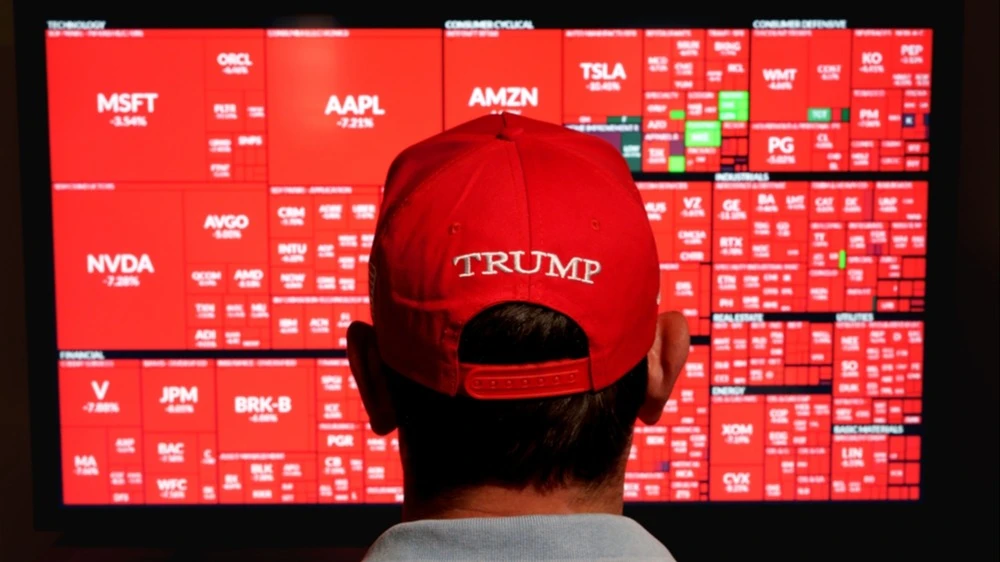
Equity markets are more likely to bottom at the beginning rather than the end of military conflicts, says Tom Lee of Fundstrat / Photo: Ascannio / Shutterstock
Stock markets are more likely to bottom at the beginning rather than the end of military conflicts, Fundstrat co-founder and head of research Tom Lee wrote in a note timed to coincide with the final trading session of the first quarter of 2026, MarketWatch writes. Right now, the strategist estimates that markets are "closer to the bottom" than "those making dire predictions" think.
Details
In the note in question, Lee cites the opinion of Fundstrat's head of technical strategy, Mark Newton, who noted that he estimates that for the broad index of American stocks, the S&P 500, a range between 6200 and 6300 (the index jumped 2.9% to 6528 points on March 31) would represent a low amid the military conflict in the Middle East. "Historically, sharp declines are followed by V-shaped recoveries," Lee writes.
The expert attributes his position to the fact that the U.S. economy, in his opinion, is ready to cope with the oil price of $100 per barrel - Lee's optimism is based on the assumption that the U.S. as a net exporter should benefit from some increase in oil prices. That said, the jump in oil prices would still have to be below historical levels, according to Lee's calculations. The highest nominal price for U.S. WTI oil was $144 per barrel (it was recorded in the summer of 2008). But with inflation up 53% since then, WTI would have to trade in a range of $220 to $240 per barrel to reach that same record in real terms, the analyst calculated. At the time of publication, WTI is trading at $100 a barrel. June Brent contracts are at $103.4.
In addition, the analyst continued, increased defense spending during wartime brings $20 billion to $30 billion to U.S. GDP each month, which should offset the impact of higher oil prices.
Also in favor of Lee's optimistic forecast speaks and indicator of the ratio of put-call options on shares (a technical indicator of market sentiment), indicates MarketWatch. According to the analyst's estimates, it now stands at 0.9, which corresponds to the value observed during the lows of April 2025 - after the administration of U.S. President Donald Trump announced a new tariff policy.
Thus, concludes Lee, "We have overcome 90-95% of this downturn [in the stock market]." "Looking ahead to April, we believe [the U.S. stock market] is closer to the bottom than those making gloomy predictions think," the strategist added.
What's in the markets
At the close of trading on March 31, the S&P 500 added 2.9% on the back of Trump's statements that the war in the Middle East could end in the next "two to three weeks". The S&P 500 lost more than 5% last month, which coincided with the start of the escalating conflict in the Middle East, marking the worst month for the index since 2022. Since the beginning of the year, the S&P 500 is down 4.63%. The Nasdaq Composite and Dow Jones, which entered the correction zone last week, lost 7.11% and 3.58% over the same period.
What other analysts are saying
Regardless of whether the U.S. withdraws from the conflict in the Middle East, Iran's closure of the Strait of Hormuz, which normally carries about 25% of the world's oil exports and a significant amount of LNG, remains an unresolved issue, Bloomberg writes, recalling that the waterway also transports a number of critical commodities, including fertilizer.
- The trading units of Goldman Sachs and JPMorgan Chase attributed the rebound in U.S. stocks on Tuesday, March 31, to extremely bearish positioning in the U.S. equity market before the end of the quarter rather than optimism about the war.
- "The impact of the Iran war has not yet been adequately factored into forecasts," said Lombard Odier Singapore strategist Homin Lee (quoted by Bloomberg).
- "Supply in the energy market is likely to remain tight for a few more weeks, if not months," observed Nick Ferres, chief investment officer at Vantage Point Asset Management in Singapore. "The [US] military buildup [in the Middle East] also suggests another phase of conflict lies ahead, possibly over the Easter weekend. We believe caution should be maintained," he warned (quoted by Bloomberg).
This article was AI-translated and verified by a human editor