Who will be the first penguin? Shipowners - on the return to the Strait of Hormuz

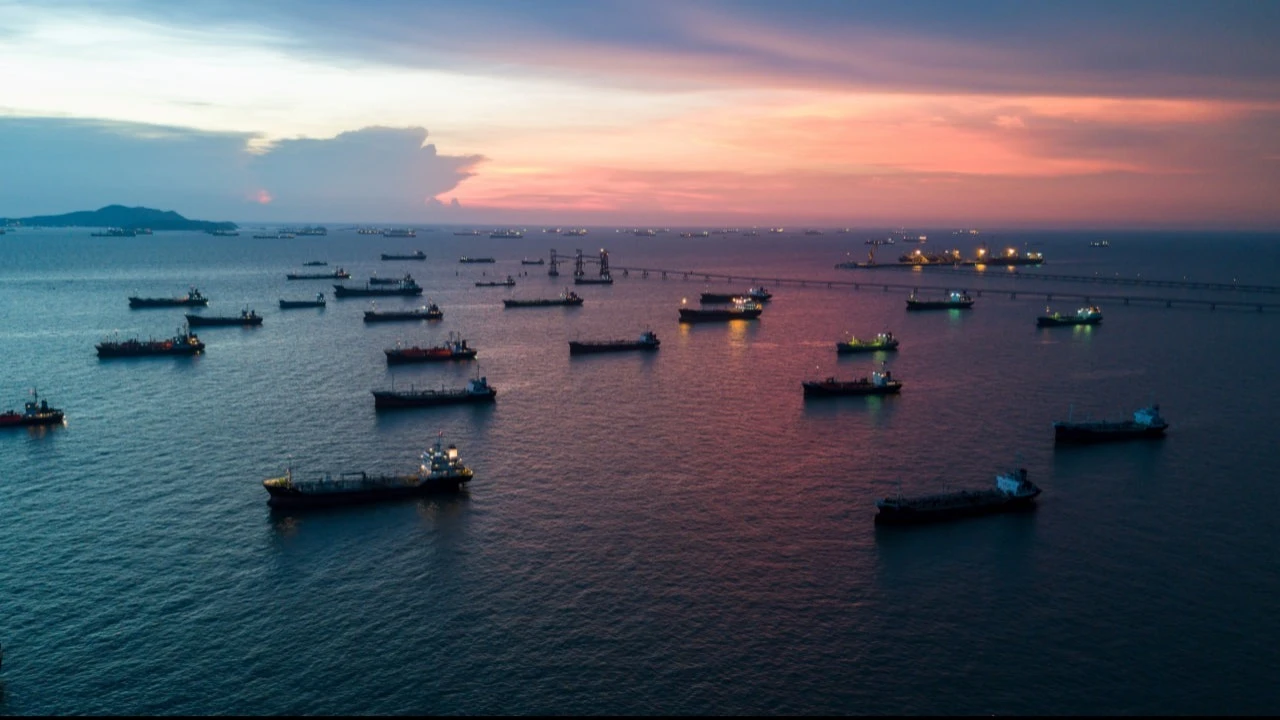
Photo: Darunrat Wongsuvan / Shutterstock.com
At least eight oil tankers began moving toward the Strait of Hormuz within hours after Iran said the key waterway was fully open to shipping during a cease-fire in Lebanon. This was evidenced by vessel tracking data compiled by Bloomberg.
That said, most are being cautious for now, as Tehran's statement does not contain all the necessary details, the agency reported. As the shipowners it interviewed noted, no one wants to be the first to check whether the route is indeed safe. "Would you be the first penguin to jump off an ice floe to test the water?" - said one.
Bloomberg sources familiar with the position of the region's major producers also expressed caution.
"The market will take it with guarded optimism rather than full confidence," said Farhad Patel, director of Sharaf Shipping Agency in Dubai. - While the move should help to partially restore vessel traffic and alleviate short-term pressure on energy flows, the situation remains tightly controlled and sensitive." Route restrictions, inspections and parallel controls mean it is too early to talk about a return to normal trading conditions, he said.
Another issue is insurance, Bloomberg reminds. Several shipowners said they are already ready to start negotiations on the cost of insurance for the passage through the Strait of Hormuz, while others will wait for lower prices to cover possible risks.
What are the risks
The situation that has developed around the Strait of Hormuz resembles the classic "chicken or egg" paradox, Bloomberg commented. Trump responded to Tehran's statement by warning that the U.S. will not lift the blockade on Iranian ports until "the deal with Iran is 100% complete." At the same time, according to the Iranian agency Fars, the authorities of this country directly link the opening of the strait with the end of the blockade: if it persists, Iran is ready to close the route again, as it will be considered a violation of the truce.
In addition, it follows from the statement of the Iranian Foreign Ministry that the passage of ships should be coordinated with the Islamic Revolutionary Guard Corps, draws the attention of Bloomberg.
The uncertainty also stems from fears of sea mines in the strait. As Trump wrote in a post on the Truth Social platform, Iran "with the help of the U.S. has removed or is removing" them. However, The New York Times previously reported that Tehran had failed to detect all the mines it had planted. Experts interviewed by Bloomberg previously predicted that the process of clearing the fairway could take about two weeks.
Jakob Larsen, safety director of BIMCO, the largest international shipping association, believes that President Trump's words about fully opening the Strait of Hormuz are "not true". "The status of the mine threat (...) remains unclear and BIMCO believes that shipping companies should consider avoiding the area," he said.
UK Maritime Trade Operations stated that "the regional security environment remains volatile, with ongoing military activity and a continuing threat to commercial shipping."
What the analysts are saying
"Shipowners need to gain confidence and [only] then send ships out en masse," Neil Crosby, head of research at Sparta Commodities, told Bloomberg, "It all takes time, and there's also the risk of a deal breaking down halfway through the strait.
Any potential agreement between Iran and the U.S. is likely to be limited and fragile, said Bloomberg Economics analysts Jennifer Welch and Adam Farrar. Disagreements over the management of the Strait of Hormuz, the future of Iran's nuclear program, and questions about Israeli involvement could be sources of friction between the parties to the conflict, they wrote.
What's up with oil prices
Oil prices collapsed by 10% after the announcement of the opening of the Strait of Hormuz. Brent futures fell below $90 for the first time since March 11, but then recovered some of their losses and are trading just above that mark. U.S. West Texas Intermediate costs a little more than $83.
There are at least 135 million barrels of oil and oil products on tankers stuck in the Persian Gulf, according to ship tracking data compiled by Bloomberg. Even if the strait is fully opened, it would take weeks for tankers to reach their destinations and months or years for oil and gas production to return to normal.
This article was AI-translated and verified by a human editor