Why Did Kazatomprom Increase Production and Decrease Sales?

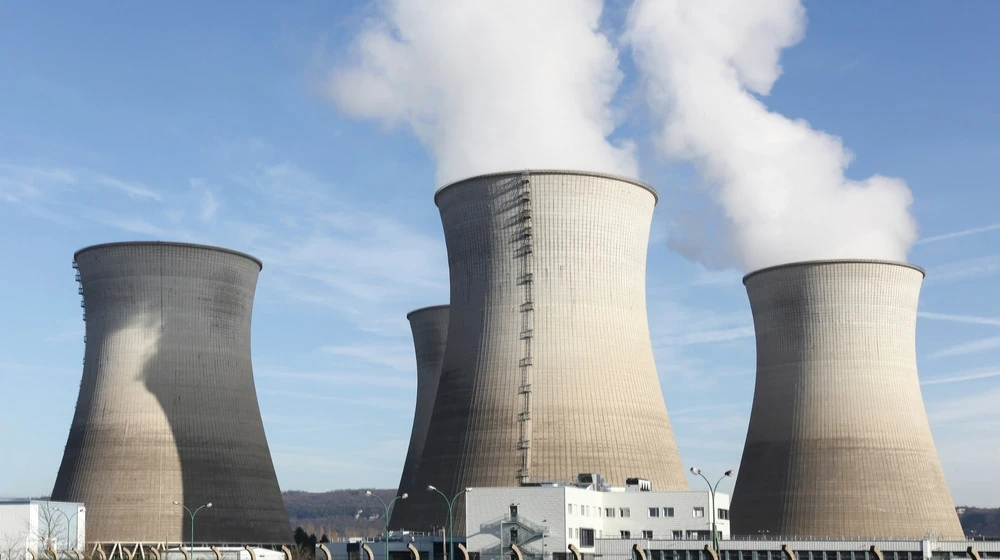
Investors in Kazatomprom are hoping for a resumption of growth in uranium prices. Photo: Shutterstock.com
"The National Nuclear Company 'Kazatomprom' has published its operating results for the second quarter and the first half of 2026. During the first half of the year, the Group produced 13,29 thousand metric tons of uranium, a 9% increase compared to the same period last year. Of this total, Kazatomprom’s share, calculated in proportion to its equity stake, amounted to 7.05 thousand metric tons, representing a 10% increase.”
The group of companies includes 14 mining and 6 processing enterprises with various shareholders, including CGN and other Chinese state-owned entities, Rosatom/Uranium One, France’s Orano, Canada’s Cameco, Japan’s Sumitomo, Kansai Electric, and Energy Asia, as well as several Kazakhstani companies.
Sales for the Group as a whole declined by 1% to 7.59 thousand metric tons. The main decline occurred in the first quarter, while the second quarter, on the contrary, saw relative growth of 19% to 5.07 thousand metric tons. As for Kazatomprom’s share, sales performance was weaker: over the first half of the year, they fell by 13% to 6,990 metric tons, while growth in the second quarter amounted to only 3% (4,430 metric tons).
“The difference in sales volumes is primarily due to the timing of customer orders rather than structural changes in the portfolio,” - the company reported, noting that sales volumes are in line with the same period last year, “which indicates overall stability in operating metrics.”
Inventory that was not sold in the first quarter was carried forward to subsequent periods, and all of the company’s full-year forecasts remained unchanged, Freedom analysts wrote in their first-quarter report.
Details
The decline in sales was largely offset by year-over-year price increases. Spot prices for truran octaoxide rose by an average of 25% in the first half of the year—from $69.38 to $86.83 per pound. “The 25% increase in the spot price during the reporting period contributed to a 16% and 13% rise in the Group’s and KAP’s average selling prices, respectively, compared to the same period in 2025,” the company said in a statement. However, the current sales portfolio includes long-term contracts that are linked to spot prices but incorporate “fixed-price elements.” The Group’s average selling price for the half-year was $67.88 per pound, while Kazatomprom’s average prices were lower at $64.51.
Overall, the company notes that in the uranium market, quarterly results and quarterly performance trends are not indicative of full-year expectations. The market reacted positively to the report: yesterday on the LSE, Kazatomprom’s GDRs reached $68.1, but by the end of the day had fallen to $67.2, with a daily gain of 6.16%. On the KASE, the company’s shares rose to 32,217 tenge but closed the day at 32,173.98 tenge, up 0.94%.
According to Oninvest.com’s calculations, based on data published by the company, it appears that, for the group as a whole, revenue from sales of uranium ore in the first half of 2026 totaled $1.34 billion, a 15.4% increase compared to the first half of 2025, with the bulk of the growth occurring in the second quarter—sales there rose from $794.9 million to $1.11 billion, or 40.1%. However, for Kazatomprom itself, quarterly growth amounted to only 16.6% to $787.3 million, and for the first half of the year, sales actually declined by 1.9% to $1.02 billion.
"Kazatomprom" is a state-owned company; 63% of its shares are owned by the "Samruk-Kazyna" sovereign wealth fund, with an additional 12% managed by the fund but held on the balance sheet of the Ministry of Finance of Kazakhstan, and 25% of the shares in free float.
Context
The volatility of spot uranium prices is one of the industry’s challenges. In early 2026, they surged above $101 per pound—prompting optimistic forecasts from investment bankers. Consequently, Kazatomprom’s stock prices also soared: while its GDRs on the London Stock Exchange (LSE) were trading at $51 at the end of December, their price reached $86 by the end of January.
But then uranium prices fell just as sharply, and since March have remained stuck within a narrow range of $83.5–87 per pound. By Ma, Kazatomprom’s certificates, which had peaked at $91.2, had fallen sharply to $70, and then, after a slight rebound, began a steady decline, falling to $62.5 by the end of June.
Nevertheless, for example, Bank of America included Kazatomprom’s securities in its latest quarterly “Top 10 Investment Ideas” list as early as the beginning of July
with a target price of $100. In their commentary, the investment bankers noted that they expect the average price of uranium to be $105 per pound in 2026.
This article was AI-translated and verified by a human editor