A Focus on Kazakhstan, Copper, and Low Costs: Why Analysts Have Faith in Arras Minerals
According to a forecast by Hannam & Partners Research, the company's stock could rise by more than 90%


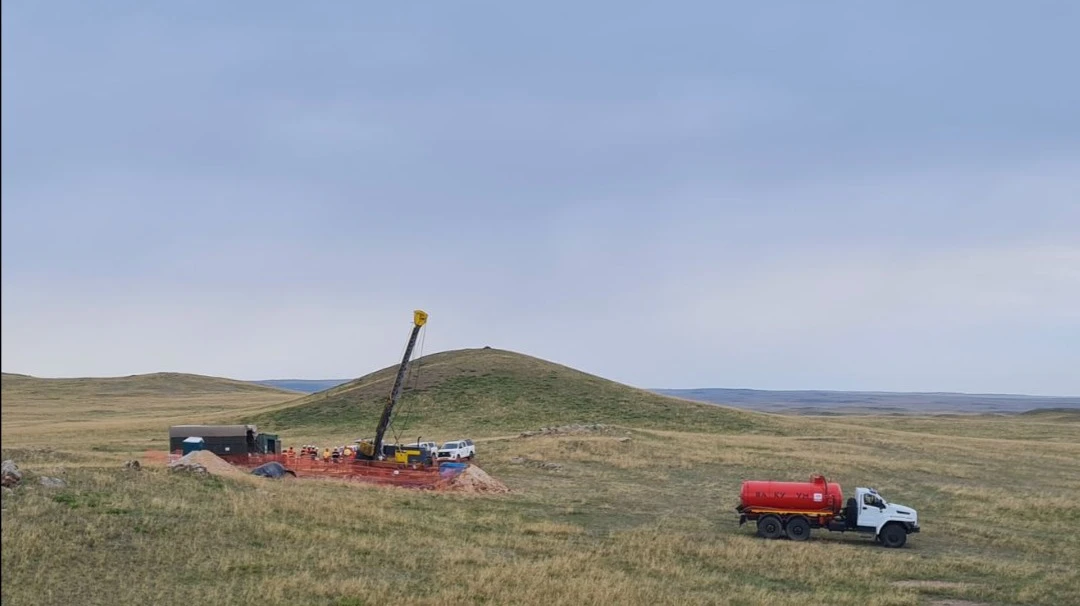
Geological exploration at the Besshoky Arras project was conducted in collaboration with Teck Resources, a major Canadian mining company / Photo: X / Arras Minerals
Analysts at Hannam & Partners Research raised their price target for shares of the Canadian small-cap company Arras Minerals by 57% after revising their assessment of the resource potential of its flagship Elemes project in Kazakhstan. H&P believes that one of its key sections—Berezski Central—may contain significantly more copper- and gold-bearing ore than previously estimated, and that low operating costs in Kazakhstan make the deposit’s economics particularly attractive. What are the prospects for Arras’s projects in Kazakhstan, and why are its shares projected to rise by more than 90%? Find out in this Oninvest article.
What Makes Arras Minerals Interesting
Arras Minerals was established in 2021 as a spin-off of the Canadian exploration company Silver Bull Resources, acquiring all of its assets in Kazakhstan. The company acquired an option to purchase the Beskauga copper-gold project from the Swiss company Copperbelt AG, as well as exploration licenses for the Stepnoe and Ekidos deposits. Arras shares were distributed among Silver Bull’s shareholders, including Silver Bull Chairman of the Board Brian Edgar and CEO Timothy Barry, who assumed the same positions at Arras.
After listing on the Canadian TSX Venture Exchange in 2022, Arras raised funding—with Canadian mining company Teck Resources among the investors—and focused on expanding its portfolio in the Bozshakol-Chingiz Belt. “This belt includes several world-class deposits, including Muruntau in Uzbekistan — the largest known orogenic gold deposit in the world — as well as the giant Oyu Tolgoi copper-porphyry deposit in Mongolia,” the company explains.
Arras later obtained licenses for the large-scale Elemes porphyry copper-gold project and the Tay copper-gold project, located near the Bozshakol open-pit mine, which is operated by Kaz Minerals, thereby expanding the area of prospective sites in the Pavlodar region to more than 3,000 square kilometers.
In 2023, Arras entered into a strategic alliance with Teck Resources Limited. Under the agreement, Teck committed to investing at least $2 million in geological exploration in 2024 and reserved the right to increase its funding to $5 million by the end of 2025. It was anticipated that, following the completion of the regional exploration phase, Teck could finance further work by selecting up to four projects and investing up to $47.5 million in each to acquire a 75% stake. However, Teck did not exercise this option, and in February 2026, Arras announced that Teck had decided to withdraw from the option, retaining approximately 9.9% of Arras’s shares. The company did not explain the reason for its withdrawal from the project.
Earlier, in June 2025, Arras terminated the agreement for the Beskauga project, forgoing a one-time payment of $15 million, explaining that the funds would be put to better use in drilling at Elemes.
What's happening now
The company holds mineral exploration licenses covering a total area of approximately 3,300 square kilometers in the Pavlodar Region in northeastern Kazakhstan. Arras is currently focused on exploration at Elemes, the company’s key asset. According to H&P Research, if resources are successfully confirmed, ore from Elemes could potentially be processed in the medium term at the Bozshakol plant, which has a capacity of approximately 35 million metric tons of ore per year.
In July 2026, Arras closed a financing transaction through a bought deal, raising 25 million Canadian dollars. The transaction was organized by a syndicate of underwriters led by Haywood Securities, which also included SCP Resource Finance, Canaccord Genuity, and Hannam & Partners. The company plans to use the proceeds to fund exploration and development of its projects in Kazakhstan.
The company later announced that it was doubling its drilling program at Elemes to 40,000 meters. The decision followed the results of the previous phase of work: at the Berezski North site, the company intersected 935.9 meters of ore with an average grade of 0.71% CuEq (copper equivalent). Copper equivalent accounts for the contribution of all metals contained in the ore, converting their value to copper equivalent. However, in this case, gold—not copper—is the main contributor to the figure: the average grade over the interval was 0.19% copper and 0.51 g/t gold, according to H&P Research. Arras CEO Timothy Barry called these results a “qualitative breakthrough,” noting the significant potential for further expansion of the deposit.
H&P Research expects that further drilling results will serve as short-term catalysts for the stock as the boundaries of the porphyry centers are refined. “The ore grades obtained appear particularly attractive given Kazakhstan’s low production costs,” the analysts emphasize.
Kazakhstan is one of the cheapest regions for oil production
H&P analysts cite the low cost of geological exploration in Kazakhstan as one of Arras’s key advantages. According to their estimates, core drilling costs the company approximately $110 per meter, which is significantly cheaper than most similar projects around the world.
To assess the potential economics of Elemes, H&P Research compared the operating performance of open-pit copper mines in Kazakhstan, Australia, Chile, and North and South America. According to their calculations, the cost of processing ore at the Bozshakol plant—which may eventually receive ore from Elemes—is approximately 13% lower than that of the closest comparable facilities in North America. At the same time, the all-in sustaining cost (AISC), after accounting for by-product metals, is about $3,171 per metric ton of paid-out copper—approximately 62% lower than that of the average Australian producer.
According to analysts, this is primarily due to the low cost of electricity: more than 70% of Kazakhstan’s electricity is generated by coal-fired power plants, many of which are integrated with nearby coal deposits.
Arras is already benefiting from the relatively low cost of geological exploration in Kazakhstan, according to H&P Research, and if the Elemes project moves into production, this competitive advantage could be sustained thanks to low ore processing and electricity costs.
That said, the low cost of geological exploration is an advantage for Kazakhstan as a whole, not just for Arras. The closest comparable is the Canadian company Mogotes Metals, which in February 2026 received an option for the Beskauga project in the Pavlodar region—a project that Arras had declined to acquire a year earlier. Mogotes estimates the cost of core drilling at approximately $100 per meter, compared to about $110 for Arras. At the same time, Beskauga is at a more advanced stage of development: unlike Elemes, the resource base for the project has already been calculated.
What Matters to Investors
Market conditions remain favorable for companies engaged in copper and gold exploration. The World Bank forecasts a 17% increase in global industrial metal prices in 2026 compared to the previous year, which could have a positive impact on the outlook for the copper market. According to Streetwise Reports (the report is available at Oninvest), the price of copper has nearly doubled over the past two years, as global production has been unable to keep pace with growing demand from data centers, electric vehicles, and the renewable energy sector. Gold prices, in turn, are being supported by steady purchases by central banks and geopolitical tensions.
Analysts at H&P Research describe the Elemes project as a rare strategic asset—a large-scale porphyry system with a potentially low cost of production, located in a stable jurisdiction with well-developed infrastructure. According to H&P Research’s model, gold will account for approximately 55% of Elemes’ revenue over the future mine’s entire operating life. In other words, although the project is typically classified as a copper project, its economics are largely determined by the price of gold. This is also reflected in H&P’s updated model: along with revising the resource potential, analysts raised their long-term gold price forecast from $3,000 to $3,500 per ounce.
Streetwise Reports also notes that, thanks to the simultaneous exploration of several promising sites, the company will be able to regularly release new drilling results that could confirm Berezski’s potential as a world-class copper-gold porphyry system.
In July, analysts at H&P Research raised their price target by 57% to 2.83 Canadian dollars per share, implying a 90% upside from the closing price on July 30. Since the beginning of the year, Arras shares have gained nearly 100%. According to MarketWatch, the company has one analyst rating: Buy.
This is not intended as individual investment advice.