A Magnet for Startups: Why Are Fintech Startups and Neobanks Flocking to Colombia?

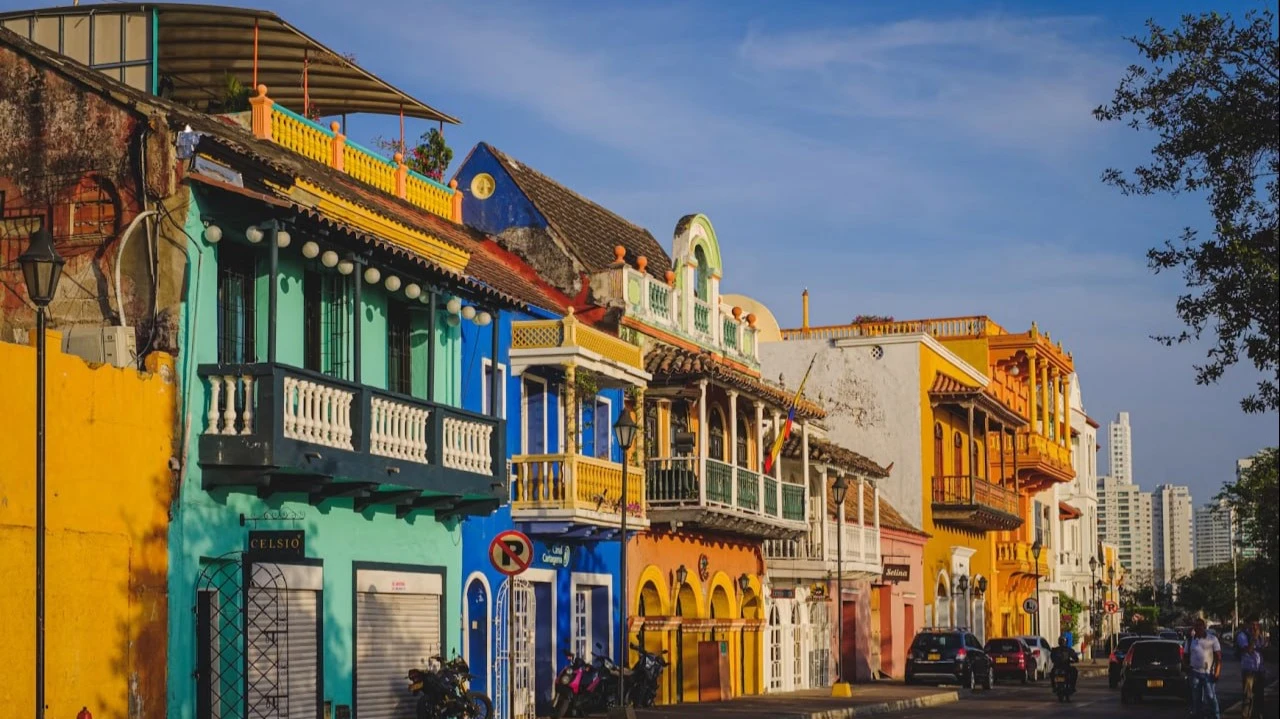
Colombia is a traditional country that, however, lacks traditional banking services. Photo: Leandro Loureiro / Unsplash.com
Banco Plata, founded by former top executives from Tinkoff, has launched in Colombia. In 2026, Nikolai Storonsky’s Revolut will enter the country. In terms of the number of fintech companies that have launched in recent years, Colombia ranks third behind Mexico and Brazil. Oninvest examined what makes this country attractive to startups and why fintech here is still competing with motorcycles and bats.
Payment via Revolut
“Important news: Plata is expanding into Colombia, one of Latin America’s most promising markets, where… millions of people still lack access to traditional banking services,” said Neri Tollardo, CEO of Plata, when he announced the company’s launch in the country in July.
Plata is a fintech startup founded in Mexico by former employees of the Russian bank Tinkoff; one of its early investors was its founder, Oleg Tinkov. For its launch, Plata chose a business model similar to the one Tinkoff used in Russia—focusing on debit and credit cards with cashback, which couriers delivered directly to recipients, and doing away with physical offices. For more than two years, Plata operated in Mexico as a financial platform under the SAPI de CV status (one of the standard legal structures for startups in Mexico) and only recently received a full banking license.
In Colombia, a neobank will follow a similar path: it will launch as a financial institution. Obtaining a full banking license is a lengthy and complex process, says Pablo Toro Cadavid, senior investment and banking analyst at the Colombian financial boutique MD Banca de Inversión. But with the easier-to-obtain status of a financial institution, Plata can begin lending immediately. Plata and the head of its Colombian branch, Michael Touch, did not respond to Oninvest’s request for comment.
In the local market, Plata will face off against Europe’s largest fintech company—Revolut, founded by Nikolai Storonsky, a native of Russia (who renounced his Russian citizenship in 2022, following the outbreak of the Russia-Ukraine military conflict). Carlos Urrutia, Revolut’s head of international expansion, called the launch in Colombia “a fundamental milestone for Revolut in Latin America.” However, the neobank chose a more complex path than Plata’s: in the fall of 2025, Revolut received approval from the Colombian regulator to launch a full-fledged bank and began the licensing process.
In Colombia, Revolut had planned to launch savings accounts, credit cards, and international money transfers as early as 2026. However, for now, users can only sign up for a waitlist for these products on its Colombian website. Revolut’s press office did not respond to Oninvest’s inquiry regarding the current status of its banking license.
Colombia has become a magnet not only for Plata and Revоlut. Fintech startups and neobanks from around the world are flocking here, and local players are actively expanding.
According to estimates by the industry association Colombia Fintech, by 2025 there were already 400 local fintech companies operating in the country, and about 560 when including companies with foreign capital.
Finnovista, a venture capital fund that invests in fintech in Latin America, has estimated an even higher number—about 700 fintech companies, including “foreign” firms, by 2025. This is fewer than the market leaders—Mexico (more than 1,100 fintech companies) and Brazil (more than 1,500 fintech companies). However, Colombia is firmly in third place in the region in terms of the number of fintech companies established there, according to analysts at the U.S. International Trade Administration.
Why Colombia, specifically?
First, in Colombia—a country of 50 million people—fintech can easily scale due to the large and unmet demand for traditional banking products and services. Colombia is “banked” only in name: nearly 96% of adults have some kind of financial product, but 79% of transactions are made in cash, and only one-third of the population has access to formal credit, explains venture capitalist Pavel Myasnikov, who works in the region.
According to Finnovista’s estimates, nearly one-third of Colombia’s fintech startups are currently focused on lending, while one-fifth address payment and money transfer needs. But even this does not meet the existing demand, says Myasnikov. The demand is most acute in the lending sector. Citizens need small loans, while local businesses need working capital. According to Colombia Fintech, half of fintech lenders focus on consumer loans, but specialized lending for car purchases, cell phones, education expenses, loans secured against future salaries, and debt refinancing is also growing rapidly. In the corporate sector, the most in-demand services are working capital loans, payment solutions, and acquiring services, as well as cross-border transfers.
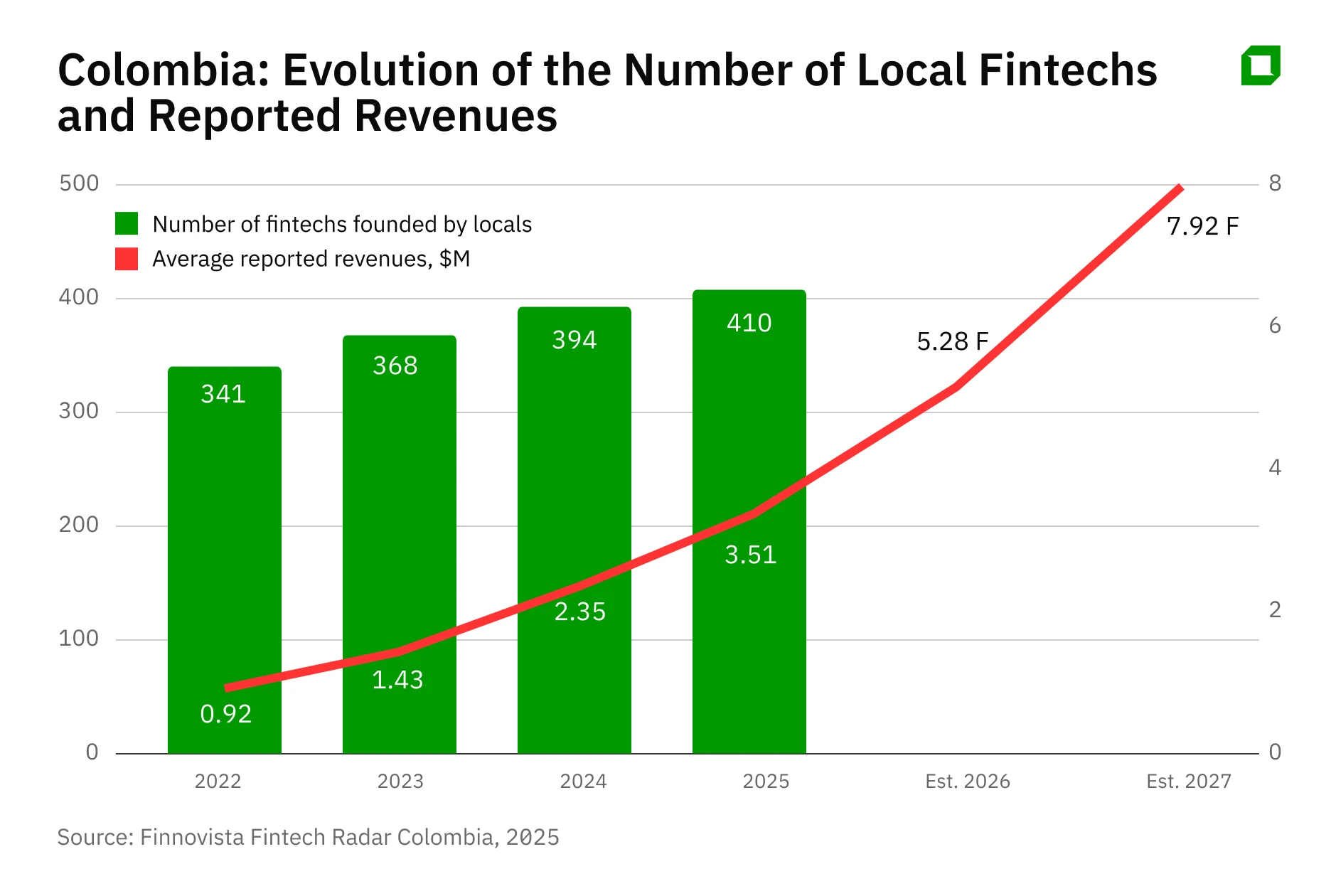
Unmet demand for financial services promises fintech companies in Colombia steady revenue growth in the coming years. According to Finnovista, average fintech revenue has nearly quadrupled over the past four years—from $922,000 to $3.5 million. The fund forecasts that it could double again by 2027.
Second, Colombia’s regulatory framework and the financial infrastructure being developed by the government make it easier to launch a fintech startup. For example, in October 2025, the country launched its own instant payment system, Bre-B, which is similar to Brazil’s Pix. In just six months, Bre-B processed 670 million transactions totaling 105 trillion Colombian pesos ($32 billion), and its user base surpassed 34 million. Bre-B provided the fintech sector with a low-cost infrastructure solution that effectively unified various payment instruments into a single network operating 24/7.
In addition, for the past 12 years, it has been possible in Colombia to register a fintech startup under a SEDPE license (which allows companies to open digital wallets and issue payment instruments linked to them, as well as receive and send money transfers and process payments). And in the 1990s, the legal framework and requirements were established for another popular legal structure in fintech—financial institutions—which allows companies to launch simple credit products without being a bank (Plata uses this structure).
Finally, in the spring of 2026, Colombia transitioned all regulated financial institutions to open APIs, which will allow fintech companies and banks to exchange customer data, personalize financial services, and reduce their costs.
The startup boom in Colombia has also been fueled bythe “orange economy,” a national strategy to support creative and technology industries—as noted by Damaris Mendoza Loera, a partner at the international venture capital fund and accelerator 500 Global. In recent years, the country has seen the emergence of many creative projects and marketplaces, while tech startups have successfully moved beyond the idea and testing phases, developed a viable product, and generated their first revenue—but they still need to scale up.
"Thanks to all these factors, Colombia logically becomes the third market for a major regional or foreign player to enter—after Brazil and Mexico," Myasnikov continues.
What are the risks in Colombia?
Unlike in Mexico, the Colombian population exhibits good financial discipline; here, customers generally pay their debts more reliably, says Marat Vergazov, director of risk management at the Colombian fintech startup KrediYa. However, a high percentage of the country’s workforce is employed in the informal sector, with all the associated risks of losing their jobs or wages: the Central Bank of Colombia estimated this figure at 56% of the working-age population. And because the courts are overburdened, legal disputes with defaulters can drag on for years, adds Pavel Myasnikov.

The Financial Supervisory Authority (Colombia’s financial regulator—Oninvest note) does not allow fintech startups and neobanks to factor these risks and high margins into their interest rates. It sets a cap on interest rates for all credit products. The current range is from 28.79% for standard consumer loans to 87.72% for microfinance products for SMEs. According to Vergazov, 28.72% per annum is far too low to turn a profit on a credit card or microloan given the existing risks. As a result, fintech companies have to find workarounds to keep rates within the regulatory cap while still turning a profit. For now, the regulator is turning a blind eye to these practices, but if the situation changes, many players simply won’t be able to turn a profit, he believes. That’s why international players often treat Colombia as a separate business unit to avoid reporting this regulatory risk in the group’s financial statements, the expert says.
Another problem is competition between fintech and illegal loan sharking. In Colombia, there is a specific term for this phenomenon: gota a gota (which translates from Spanish as “drop by drop”).
The point is that unlicensed lenders—which were originally drug cartels—lend money to citizens without a credit history, credit score, or guarantors, and the borrower agrees to repay the debt with interest on a daily basis. According to Gabriel Santos, head of Colombia Fintech, 66% of the country’s borrowers currently use the services of “shadow lenders.” In Colombia, a fintech company with a sleek app is still competing “against a motorcycle and a bat,” says Pavel Myasnikov. But citizens, mainly in the provinces, usually turn to such lenders for startup capital for their businesses, rather than to cover personal needs. So from a Colombian perspective, “gota a gota” is more about entrepreneurial risks and traditions than about a situation where “there was no other choice,” he believes.
The third risk is the rapid rise of digital fraud in Colombia. According to Gabriel Santos, fraudsters in Colombia primarily target consumers, making extensive use of social engineering and AI capabilities. For example, one common form of digital fraud involves stealing customers’ personal data and making unauthorized credit card transactions. Fake Bre-B notifications, counterfeit SIM cards, and a nearly 190% increase in account takeover attempts over the past year—these issues are also specific to Colombia, says Pavel Myasnikov. But this is not just a problem for Colombia; it affects the entire world.
Another challenge facing the market in recent years has been a severe capital shortage in the country and the region, according to the expert: The Colombian venture capital market has fallen from an investment peak of about $1.5 billion per year in 2021–2022 to $224 million in 2025.
According to Myasnikov, there are still 2–3 domestic venture capital funds in the country that are large enough and invest frequently enough to be considered key players. However, it is becoming increasingly difficult for early-stage startups to secure venture capital.
According to Damaris Mendoza Loera, the issue isn’t that venture capital has lost interest in Colombian startups—venture capital investment is declining worldwide. “The venture capital market as a whole is currently undergoing a period of profound transformation. Funds are reevaluating what their ecosystem should look like in order to have even a chance of continuing to thrive over the next 10 years,” she explains.
As the market becomes saturated with credit products and Bre-B gains traction, revenue growth for fintech companies focused on lending and payment solutions will slow, and they will begin competing to retain the same “high-quality” customers. The future belongs to those who can develop their own high-tech anti-fraud solutions or bring others’ to market, according to Myasnikov.
"The payments industry and Colombia's fintech market as a whole are still far from reaching saturation," counters Damaris Mendoza Loera. It will take at least 5–6 years—if not a decade—before the first signs of saturation appear.
This article was AI-translated and verified by a human editor