A merger between Tesla and SpaceX could net Musk more than $110 billion. What are the risks for shareholders?
Musk may receive Tesla shares ahead of schedule—shares that would otherwise not vest until 2028—as well as a portion of his 2025 bonus package without having to meet operational targets

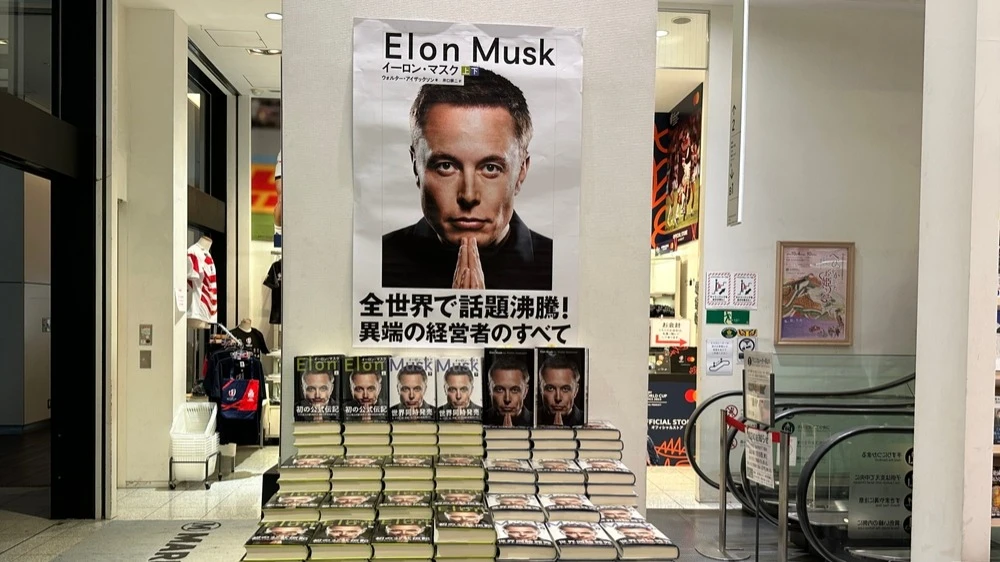
If the merger goes through, the board of directors will likely need to develop a new compensation package for Elon Musk / Photo: Hiroshi-Mori-Stock/Shutterstock.com
A merger between Tesla and SpaceX could increase the net worth of their founder, Elon Musk, by more than $110 billion, according to Bloomberg’s calculations. This week, Musk confirmed that both companies are already exploring the possibility of a merger. This would accelerate the transfer of Tesla shares to him, which are not currently included in his net worth. Furthermore, if Tesla is valued high enough in the merger, Musk could receive billions of dollars in stock through a bonus package approved for 2025. Tesla and SpaceX did not respond to Bloomberg’s request for comment.
Bonus without meeting goals
Last year, Tesla approved a record-breaking bonus package for Musk that, if all conditions are met, could be worth nearly $1 trillion. It is tied to ambitious goals: to deliver one million Optimus robots and 20 million cars, to bring one million robotaxis into commercial operation, and to reach a market capitalization of between $2 trillion and $8.5 trillion. Tesla has not yet reached any of these milestones, but in the event of a merger, these operational targets may no longer be taken into account.
This will happen if the conditions for a change in control are met—that is, if Tesla’s current shareholders hold less than 50% of the voting rights in the combined company. Such an outcome is plausible, since SpaceX is valued at about one-third more than Tesla, but ultimately, the merger structure will determine the outcome, notes Bloomberg. In that case, Musk’s payout will be calculated based on Tesla’s valuation at the time of the merger: at $2 trillion—the lowest market capitalization threshold in the bonus package—he would receive shares with a net value of more than $6 billion. Tesla is currently valued at about $1.5 trillion.
Jason Schletzer, an associate professor at Georgetown University, draws attention to the link between Musk’s payment and Tesla’s valuation. “Whether the change-of-control provisions will formally apply depends on how the merger is structured, but shareholders of both companies should assume that Musk has an interest in a high valuation of Tesla upon the merger,” he says.
You won't have to wait until 2028
Musk could stand to gain more from the package Tesla approved for him in 2018 than from his 2025 bonuses. He has met all of his targets. This year, Musk negotiated with the board of directors to exercise approximately 304 million stock options without paying their full value: part of the shares was used to cover taxes and exercise costs, and he received about 286 million shares. These shares will not be fully transferred to Musk until January 2028—an additional incentive to remain with the company. However, if the conditions regarding a change in control are triggered during a merger, the shares will become Musk’s property immediately. These shares are currently worth more than $110 billion.
Are new bonuses inevitable?
If the merger goes through, Musk will lose most of the bonuses Tesla promised him in 2025: their amount will depend solely on the company’s valuation at the time of the merger. He will also no longer have specific goals related to cars and energy storage—Tesla’s traditional businesses. Therefore, the board of directors may have to develop a new compensation package for him, Bloomberg reports. According to the agency’s assessment, the merger is unlikely to affect Musk’s two current bonus packages at SpaceX. These are also tied to the company’s market capitalization, but the target levels can be revised—as was already the case after SpaceX acquired Musk’s AI startup, xAI.
Schletzer believes that the new bonuses for Musk “seem like a done deal, given that both companies have already issued very large stock grants.” “The board of the merged company will have to hear the familiar argument: the new compensation is needed to keep Musk from losing interest,” he added (as quoted by Bloomberg).
Most mergers fail
The merger itself is highly likely to be a bad idea, warned Fan Gu, a professor at the University at Buffalo, in an interview with MarketWatch. In their recently published book, *The M&A Failure Trap*, Gu and New York University professor Baruch Lev analyzed 40,000 mergers and acquisitions from 1980 to 2022. Between 70% and 75% of them failed: three years later, the combined company’s market capitalization was lower than it would have been had the companies remained independent. A merger between Tesla and SpaceX could become the largest M&A deal in history, and the chances of failure are even higher for large deals, Gu and Lev write.
Supporters of the merger point out that Tesla and SpaceX are becoming AI companies. But cars and energy storage still make up the bulk of Tesla’s business, Gu points out. “What these two companies have in common is a set of AI-related projects with questionable synergy,” he says.
Finally, this week SpaceX reported growth that significantly exceeded market expectations, while Tesla’s revenue remained unchanged. “If these two companies merge, Tesla’s automotive business, with its slower growth, will drag down the overall growth rate of the combined company,” Gu noted.
This article was AI-translated and verified by a human editor