"Quite a few eggs in one ambitious basket": What analysts are saying about the Tesla-SpaceX merger
For Tesla shareholders to support the merger with SpaceX, the price of their shares in the deal must be significantly higher than the market price

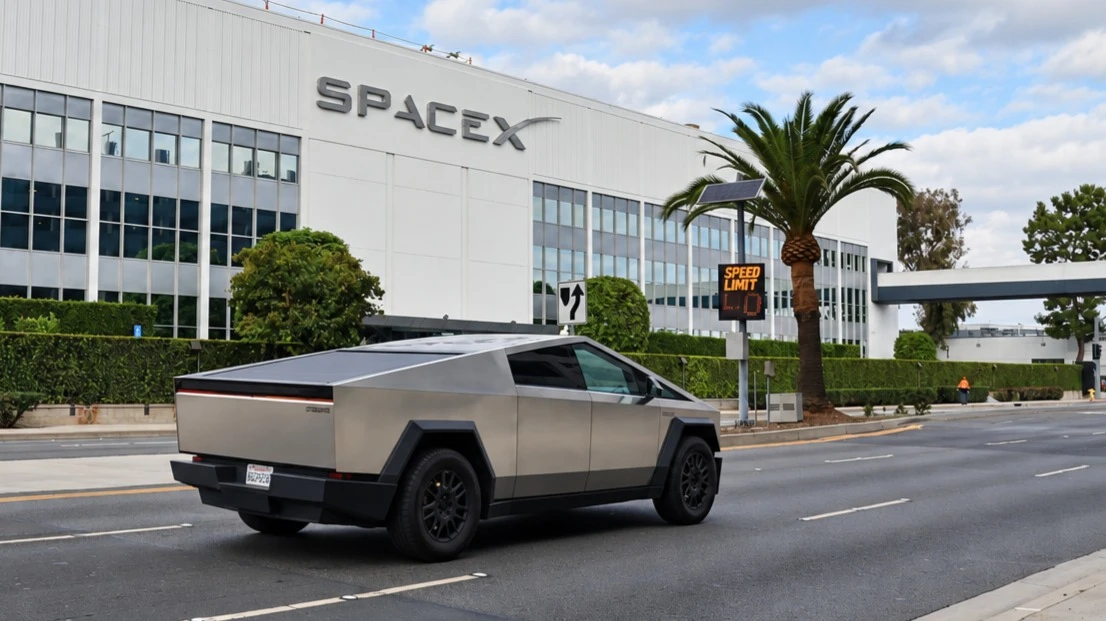
Elon Musk, CEO of the rocket and space company SpaceX and the electric car manufacturer Tesla, called a merger between the two companies “a good idea.” Speaking at SpaceX’s third-quarter investor conference, he said the companies had formed special committees of independent directors to explore the possibility of a merger, according to MarketWatch. In after-hours trading, SpaceX shares rose 8%, while Tesla shares rose nearly 2%.
Musk himself is not officially involved in the negotiations between the boards: he is the CEO and a major shareholder of both companies and, by his own admission, has a conflict of interest. According to him, the committees have not yet agreed on the terms of a potential deal, and there is no certainty that they ever will. SpaceX shareholder approval does not worry the company’s CEO too much, since he alone controls more than 80% of the votes, MarketWatch reports. At Tesla, owners of 50% of all shares must vote in favor of the merger, and Musk called this “a fairly high hurdle.” Overall, market participants whose comments were compiled by Reuters view the merger as logical but assess its risks differently.
According to Dan Ives, a partner at Yorkville Ives & Co., shareholders will want such a merger because it makes “a lot of strategic sense.” “It’s an obvious move for both SpaceX and Tesla; it all comes down to shareholder value. For the deal to be finalized and approved, Tesla’s stock price would likely need to be around $550 (47% above the last closing price—Oninvest note),” he says.
Justus Parmar, CEO of Fortuna Investments, sees the advantage of the merger in the fact that Tesla has a high-margin automotive business with strong cash flow, which will continue to grow with the launch of robotaxis. According to Parmar, this money would help improve SpaceX’s financial results and “fund its very capital-intensive plans for space exploration and rocket launches,” including the creation of orbital data centers.
Josh Gilbert, eToro’s lead analyst for the Asia-Pacific region, believes that a merger between Tesla and SpaceX would be the largest in market history: together, the companies are valued at about $3.5 trillion. The logic is clear, since both businesses are now largely focused on AI, but pulling off such a merger would be no easy task, he says. “Even though Musk does not serve on any boards, a deal in which one person leads both companies would raise serious questions about how the companies are governed,” Gilbert warns. If the merger goes through, AI, robotics, electric vehicles, and space exploration will all be grouped under a single ticker for investors—and that’s “quite a few eggs in one very ambitious basket.”
Michael Monaghan, portfolio manager at Founder ETFs, has no fundamental objections to how companies are managed: he believes founders should retain control of their businesses. However, he sees a risk elsewhere. “Given SpaceX’s role as a key U.S. defense contractor, Tesla’s Chinese operations may need to be formally separated or isolated by strict operational and information barriers to allay [Washington’s] national security concerns,” Monaghan believes.
Wall Street's favorite — SpaceX
According to The Wall Street Journal (WSJ), 46 analysts cover SpaceX, and on average, they expect the stock to outperform the market (consensus recommendation: Overweight). Tesla has the same consensus.
The average target price for SpaceX shares, at $229.7, is 55% higher than the closing price on October 20 ($147.8). Tesla’s growth potential is more modest: analysts expect, on average, that its stock will rise by just 2.4% over the next year, to $382.7 (from $373.7).
This article was AI-translated and verified by a human editor