Toothpaste stock valuations now above tech as investors search for safety

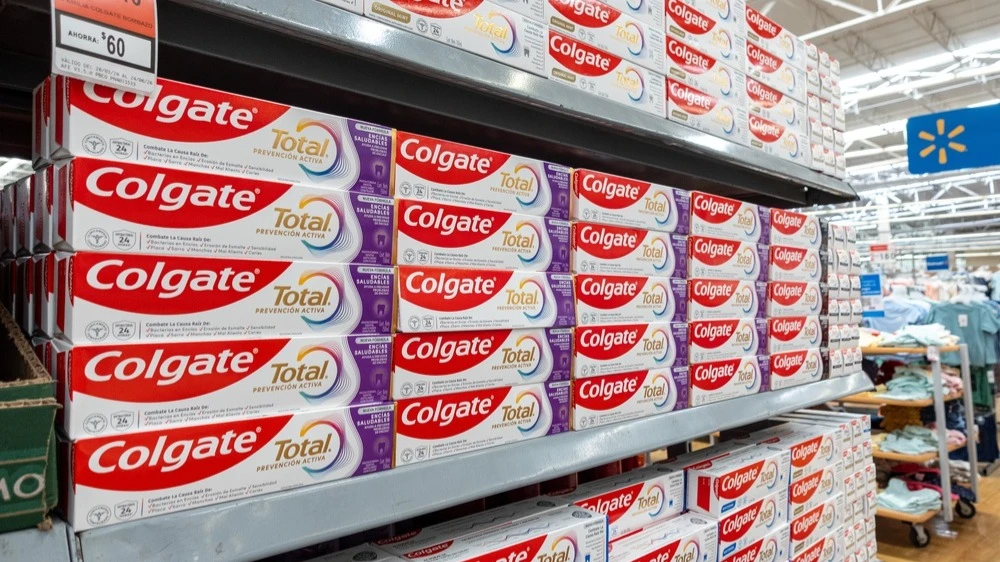
Consumer staples have overtaken tech as the S&P 500’s most expensive sector based on forward price/earnings ratios / Photo: JRomero04 / Shutterstock
Tech is no longer the S&P 500’s richest sector based on forward price/earnings ratios. It long held that distinction as investors bet on faster earnings growth and high margins at tech companies. Now, consumer staples have taken the lead, with the sector including retailers Costco Wholesale and Walmart, as well as household and personal care products maker Colgate-Palmolive. “Investors’ search for safety has made toothpaste stocks more expensive than tech,” MarketWatch reports.
Details
The S&P 500’s consumer staples sector traded at a forward P/E ratio of 23.8 on Tuesday morning versus 19.8 for tech, according to FactSet data cited by MarketWatch. This measure reflects how much investors are willing to pay for each dollar of future earnings. Consumer staples makers and retailers usually trade at lower multiples than tech stocks: investors value them for steady but modest growth and reliable dividends, MarketWatch explains.
Consumer staples stocks in the S&P 500, representing companies that sell food and essential household products people need regardless of economic conditions, have already jumped around 9% in October, according to FactSet data. That compares with a gain of less than 1% for the broader S&P 500 and a 3.8% decline for its information technology sector over the same period, MarketWatch writes.
What is going on?
“Staples have become relatively more attractive as a hedge against tech concentration and AI uncertainty,” argues Mark Hackett, chief market strategist at Nationwide’s Investment Management Group. However, the rally over the last month has made some leading stocks, and arguably the sector as a whole, less cheap without leaving them universally overvalued, he added.
Some consumer staples stocks do look rich. Walmart and Costco trade at around 42 and 48 times forward earnings, respectively, despite projected earnings growth well below that of the tech sector, MarketWatch notes.
It makes sense for investors to pay a premium for the “dependable earnings” of consumer staples companies, but some of the best-performing stocks may already price in an unusually optimistic outlook for the sector, Hackett said. “If inflation pressures margins, consumers trade down or earnings disappoint, those high-multiple names could be vulnerable,” he reckons.
When investors grow nervous about the outlook for the AI rally or the health of the economy, they often rotate into defensive sectors such as consumer staples. But if too many investors crowd into that trade as well, there are fewer places left to hide.
Context
The consumer staples sector has often outperformed the broader stock market in economic downturns. Over the last four recessions, defined as two consecutive quarters of declining real GDP, which began in July 1990, March 2001, December 2007, and February 2020, the sector gained an average of 2.2% in the first six months after the downturn began and around 6% after one year, according to Dow Jones Market Data cited by MarketWatch. The U.S. economy is not currently in a recession, but the labor market and consumer spending show clear signs of cooling amid sticky inflation and high borrowing costs. In Hackett’s view, however, the recent outperformance of consumer staples looks more like a defensive rotation than a sudden improvement in consumer demand.
“Investors have been taking risk down amid concerns about AI-related capital spending, financing costs, valuation and the sustainability of tech earnings expectations. That has favored companies with recurring demand, pricing power, and relatively stable cash flow,” he said.
As tech stocks faltered, Goldman Sachs strategists last week advised investors to consider defensive stocks in the consumer and healthcare spaces. Their list included names such as Colgate-Palmolive, Church & Dwight, and Hershey.