A record number of central banks plan to increase their gold purchases. Will the rally return?

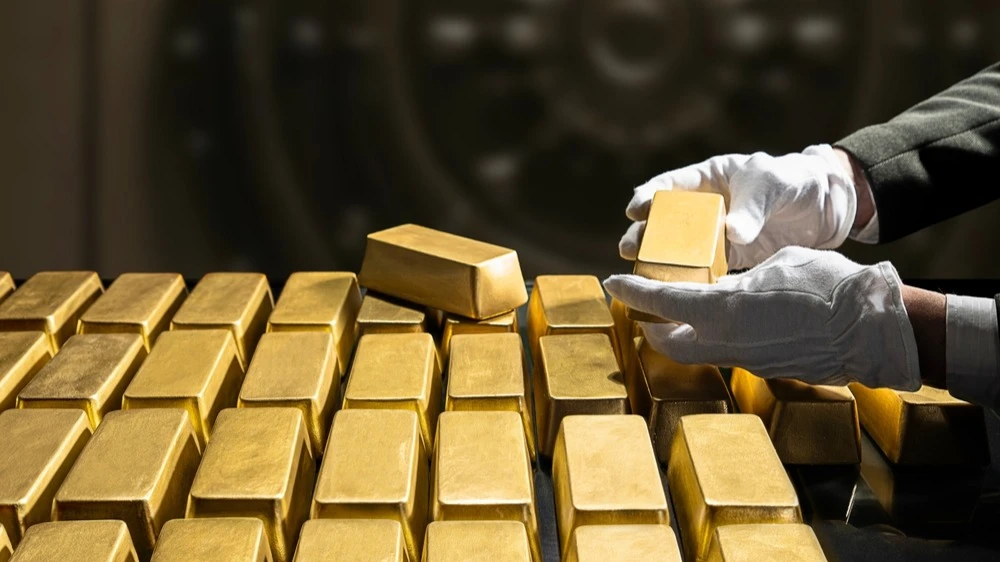
Central banks are preparing to buy up gold on a massive scale following the price drop / Photo: TSViPhoto / Shutterstock
A record number of central banks plan to increase their gold reserves in the coming year. This is a sign that one of the key forces behind the precious metal’s record rally earlier this year remains in place, despite the recent decline in prices, Bloomberg reports.
Details
In a survey of 74 central banks, 45% of respondents said they plan to purchase gold over the next year. This figure is the highest since the World Gold Council (World Gold Council; WGC) and the research firm YouGov since 2018, according to Bloomberg. Only one bank reported plans to reduce its gold reserves, according to a WGC report published on June 16.
According to the study, central banks in emerging economies will account for the majority of potential gold buyers in the coming year. About 53% of respondents from this group said they expect to increase their gold reserves, compared with 18% of central banks in developed economies.
A significant portion of these purchases is carried out under domestic accumulation programs, in which governments buy gold from their own mining companies using local currency, rather than depleting their scarce hard-currency reserves. In the survey, half of the central banks planning purchases reported that regulators would finance the transactions in this manner, while 38% noted that they would sell existing reserve assets to do so.
The Bank of England, located in London—the world’s leading hub for precious metals trading—remains the most popular destination for storing gold reserves. Fifty-seven percent of the regulators surveyed use its services. However, 9% of respondents stated that over the past year they have begun to store more gold within their own borders, while 10% have shifted toward diversifying their reserves. A year earlier, these figures stood at just 5% and 2%, respectively.
What's happening with gold prices?
The spot price of gold rose 0.64% during trading on June 16, reaching $4,339 per ounce. Prices for the precious metal have more than doubled over the past three years, with the rally fueled by a sharp increase in purchases by central banks, notes Bloomberg. Part of this growth was offset this year after the war in the Middle East led to higher energy prices. The war also reinforced forecasts that interest rates would have to remain at higher levels for a longer period, reducing the appeal of the precious metal, which does not generate interest income, the agency reports. Speculators began exiting these investments, causing gold prices to hit their lowest level since the start of the year on June 10. On January 29, the precious metal reached its peak at $5,594.82 per ounce. Since then, the price of gold has plummeted by 29%.
What people are saying in the market
“I think the drop in [gold] prices presents an opportunity for some central banks to start buying,” said Shaokai Fan, global head of central bank relations at the WGC. “In 2025, we actually noted that a number of central banks were saying, ‘Oh, the price is a bit high right now; I want to wait and see if we get a buying opportunity,’” he said.
Political risks are also “definitely on the minds of central banks,” Fan added. The trend toward central banks diversifying their gold reserves across different locations could open up opportunities for alternative hubs, such as Singapore and Hong Kong, each of which is promoting its gold storage services to regulators to strengthen its own precious metals markets, he believes.
Yesterday, a team at Bank of America identified assets that investors should consider buying amid the de-escalation in the Middle East. Among them is gold. According to analysts, given the scale of the reduction in debt levels that has occurred in the gold market over the past few months, the conditions for a trend reversal in this asset are now ripe.
On June 9, JPMorgan lowered its year-end gold price forecast but still believes the precious metal will hit a new record high in the coming months. According to the bank’s estimates, gold will cost $6,000 per ounce in the fourth quarter. This is 38% higher than the current price and 9% above the all-time high reached in January.
However, on June 9, even before news of a temporary deal between the U.S. and Iran, predicted that gold could fall another 20%—to $3,500 per ounce—if the Strait of Hormuz remains closed until the end of the summer.
This article was AI-translated and verified by a human editor