Stock Battle: CXMT vs. Micron. Is the Chinese memory manufacturer’s surge justified?

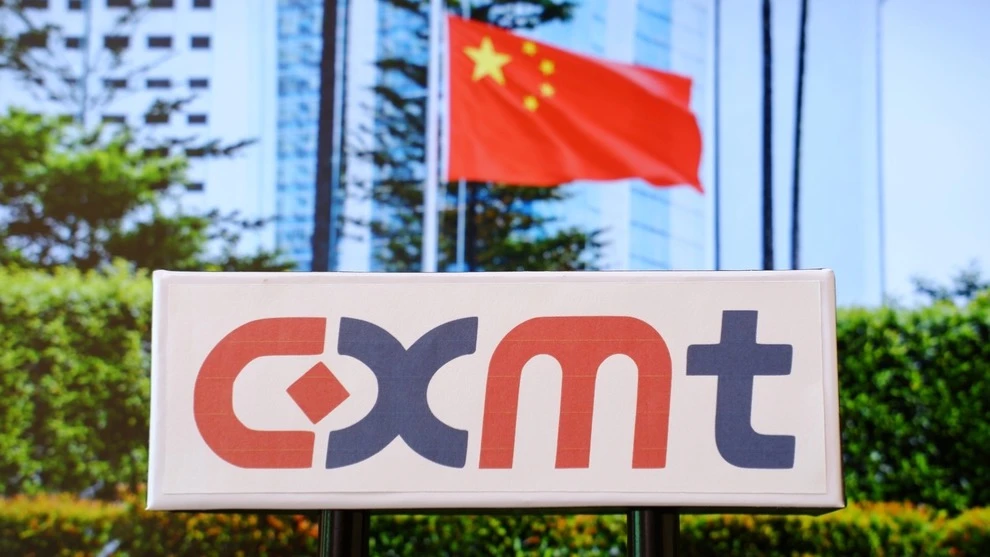
In July, the Chinese company CXMT held the largest IPO in Asia and remains one of the most valuable companies in China. Photo: Poetra.RH / Shutterstock.com
Chinese memory manufacturer CXMT has completed the largest IPO in Asia this year and aims to quadruple its market share by 2030. Investors have already priced in very high expectations for this company: CXMT is significantly more expensive than the U.S.-based Micron based on key multiples, and its technological gap behind the “big three” market leaders in memory manufacturing remains substantial. For more details, see this article by independent analyst Mikhail Zavaraev.
A Rising Star in the Asian Market
The recent initial public offering (IPO) of Chinese chipmaker ChangXin Memory Technologies (CXMT) was the largest in Asia this year and the largest in China since 2010. On its very first day of trading, July 27, the stock price soared 466%, briefly making it the most valuable publicly traded company in mainland China.
Two weeks later, the Chinese chipmaker remains one of the most highly valued companies on the Chinese market.
The rapid surge in CXMT’s stock price raises quite a few questions, despite the hype surrounding AI and the chip shortage. Its share of the DRAM (Dynamic Random-Access Memory) market is significantly smaller than that of the “big three” manufacturers—Samsung, SK Hynix, and Micron. CXMT ranks fourth in that market. It is less diversified than its peers, and its operational efficiency (partly due to technological lag) lags significantly behind its key competitors.
This surge is driven not only by fundamental factors but also by purely technical ones—after the listing, only 6.73% of the company’s shares were in free float, as the majority of the shares are restricted.
In its IPO, CXMT offered 6.69 billion shares at a price of 8.66 yuan, raising $8.66 billion (or 7.69 million shares, including the option). Demand from retail investors alone exceeded supply by 212 times during the IPO.
A limited stock offering typically leads to explosive growth in the first few days of trading, but is followed by a protracted decline as the hype surrounding the IPO subsides and lock-up periods gradually come to an end. A recent striking example is the SpaceX offering.

Fortunately for CXMT, a significant influx of new shares into the market won’t happen anytime soon — not until January 2027—since 70% of the shares allocated to institutional investors as part of the IPO are subject to a six-month lock-up period. Lock-up periods for a number of strategic investors will last up to two years, and for the company’s management and key employees, three years from the date of the IPO.
Should I buy its stock right now?
CXMT Takes on the "Big Three" Chip Manufacturers
The key paradox of CXMT is that the company isn’t really playing a major role in the AI boom itself. At present, its main area of expertise is DRAM for PCs and smartphones, where it is technologically almost on par with the top three leaders. However, in the segment of multi-layer, high-performance HBM memory—which is used in modern data centers—the company lags significantly behind the industry leaders by 3–4 years. Given the cyclical nature of the chip manufacturing sector and the potential bubble in the AI market, this is an enormous amount of time.
The Chinese company’s advantage amid the AI boom lies precisely in the fact that the “big three” have shifted their focus to the higher-margin HBM memory market, allowing CXMT to fill the resulting gap in segments with less advanced technology.
In an environment of widespread shortages, all market participants stand to gain. In the first quarter of 2026 alone, DRAM prices rose by 98% compared to the previous quarter. According to TrendForce estimates , prices could have risen by another 58–63% in the second quarter . In July, the average standard price of DRAM for PCs was $24, whereas 10 years ago it was just $2.9. UBS has raised its forecast for DDR memory price growth in the third quarter of 2026 to 32% quarter-over-quarter (up from 17%) and to 18% in the fourth quarter (up from 12%). The investment bank expects demand for memory to grow by 36% in 2027, while supply will increase by only 19%. According to Citrini Research estimates, the DRAM chip shortage will persist until 2030.
It’s no surprise that, under these circumstances, the three largest memory manufacturers have already secured contracts for nearly all the memory they plan to produce in 2027. Moreover, amid a severe shortage, even Apple is now prepared to ask the Trump administration for permission to use CXMT chips in some of its devices.
At first glance, these forecasts leave no room for bears in the semiconductor sector. But it’s important to remember that all these optimistic projections are based on one simple premise—capital investment in AI will continue to grow at an incredible pace. So far, this has been the case. Since 2023, Amazon and Alphabet, along with Microsoft and Meta, have already spent more than $1 trillion on AI and related infrastructure, and the tech giants continue to increase their capital expenditures.
However, a lack of tangible returns on AI investments or a significant increase in borrowing costs could very quickly lead to a reassessment of investment levels in data center construction.
It’s also true that these days you often hear the opinion that historical trends for the memory market are no longer relevant. But the fact remains—this sector is cyclical and has experienced many ups and downs over the past 30 years. The current situation certainly stands out, but I wouldn’t go so far as to say with certainty that things will be different this time.
It’s also important to remember that chips are fairly versatile devices. For consumers, it doesn’t make much difference where they buy them. Price is the most important factor, and CXMT’s prices are no lower than those of the “big three”—partly because the Chinese company’s production costs are higher.
One of the key reasons for the technological lag among manufacturers in China is sanctions pressure from the United States. The U.S. has become one of the main advocates for cutting off Chinese companies’ access to ASML’s advanced EUV lithography. However, using DUV lithography—which is available to China—to “print” chips is significantly more expensive and physically prevents the production of the most advanced memory chips. So far, China has only built its first EUV lithography prototype. Consequently, it will be quite some time before mass production begins.
On the other hand, technology wars also have their advantages for CXMT. The Chinese market has enormous capacity, and the Chinese Communist Party’s determination to build a sovereign AI market is even greater. When the boom gives way to a shortage, CXMT will certainly have priority access to the Chinese market, which may help offset the negative impact of declining global sales.
CXMT vs. Micron
CXMT is currently the fastest-growing DRAM manufacturer in the world. Its closest market benchmark is the American company Micron—both companies specialize in the production of this type of memory and benefit directly from rising DRAM prices. Moreover, by the end of this year, CXMT may close the gap with Micron in terms of DRAM production—350,000 wafers per month versus 375,000.
The Chinese company's revenue grew by 716% year-over-year in the most recent reporting quarter, accounting for 7% of the global DRAM market. Micron’s share was 25%, and the company’s revenue in the most recent reporting quarter grew by “only” 346% year-over-year.
CXMT’s management has no intention of resting on its laurels—the company will allocate most of the proceeds from its IPO to the construction of new plants, and its market share target for 2030 is a very ambitious 30% (four times its current level). Given that the market itself is expected to grow by approximately 12% per year, CXMT will need to increase its production by an average of 45% annually.
In the case of Micron, Wall Street estimates that the company’s revenue could peak at $269 billion by 2029, then decline to $240 billion by 2030. This year, it could generate $129 billion in revenue.
On the other hand, Micron’s profitability metrics are significantly higher than CXMT’s. The U.S. company’s return on equity over the past 12 months stands at a phenomenal 56%, compared to 26.5% for CXMT, which is also quite good. In terms of operating margin, the gap is not quite as wide: 65.6% versus 48% for CXMT.
It’s important to remember that the two companies are at different stages of their life cycles. And for CXMT, which invests most of its funds in business expansion, many performance metrics are bound to be lower than those of the more mature Micron.
In addition, one of the main reasons for Micron’s exceptionally high profit margins is its ability to maintain very high prices for chips, especially for premium HBM memory. Over the past five years, the company’s profit margin has not exceeded 30%.
In any case, even when the memory market stabilizes, CXMT’s profit margins will still be significantly lower than Micron’s, due to higher costs and its focus on segments of the market that are not among the most premium.
In the future, this gap may narrow—if China acquires state-of-the-art EUV lithography systems or if new technologies are developed that enable CXMT to effectively manufacture cutting-edge chips.
Valuation multiples also do not favor CXMT: its shares are significantly more expensive than Micron's based on key valuation metrics.
CXMT’s current P/E ratio is 107, compared to Micron’s 19.46. Even the Chinese company’s forward P/E ratio (19.6) is higher than the U.S. company’s current ratio. In terms of EV/EBITDA, the gap between them is also more than threefold: 44.36 for CXMT and 13.95 for Micron.
In essence, based on its forward P/E ratio, Micron is a deeply undervalued company (deep value), despite its very high growth rates. The other two market leaders—Samsung and SK Hynix—also have very low forward P/E ratios: 4.97 and 5.19, respectively.
And this is an extremely important point.
In essence, investors are not entirely convinced that the current growth rates of memory manufacturers’ operating metrics will continue for very long. And if that is the case, then CXMT’s current price seems very high.
Yes, the market can be wrong, and it’s entirely possible that today’s excess demand for memory is indeed a structural shift driven by AI.
In that case, it is quite possible that CXMT’s stock price will be higher than current levels in a few years. But if that happens, the stock prices of the “big three” memory manufacturers should rise significantly more, given their current valuations and higher operational efficiency. In other words, in most possible scenarios, Micron, Samsung, and SK Hynix shares currently appear more attractive in terms of risk-reward ratio compared to CXMT shares.
This article was AI-translated and verified by a human editor