AI chips, smuggling, and a hair dryer: What the Supermicro scandal reveals about the U.S.-China rivalry

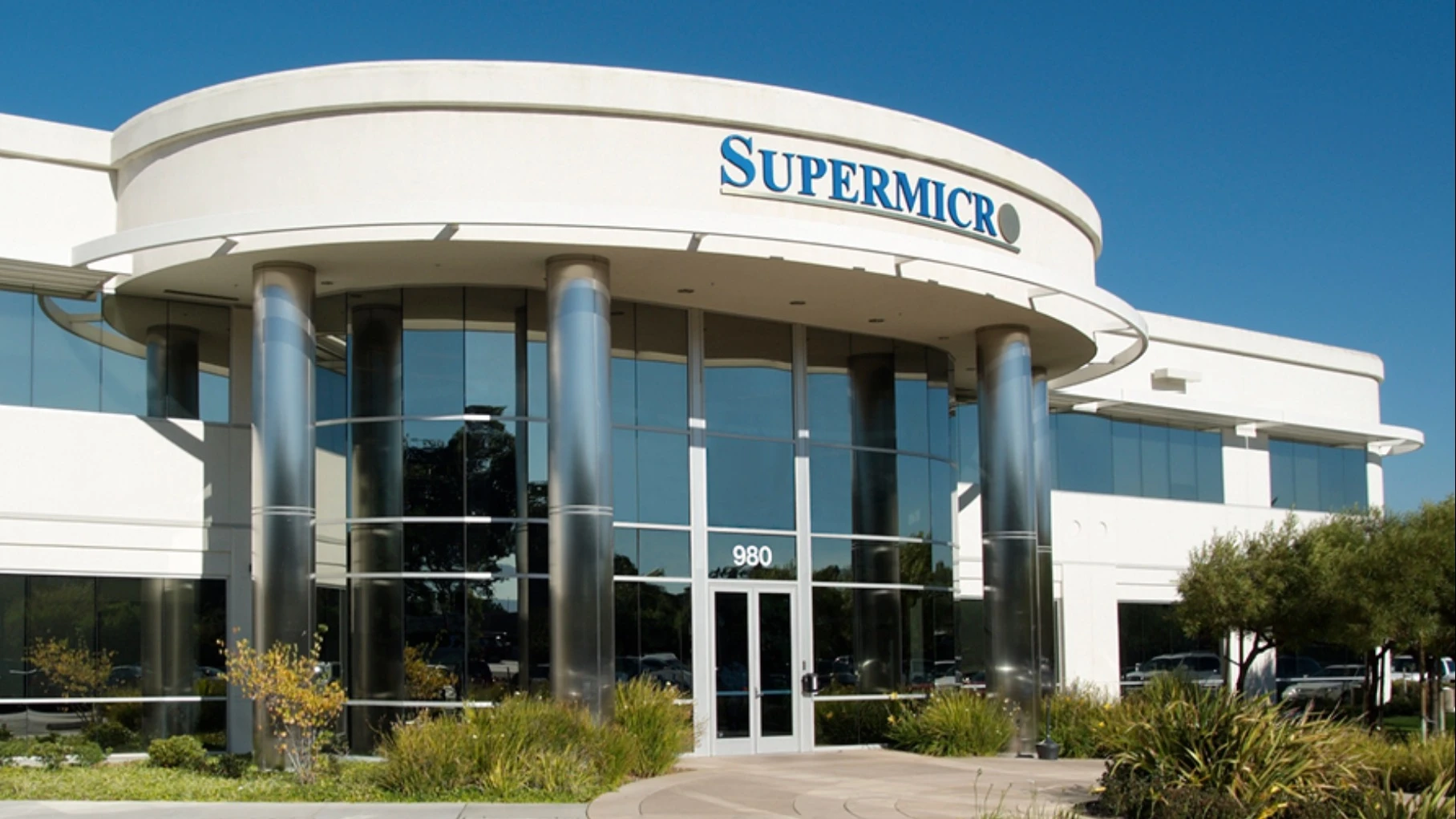
Supermicro has found itself at the center of a scandal involving the smuggling of AI chips to China. Photo: Supermicro / X
On March 19, 2026, the U.S. Department of Justice announced that three individuals had been charged with smuggling: Yi-Xian Liao, a co-founder and executive of the American company Supermicro, its sales manager, Zhui-Cang Chan; and Taiwanese contractor Ting-Wei Sun.
According to the prosecution, between 2024 and 2025, Liao and Chang grossly violated U.S. export control laws by carrying out a large-scale operation to ship Supermicro servers equipped with Nvidia H200 and B200 graphics processing units—first to a Taiwanese office and then via an unnamed Southeast Asian company, which allegedly served as the end buyer, to China. CNBC aired surveillance footage showing the process of repackaging the goods into unmarked boxes—the original labels were vigorously peeled off using a hair dryer.
Bloomberg later reported, citing sources, that the unnamed company was the Thai firm Obon. Through it, Nvidia chips—which were the main target of the deal—could have ended up with China’s Alibaba.
According to the U.S. Department of Justice, the trio of smugglers transported at least $2.5 billion worth of equipment.
This is the largest scam of its kind since October 2022, when the U.S. imposed its first export restrictions on the transfer of advanced AI technologies to China.
It may not be classified as an economic crime, but rather as an act of subversion against national security, and the defendants face up to 20 years in prison (Liao Yi-xian, meanwhile, is 71 years old). This past summer, police raided Supermicro’s Taiwan office and detained four more employees: two were arrested, and two were released on bail with a travel ban.
What You Need to Know About the Individuals Involved
Supermicro is an American company based in San Jose and one of the largest suppliers of AI servers, as well as a manufacturer of motherboards, server chassis, power supplies, cooling systems, and SAS, Ethernet, and InfiniBand controllers.
From 2023 to 2025, its revenue more than tripled. It became one of the stars of the AI boom, thanks in no small part to its partnership with Nvidia. It’s worth noting that Nvidia CEO Jensen Huang and Supermicro CEO Charles Liang share a rather close relationship: among other things, both are Taiwanese natives and even founded their companies at the same time—in 1993.
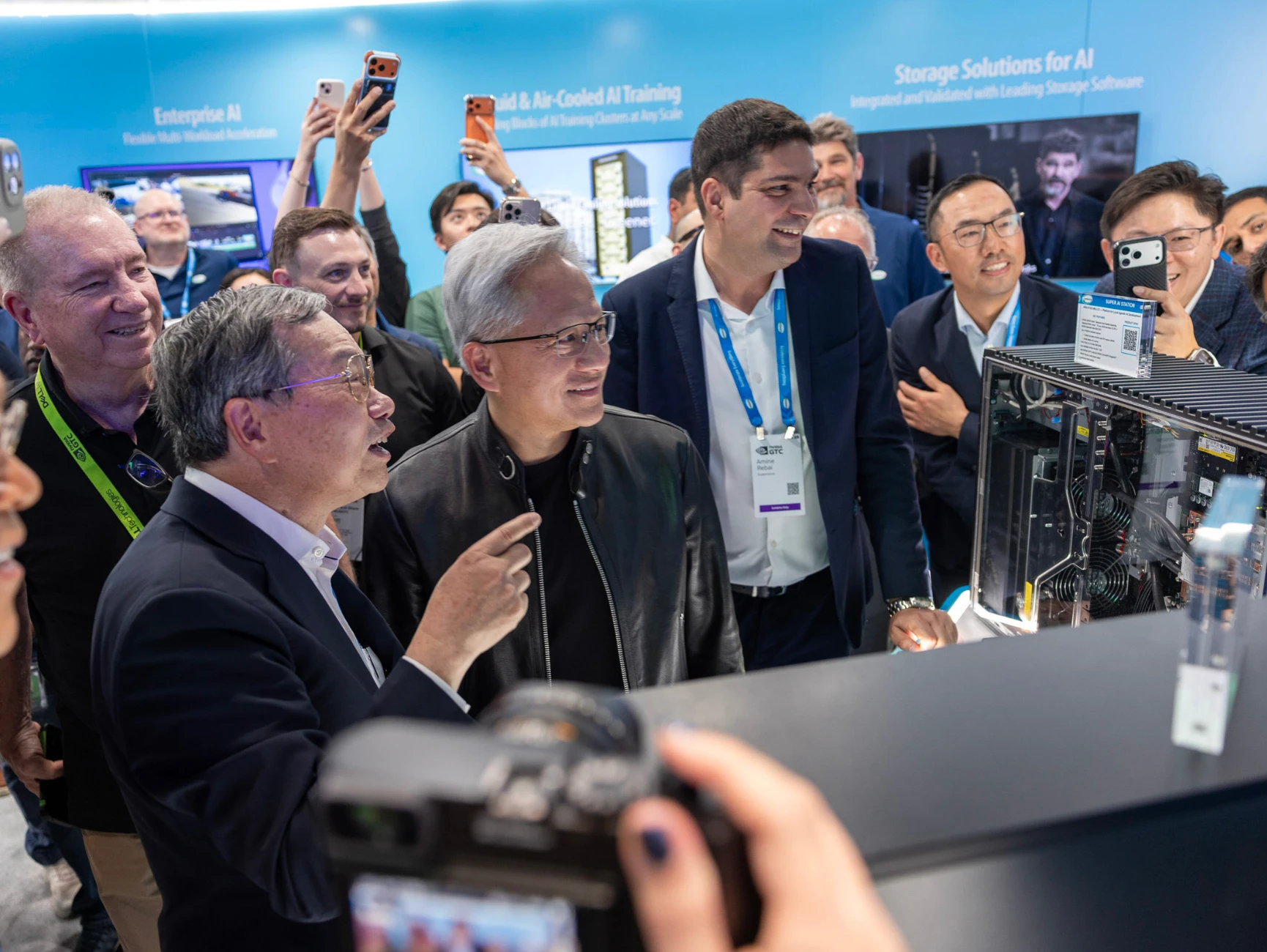
Nvidia CEO Jensen Huang and Supermicro CEO Charles Liang share a warm relationship. Photo: Supermicro / X
The H200 chip at the center of the case is an advanced graphics processing unit manufactured by the latter company, which is essential for training and running powerful AI models. However, it is still a previous-generation chip based on the Hopper microarchitecture—as opposed to the latest Blackwell, the export of which is subject to a truly strict ban.
Supermicro is not a defendant in the case; in a statement, the company distanced itself from the actions of the three individuals involved, reported that it is fully cooperating with the investigation, terminated its relationship with the intermediary, and announced that members of the board of directors have launched an independent internal investigation. However, no timeline was provided for the investigation’s completion. Nvidia also distanced itself from the incident, issuing a standard statement that strict compliance applies to all partners in its ecosystem.
Nevertheless, Supermicro's stock price on the Nasdaq plummeted by more than 30% on March 20—the day after the Justice Department's announcement—and did not recover until early May.
What else has Supermicro done wrong?
Supermicro is no stranger to reputational setbacks. In September 2006, the company pleaded guilty to shipping 300 Super Net motherboards to Dubai between December 2001 and January 2022, from where they were sent to Iran. This, of course, violated the export laws in effect at the time (although there have been periods of relaxation in U.S. trade policy even with regard to Iran— for example, in 2013, Apple smartphones were officially authorized for sale). The case resulted in a $150,000 fine for Supermicro.
In the fall of 2018, a much more serious scandal broke out, and this time it was no longer related to smuggling per se, but to state espionage.
Tiny microchips—no larger than a grain of rice—that were not included in the original schematics were discovered on Supermicro server motherboards used by the startup Elemental Technologies. They were believed to have been used by Chinese intelligence agencies to steal data. The situation was exacerbated by the fact that Elemental’s servers were used not only by companies such as Amazon, but also in data centers operated by the U.S. Department of Defense and the CIA.
In October 2018, Bloomberg Businessweek published an investigative report with an alarming cover. The story wasn’t just about Supermicro, but about what appeared to be a systemic failure—according to the investigation, nearly 30 companies, including Apple, were affected by this type of chip implantation. Sources at Apple reported that the company had discovered these very chips on its motherboards as early as the summer of 2015. In 2016, Apple severed ties with Supermicro without specifying any particular reasons, even though as early as 2014 it had planned to order more than 10,000 servers from the company and double that volume the following year. Supermicro CEO Charles Liang acknowledged at the time the loss of two key clients, without naming Apple, but chose to blame unnamed competitors for the loss.
A few days later, another report was published confirming the scale of the problem. Cybersecurity expert Yossi Applebaum asserted that the problem lay not with Supermicro, but with the Chinese supply chains themselves. Supermicro, of course, has assembly plants in California, the Netherlands, and Taiwan, but its motherboards are manufactured by contractors specifically in China—for example, in Guangzhou, 100 km from Shenzhen, China’s Silicon Valley. The spy chips are most likely installed directly at the factories of Chinese subcontractors, and in most cases, it is impossible to track this process.
"Supermicro is just one of the victims, like everyone else," Yossi Applebaum claimed.
However, its status as an alleged victim did not spare the company from other troubles—in August 2018, Supermicro was temporarily suspended from trading on the Nasdaq for failing to file its financial statements. On August 27, 2024, its stock plummeted by more than 8% immediately following a report by short-sellers at Hindenburg Research alleging opaque accounting practices, nepotism, and non-compliance with sanctions—the company was even called a “serial offender.”
Finally, on October 30, 2024, Ernst & Young unexpectedly resigned as Supermicro’s independent auditor, citing concerns regarding the company’s corporate governance and internal control mechanisms, as well as the independence of the board of directors from management. On the same day, Supermicro’s stock plummeted by 33%. The company once again faced the threat of delisting from Nasdaq, but managed to hire a new auditor and recover from the drop.
Smuggling on the Rise
The Supermicro smuggling case is far from the only one. In October 2025, 43-year-old Alan Hao Xu and his Texas-based ITcompany, Hao Global LLC, illegally shipped Nvidia H100 and H200 graphics processing units worth approximately $160 million to China using forged shipping documents that concealed the true destination, according to the U.S. Department of Justice.
On December 3, 2025, Fan Yue “Tom” Gong, a 43-year-old Chinese citizen residing in Brooklyn, was arrested in New York. He was charged with purchasing Nvidia graphics processing units (GPUs) for shipment to the People’s Republic of China. The scheme was the same: Gong’s accomplices purchased the processors through front men and intermediaries, claiming that the equipment was intended for customers in the U.S. or in countries where shipments do not require an export license. At warehouses in the United States, labels from the nonexistent company SANDKYAN were affixed to the processors in place of the original Nvidia stamps, and the processors were shipped to China and Hong Kong disguised as standard computer components.
Finally, in March 2026—right in the midst of the Supermicro scandal—Stanley Y. Zheng, a Chinese national, and two U.S. citizens, Matthew Kelly and Tommy Shad English, were arrested, according to the U.S. Attorney’s Office for the Northern District of Georgia. They were smuggling AI chips—prohibited for export—from a California-based company using forged certificates, ostensibly to Thailand, but in reality to China. Discrepancies were uncovered during a routine inspection—a rare instance in which the control mechanisms actually worked. In particular, the investigation uncovered touching encrypted messages exchanged among the participants in the scheme: “Not a word about China.”
And here’s the latest story: On July 23, the White House accused the Chinese startup Moonshot of gaining access to advanced processors from Nvidia in violation of export restrictions: it purchased servers equipped with GB300 chips from the Blackwell family in Thailand. A week earlier, Moonshot had released a new AI model, Kimi K3, which, according to the company, comes close to Anthropic’s Fable in terms of performance.
The U.S. vs. China: The Background
If these almost cinematic plots seem vaguely familiar to you, that’s only natural. In Martin Scorsese’s film *The Departed*, Jack Nicholson’s mobster character secretly sells microprocessors and chips for rocket technology to the Chinese, while Martin Sheen’s character, a government official, predicts that in 20 years America will have to go to war with China—and, note, the film was released in 2006. In the original Hong Kong film *Double Cross* (2002), there is, of course, no chip smuggling. This is a reworking by *The Departed* screenwriter William Monahan, who won an Oscar for Best Adapted Screenplay. In the original, the plot revolved around run-of-the-mill drug trafficking. But this, incidentally, reflects the current situation in its own way: according to experts, the profit from smuggling chips (“buy for $25,000, sell for $50,000”) is quite comparable to the profit margins in the drug market.
"The Renegades" predicted, in their own way, the foundations of the future AI rivalry between the U.S. and China. On September 1, 2022, the U.S. banned the export of two Nvidia chips—the A100 and H100—to China (which were, of course, manufactured in Taiwan). However, Nvidia continued to export products of a slightly different configuration.
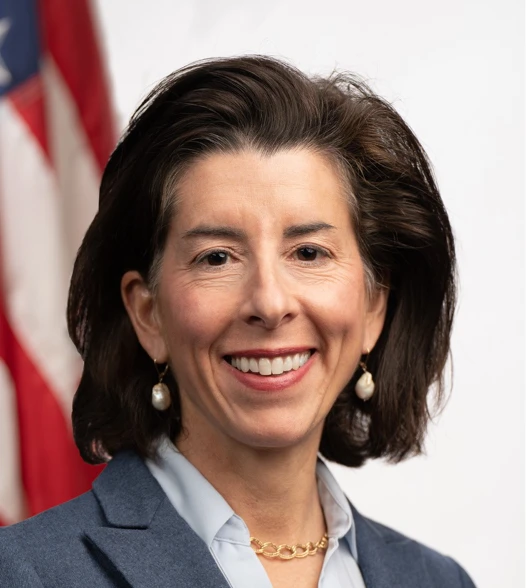
In December 2023, U.S. Secretary of Commerce Gina Raimondo stated that Nvidia “can, will, and should” sell AI chips to China, since most of them are used for commercial purposes—though this does not apply to the most advanced versions.
We cannot allow the export of the most advanced AI chips with the highest computing power, which would enable China to train its cutting-edge artificial intelligence models.
On January 13, 2025, in the final days of Joe Biden’s presidency, the “AI Diffusion Rule” was introduced. It established a three-tier export control system and called for maintaining strict restrictions on China. It was scheduled to take effect on May 15. However, two days before it was set to take effect, the U.S. Department of Commerce rescinded it (partly due to criticism from Nvidia). The Trump administration opted for targeted controls, more in line with the spirit of the new president, who loves a good deal.
Nevertheless, in April 2025, the U.S. did ban Nvidia from freely selling the H20—a less powerful version of its flagship AI chips for the Chinese market—and required the company to obtain special export licenses. In May 2025, Nvidia CEO Jensen Huang harshly criticized the restrictions, warning that Chinese competitors, with increased government support, would only accelerate the development of their own products. His business arguments were quite compelling, and President Trump, as is well known, tends to change his mind at the speed of a next-generation microprocessor.
In August of that same year, the U.S. Department of Commerce began issuing licenses for the export of H20 chips to China. And in December, Trump announced that he saw no national security threat in selling Nvidia H200 chips to authorized Chinese customers, but imposed a 25% tariff on them just in case (although he had previously threatened to impose 100% tariffs on all chip imports). In January 2026, the U.S. officially authorized the export of the H200.
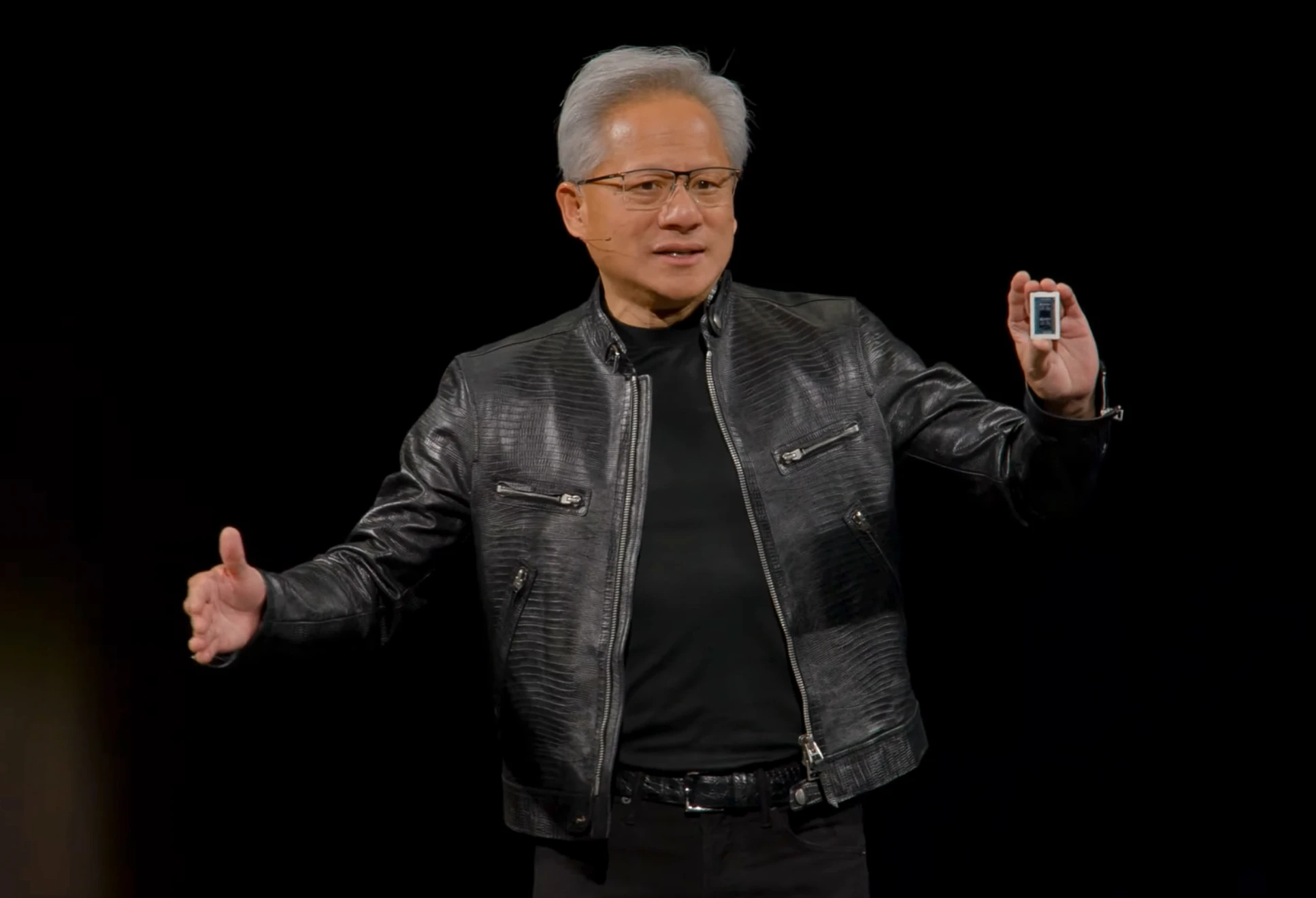
Nvidia CEO Jensen Huang spoke out against export restrictions on Nvidia chips to China. In May 2026, he was added at the last minute to U.S. President Donald Trump’s delegation that traveled to China. Photo: Nvidia / X
By the way, this game can be played by two people. Beijing itself has effectively blocked shipments of certain chips from the U.S. since around August 2025, and in January 2026, the Chinese customs service once again reminded customs agents that H200 chips are actually prohibited from being imported into the country.
The statements were couched in the spirit of classic Chinese evasiveness (also known as politeness): instead of a direct veto, they used phrasing such as “did not recommend unless necessary.” Furthermore, the authorities did not specify how temporary this measure might be. Also in January, the Chinese government made an additional adjustment, explaining that it would approve H200 purchases only under special circumstances, such as for university research.
Following Trump’s visit to China—incidentally, Huang was added to the delegation traveling with the U.S. president at the very last minute—- On May 20, the U.S. Senate unanimously passed the “Stop Stealing Our Chips Act,” aimed at combating the smuggling of American semiconductor products to China. In particular, the bill provides for incentives for individuals who report violations and guarantees their protection. The reward ranges from 10 to 30 percent of the amount of the fine actually collected. However, it has not yet been sent to the president for his signature.
In May 2026, the U.S. Department of Commerce launched yet another initiative to tighten regulations and close loopholes—this time targeting Chinese companies operating outside of China.
China, in turn, promised to begin drafting retaliatory sanctions.
Characteristics of a Dead-End Situation
The strategic goals of the U.S. and China coincide in a certain sense—the former wants to avoid losing the AI race and reduce its dependence on Taiwan’s chip and semiconductor production, whose geopolitical status—with the potential to “return to its motherland”—is a source of some concern (in this regard, the promotion of investment by Taiwan’s TSMC in a plant in Arizonadeserves special attention).
The latter are equally unwilling to concede ground in this area—which is crucial for the future—or to depend on U.S. supplies. At the same time, U.S. policy is marked by a clear lack of strategic coherence—the authorities are aware of the geopolitical and military risks of transferring AI technologies to China, yet they have never truly hindered the creation of legal (and illegal) channels for exporting chips. One of their typical excuses is to shift the blame onto “allies” who do not share their trade principles. In a similar vein, Trump railed against NATO countries for their lack of enthusiasm during the war with Iran.
Technology investor Charles Ferguson argued that export control measures restricting China’s access to U.S. AI technologies were implemented slowly for a long time, belatedly, and inadequately—there was a shortage of personnel to fully implement them, and they proved easy to circumvent, as confirmed by incidents involving Supermicro and other smugglers.
Tech Insider also wrote about the harmful nature of Trump’s decision to allow the export of H200 chips in limited quantities and under strict conditions starting in January 2026, since these “strict conditions” turned out to be all too easy to circumvent, and each party determines the volumes for itself—as demonstrated by the Supermicro equipment scheme.
Another problem is that Taiwan does not consider the unauthorized export of AI chips to China a criminal offense (especially since most of the chips are manufactured in Taiwan). Only now have Taiwanese authorities begun discussing the tightening of export controls.
But for now, the only way to prosecute alleged smugglers through Taiwanese courts is to charge them with violating other applicable local laws (such as document forgery). This leaves plenty of room for such trade operations.
One way or another, the situation has already gone beyond the realm of economic debate. It all boils down to broader politics and military interests: AI chips are no longer commercial goods, but strategic weapons. Amy Webb, CEO of Future Today Strategy Group, directly referred to the Supermicro case as a potential war between the U.S. and China—at least in the realm of AI technology: in her view, the U.S. is underestimating China and failing to properly monitor what is being exported and to whom.
Trump’s recent harsh statement about China’s alleged interference in the 2020 U.S. election further escalated the situation, but a few days later he said that thingsweren’t as bad as they seemed and that the U.S. was, in general, doing the same thing.
How the situation is unfolding
Yi-Xian Liao pleaded not guilty and was released on $5 million bail in April of this year pending trial, which has been postponed until March 2027. The second defendant, Zhang, remains at large—presumably hiding somewhere in Southeast Asia.
Amid stricter scrutiny, Nvidia has more than halved the number of Asian customers authorized to purchase its AI chips. The company has created a new “whitelist” and stepped up vetting of customers in Singapore, Malaysia, and Japan. Nevertheless, in terms of readiness for the future, Nvidia ranks among the top five in The Wall Street Journal’s ranking, ahead of Alphabet and Microsoft; the ranking’s authors took into account, among other factors, resilience to risks in supply chains and geopolitics.
Back in the spring, Tech Insider offered a series of cautious predictions about how the situation would unfold by the end of the year: companies may have to implement tracking of each chip’s serial number from the manufacturing stage through to end-use, to prevent the serial number from being altered with a hair dryer. Compliance costs for AI server manufacturers will rise by 15–25%, which will inevitably lead to higher costs for customers. China will push its import substitution policy even more aggressively. Supermicro faces additional inspections, and the fight against smuggling will reach a new level, as the arrest of such a high-profile figure in the world of AI manufacturers as Yi-Xian Liao will inevitably lead to more whistleblowers coming forward and trigger further investigations in the industry. Here, Tech Insider successfully anticipated the “Stop Stealing Our Chips Act” with its whistleblower incentive program.
On July 21, Supermicro announced a record order backlog—the AI boom is still going strong.
On July 17, Xi Jinping personally unveiled a new organization, WAICO, at the World AI Conference in Shanghai—an alternative AI bloc headquartered in Shanghai and comprising 29 founding member countries. As a result, it is becoming increasingly difficult to adhere to the “not a word about China” principle.
Xi's return visit to the U.S. is still scheduled for September.
At the same time, Jensen Huang’s alarmist predictions about the rapid advancement of Chinese competitors in the field of AI are likely coming true—according to some estimates, Huawei’s advanced Ascend 950 chipsare alreadyroughly on par with Nvidia’s H200.
U.S. Treasury Secretary Scott Bessent raises the issue of possible sanctions over technology theft and “distillation” (when a less powerful AI model parasitizes an existing one—that is, presumably a Chinese model parasitizing an American one). China, for its part, is considering the possibility of further tightening its own export controls on AI technologies.
While the standoff continues, with no end in sight in the near future, certain financial outcomes in this area—whatever they may mean—can already be observed. DeepSeek founder Liang Wenfeng, with a net worth of $36 billion, is now wealthier than the head of Anthropic, as well as all other founders of AI development companies.
This article was AI-translated and verified by a human editor