An angry France: What surprises could the coming presidential election bring?

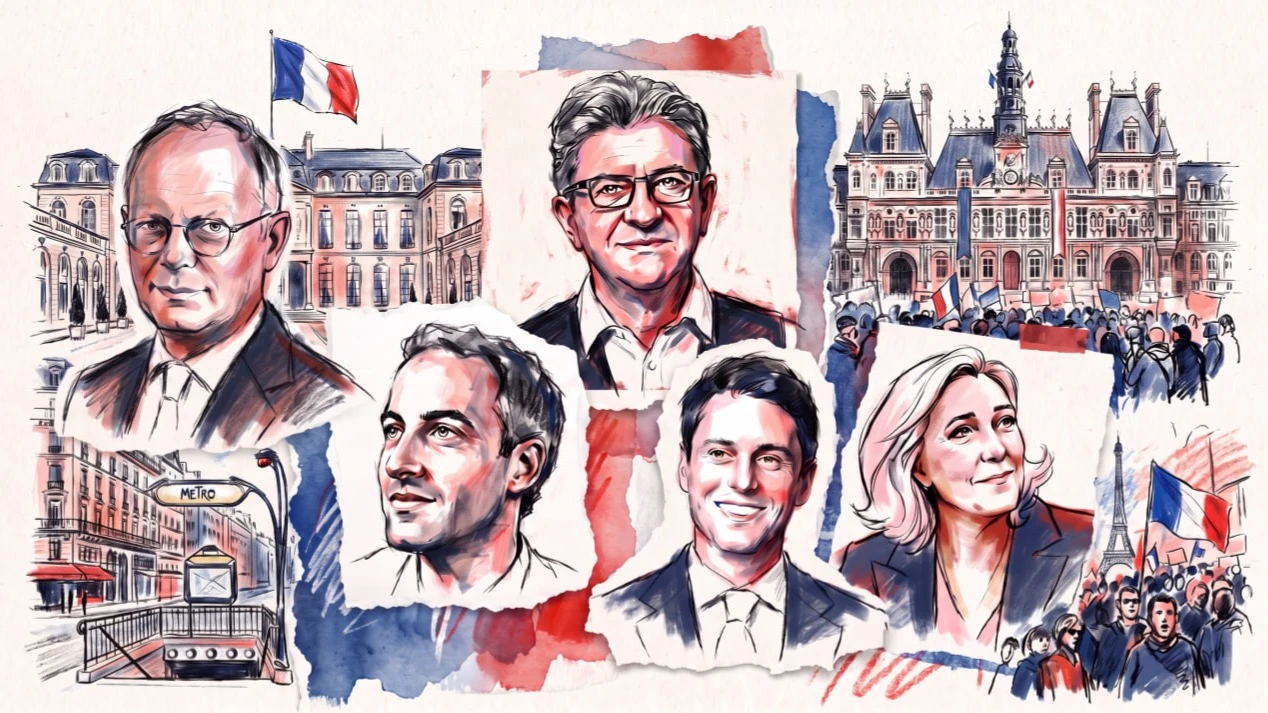
With the French presidential election in April 2027, polls show Marine Le Pen as the favorite, while Édouard Philippe, Raphaël Glucksmann, Jean-Luc Mélenchon, and Gabriel Attal round out the top five / Illustration by Oninvest
France, grappling with debt and budget crises, will hold a presidential election in April. For now, the candidates from the far right and far left have taken the lead. They are making promises that angry French voters want to hear. Yet that leaves plenty of room for unexpected turns. Political commentator Sergey Mikhaylov examines the favorites and under-the-radar contenders in the race for the Élysée Palace.
What the polls show
The first round of France’s presidential election is scheduled for April 18. By late October, the campaign should be gathering momentum, with favorites emerging. Everyone understands, however, that the decisive developments still lie ahead.
Opinion polls are published every week, conducted by various polling organizations. The balance of support in the first round has held steady over the last two months: Marine Le Pen, one of the leaders of the National Rally party, is well ahead, with 30-35% of voters prepared to back her. She is considered a far-right politician, though in recent years she has worked hard to soften her image and avoid alienating moderate voters.
None of her rivals in the presidential race commands more than 20% of the vote, according to the polls. A fierce contest is now taking shape among them for a place in the second-round runoff and the chance to challenge the front-runner.
In second place is Jean-Luc Mélenchon, leader of the far-left France Unbowed party, who, unlike Le Pen, fully lives up to his political label. In previous elections, he consistently won around 20% of the vote, a figure that represents both his electoral ceiling and a dependable base of support.
Next come Horizons party leader Édouard Philippe and Raphaël Glucksmann, the winner of the social-democratic camp’s primary. Where they trail Mélenchon, the gap is within the margin of error. Gabriel Attal, secretary-general of the Renaissance party, rounds out the top five.
The candidates chasing Le Pen and Mélenchon will soon need to give their campaigns a substantial boost or consider an alliance.
Lessons from a previous election
Consider the 2017 election, when incumbent President Emmanuel Macron first won the presidency: in October 2016, no one could have predicted his victory.
Everyone was waiting for the outcome of the Republicans’ primary, which François Fillon ultimately won. He looked like the leading contender for the presidency until a scandal erupted in January 2017, destroying his political career and opening the way for Macron. Journalists reported that Fillon’s wife and children had received publicly funded salaries as parliamentary aides.
What does this teach us? The main lesson is that candidates’ current polling numbers offer an early guide, but it would be a mistake to attach too much significance to them. The central figure in the new campaign is the angry French voter.
Many French people feel trapped: inflation is outpacing their incomes, prices at the pump are at record highs, the education system is struggling, and public services are deteriorating.
Most French blame Macron for their lack of personal prospects and the sense that the country has reached a dead end.
A full assessment of his presidency will come later, a few years down the road. That requires some historical distance. But political life follows its own rules: judgments are delivered now, shaped by the concerns of the moment. By that logic, everything today is Macron’s fault. Just 15% of French people approve of his performance in office, according to Ipsos, the lowest level since 2017.
This directly shapes what the presidential candidates say. Those who have been in opposition, notably Le Pen, Mélenchon, and Glucksmann, stress at every opportunity that they bear no responsibility for the bleak last decade and promise a complete break with the incumbent’s governing style.
The centrist contenders for the presidency, Philippe and Attal, both served as prime minister under Macron. Now both must defend their records and promise political renewal, fully aware of the difficulty of winning voters’ trust.
Le Pen and her 'national priority'
This will be her fourth presidential election, and she has never been so close to victory. Polls consistently put her first-round support above 30%. Even the scandal involving her trusted ally Jordan Bardella, who made openly anti-Semitic remarks in his youth, according to a Mediapart investigation, has failed to dent her standing.
Bardella is slated to become prime minister if Le Pen wins. For now, he enjoys the full support of the entire National Rally party, starting with its leader, and categorically denies the anti-Semitism allegations. Still, the affair may not be over. Further revelations could emerge, potentially forcing Le Pen to make difficult decisions under pressure.
Her platform combines right-wing political positions, primarily tighter immigration rules and a crackdown on all forms of crime through tough policing, with populist economic promises. The central principle is what she calls “national priority.” This should not be understood as U.S. President Trump’s “America First”: it does not involve settling scores with neighboring countries or, despite her criticism of Brussels, leaving the EU or the euro zone. Still less does it involve foreign-policy projects driven by ambitions of national grandeur.
“National priority” means tightening immigration rules, withdrawing from international aid programs – Le Pen has said, for example, that she intends to end aid to Ukraine – and restricting foreigners’ social entitlements in France, particularly access to benefits and social housing. None of these plans comes as a surprise: Le Pen has always been happy to discuss lowering the retirement age to 60 or cutting value-added tax using savings made at foreigners’ expense.
The economic component of her platform may prove the real test of Le Pen’s presidential ambitions. She speaks of enormous potential budget savings from France’s contributions to the EU budget and an overhaul of immigration policy.
There are concerns, however, that these estimates are too optimistic. The enormous hole in France’s public finances has not come out of nowhere: it reflects persistent deficits in the pension and social insurance systems. Rather than reforming these systems, Le Pen proposes finding money elsewhere, and some of her ideas may prove sound. Yet that will not make fundamental reforms any less necessary. Another potential difficulty lies in institutional constraints. Her enthusiasm for proposed referendums, including on constitutional amendments, is no coincidence.
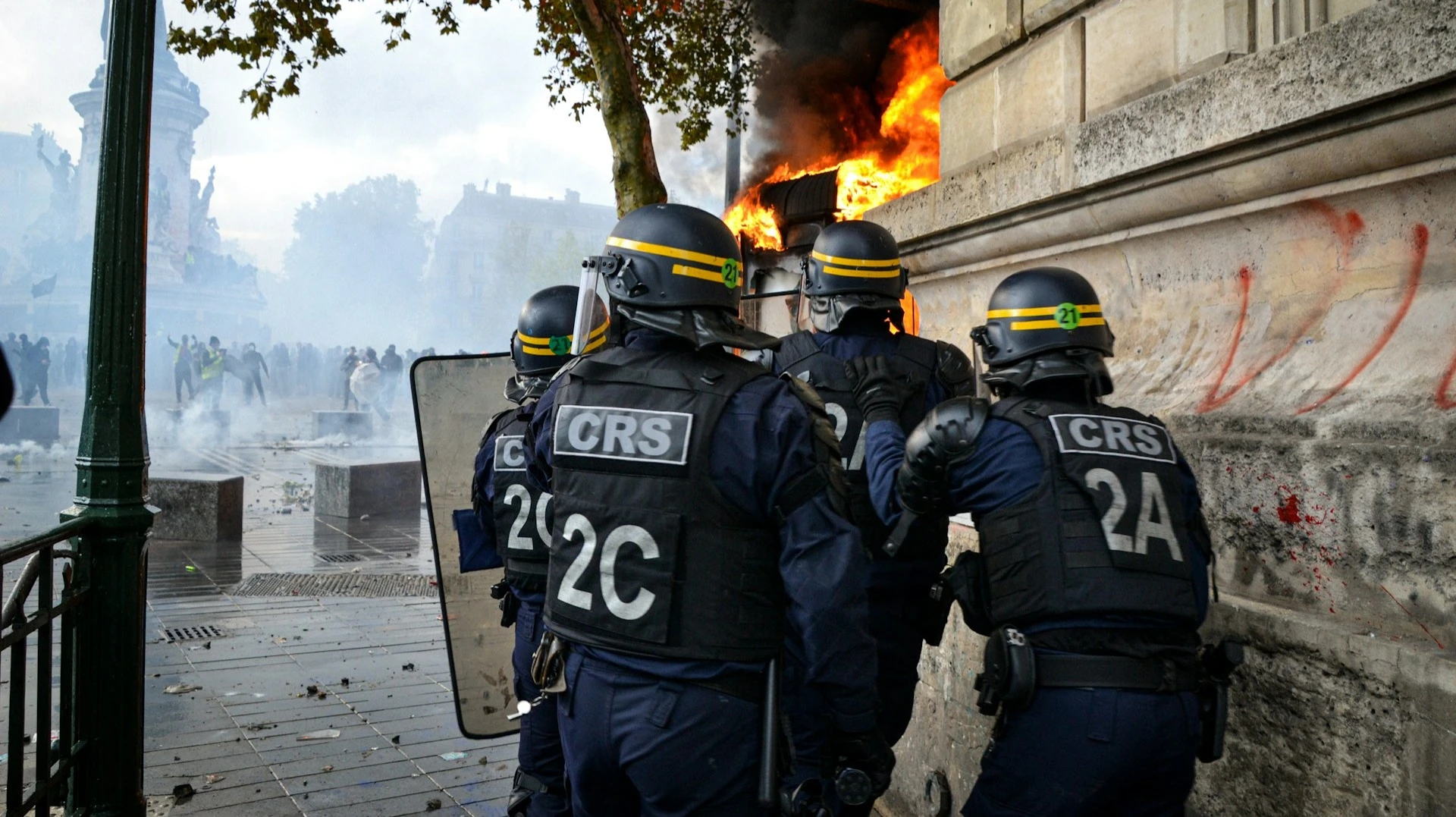
It is already clear, however, that the Senate and the Constitutional Council will take their own positions rather than automatically endorse all her proposals.
From the opposition benches, Le Pen can readily discuss constitutional changes that would curb the influence of European institutions and provide a legal basis for risky initiatives. It would be quite another matter to travel to Brussels as French president and present such ideas to the European Council, knowing how important European support is to France, including for the cost of servicing its external debt.
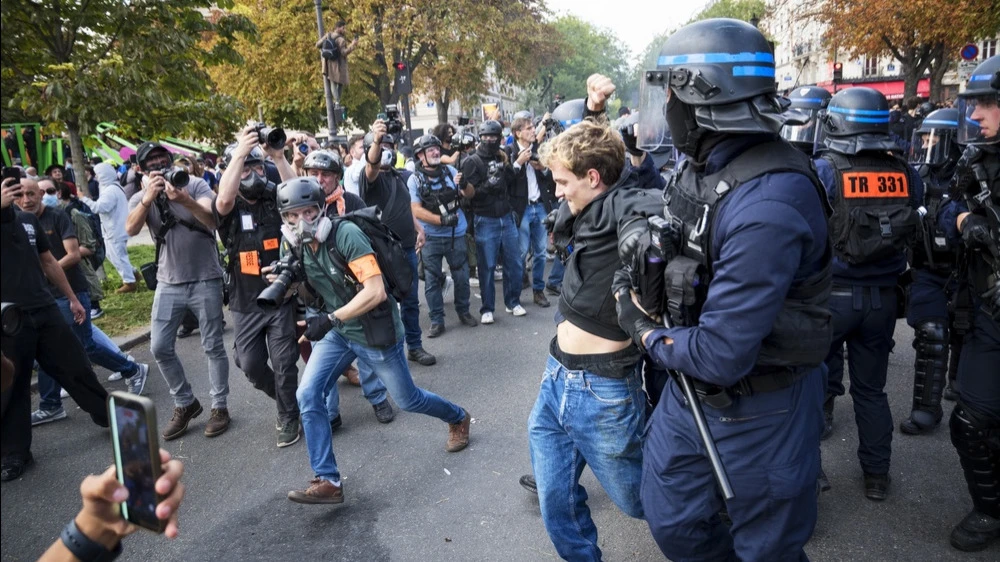
The contradictions in Le Pen’s platform will not trouble her loyal supporters. But they will give pause to those protest voters willing and able to examine the details. Unless, that is, substantive debate gives way to discussion of an unending succession of increasingly violent protests.
Mélenchon and his vision of a Sixth Republic
The 75-year-old politician has a long career behind him. A Trotskyist in his youth, he later served as a minister in a Socialist government before founding France Unbowed in 2016. That move indeed paid off: France’s Socialist Party was in deep crisis after François Hollande’s presidency, and the left-leaning part of the electorate needed new ideas and faces.
Like Le Pen, Mélenchon built his political movement on fierce criticism of the elites and their inability to meet the challenges of the times. He attacked the government from the left, presenting himself as a champion of the oppressed.
The defining word in his platform is "rupture," a break with capitalism in its current form, the outsized incomes of the wealthy, existing budgetary principles, hidden discrimination, and, indeed, the Fifth Republic itself.
Mélenchon would like to replace the current system with a Sixth Republic founded on the principles of popular democracy.
It is difficult to take these ideas seriously, but they resonate with young people, both in disadvantaged neighborhoods and at universities. Young people are always acutely sensitive to the injustice they see around them. Mélenchon’s theatrical rhetoric, delivered with undeniable charisma, pays political dividends.
Many opinion polls now suggest that he could reach the presidential runoff, where he would be certain to lose to Le Pen. Mélenchon has long faced high levels of rejection: an Odoxa poll published in October 2023 found that 62% of French people had a negative opinion of him. His lead over rivals from the centrist camp is so narrow, however, that any predictions are clearly premature.
His position is complicated by the presence this time of a strong challenger from the moderate left. Glucksmann, the winner of the social-democratic primary, categorically rejects an alliance with Mélenchon and looks like a credible rival. In the two previous presidential campaigns, Mélenchon could claim to be the only candidate across the entire left, from Socialists to Communists, with a chance of winning. So this time will be different, and he cannot automatically count on the votes of the entire left.
The moderates: Who will challenge the front-runners?
Within the political center, the moderate right and moderate left find themselves in significantly different positions. The latter has chosen a common candidate through a primary: Glucksmann. Polls suggest he will be able to compete for a place in the runoff.
For all their limitations, primaries have the undeniable advantage of giving the winner an unquestioned mandate among the voters they represent. There is no such clarity on the moderate right. There are Philippe and Attal, who served as prime minister at different points under Macron. There is Bruno Retailleau, a former interior minister who took every opportunity to emphasize his differences with the government. There is David Lisnard, the mayor of Cannes. He has not served in the government and has consistently criticized Macron’s policies from a free-market conservative perspective.
In terms of their platforms, these candidates, who have eschewed the overt populism of Le Pen and Mélenchon, seek to put forward responsible proposals aimed primarily at balancing the budget and bringing public debt back under control.
Clearly, achieving those goals requires unpopular reforms, particularly to pensions and social insurance, as well as public spending cuts. The difficulty is that French people, many of whom already feel their living standards slipping, have little enthusiasm for plans to scale back their social entitlements, even when they understand their underlying reason. Especially when Le Pen and Mélenchon promise to find money elsewhere, from the wealthy, foreigners, corporations, and so on, without making ordinary citizens worse off.
Another difficulty for the moderate candidates is their membership in the political establishment and, by extension, their association with the record of Macron’s almost decade in power.
Philippe and Attal are in the most difficult position. Retailleau and Lisnard emphasize their opposition to the incumbent’s indecisiveness and inconsistency. But both have long belonged to the Republicans and, in the public mind, are little different from their party colleagues who served directly in Macron’s governments.
Finally, Glucksmann has always been in opposition and cannot fairly be criticized on those grounds. But he faces the difficult task of winning over Mélenchon supporters or voters on the moderate right.
Add together the polling support for all these candidates and the result is an impressive figure: more than 40%. That suggests France’s political center still exists. Unfortunately, however, electoral arithmetic does not work that way. A Glucksmann voter will likely never vote for Retailleau, and vice versa.
An alliance between Philippe and Attal in January or February is conceivable, but a pact involving other contenders looks more problematic. Mélenchon sees his chance of reaching the runoff in this fragmentation of the center. But the contest has yet to play out.