The Euro vs. the Barricades: What Affects Its Exchange Rate More Than the Crisis in France
The unrest in the country has made headlines everywhere, but it is only indirectly affecting the European currency

The debt crisis in France is undermining the euro's position as an alternative to the dollar. Photo: Robert Anasch / Unsplash.com
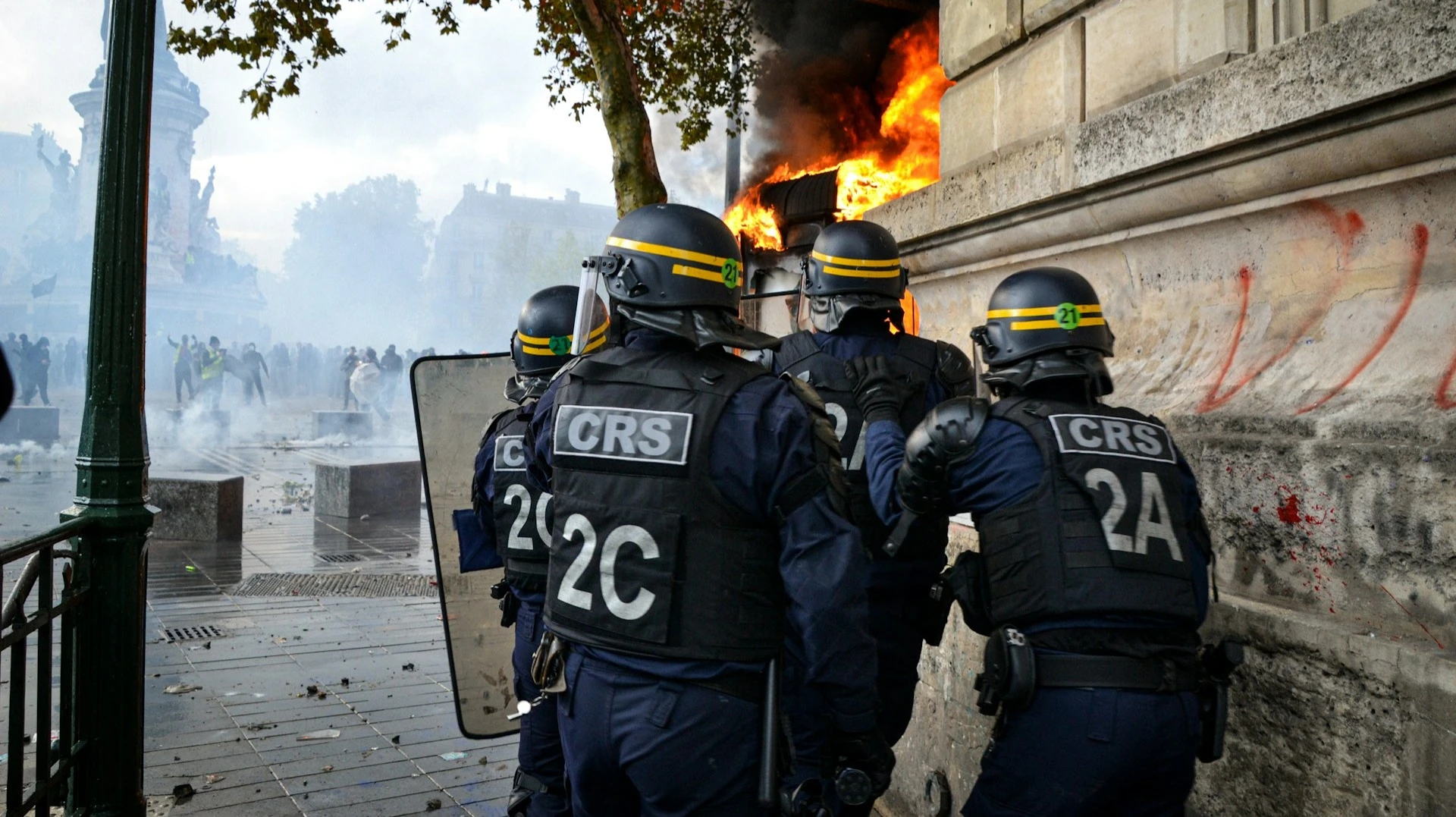
The protests in France have become the largest in recent years and have spread to Italy, while against this backdrop, the euro hit a 17-month low against the dollar. This suggests that the European currency’s exchange rate is now being determined by the streets. However, Sergey Romanchuk, a financier and member of the ACI’s Foreign Exchange Operations Committee, sees it differently: the protests are just one factor—and by no means the most important one. There are six reasons for this.
What the Market Revealed
I’ll start with the numbers, because they don’t match the headlines. Since mid-June, the euro has lost about 2.5% against the dollar: from $1.15 to a low of $1.1161 on October 5, and to roughly $1.12 now. For the EUR/USD pair, this is a noticeable but quite typical movement over four months.
Movements in the bond market turned out to be much more pronounced. The spread between French and German 10-year bonds widened from about 65 basis points in June to more than 150 now—the highest level since late 2011. Yields on French OAT government bonds have approached 5%, a level not seen since 2002, and France now borrows at higher rates than Italy and Greece.
How did the euro react to the street riots in dozens of French cities over the weekend? With a small downward gap at Sunday’s open. On Monday, it failed to develop into either a sell-off or a rebound. The yield on 10-year OATs rose from 4.8% to 4.9%. This is within the range of normal volatility—both for bonds and, even more so, for the currency.
ING estimates the short-term fair value of EUR/USD based on the interest rate differential to be $1.137–1.139. In other words, the entire political premium (compared to the current exchange rate) that the market is currently pricing into the euro exchange rate is about 1.5%.
This is the cost of the entire situation in France, which includes protests, budget uncertainty, and the upcoming presidential election.
Why Street Protests and Political Battles Aren't the Main Factors
First, the protests and political uncertainty do not affect the euro directly, but rather through bonds and the ECB. The spread between French and German bonds had already widened before the unrest—due to the failure to meet budget targets and the government’s lack of support from a parliamentary majority.
The street protests here are not the cause, but a symptom: they merely confirm what the market already knew—that it is politically impossible to consolidate the budget before the 2027 elections. Reuters rightly notes that the unrest is significant for the euro through its impact on the French debt market, rather than in and of itself.
Second, in the short term, the euro exchange rate is much more heavily influenced by other factors.
— This is the interest rate differential. The ECB raised rates in June and September due to rising inflation (which stood at 3.8% in September, with energy prices accounting for 1.71 percentage points of that figure). The Fed also resumed raising rates in September.
— It’s oil: Brent is trading above $100 per barrel, and the eurozone countries are net energy importers. The euro is weakening significantly against the currencies of oil-exporting countries—the Norwegian krone and the Canadian dollar—based on terms of trade.
Third, the value of the EUR/USD pair is determined primarily by the behavior of the dollar. And this is where a unique magnet for capital is currently at work.
The growth of the largest AI companies, their plans to raise capital, and current capital expenditures in the data center sector—all of this constitutes one of the most powerful investment cycles in history. Foreign capital is flowing into U.S. stocks and the debt securities of the largest companies—in other words, essentially into the dollar. This is changing perceptions of the dollar’s attractiveness more than any European policy.
For the euro, this is a competition for capital. And in this regard, Europe lacks a comparable growth narrative. The situation in France—the government’s attempts to balance the budget and deal with protests, as well as political uncertainty ahead of next spring’s presidential election—is reducing the euro’s appeal at precisely the moment when the dollar has something to offer.
My long-term outlook on the dollar hasn't changed: political risk in the U.S. remains an independent factor affecting the currency. But today, that risk is being overshadowed by the impact of interest rates, oil prices, and developments in AI.
There is a downside to this, and it is more significant for the euro.
The dollar has essentially become a leveraged bet on AI. At a time when the Nasdaq is questioning the return on investment, the dollar is no longer strengthening as a safe haven but is falling along with stocks. ING states outright that the jitters surrounding AI have undermined the dollar’s protective function. Financing capital expenditures with debt adds risk: corporate bonds issued by AI companies are already competing with Treasuries for long-term capital. If the bubble bursts, capital flows will reverse: after the dot-com crash, the dollar index lost a third of its value over three years.
Fourth, there is a truly long-term factor at play for the euro.
Last year, I wrote that the rise in the euro’s share of global reserves was halted not by exchange rates or policy, but by investors’ concerns about the reliability of bonds denominated in the European currency: it peaked at 28% in 2009, on the eve of the debt crisis, and has remained around 20% ever since.
The crisis in France undermines this argument, as France is the eurozone’s second-largest government debt market—one that, until recently, had benefited from the flight to quality but has now become a source of it itself. As long as France’s debt yields remain higher than those of Italy and Greece, talk of the euro as an alternative to the dollar in reserve holdings is on hold. However, this does not fundamentally change the euro’s position as the only significant alternative to the dollar.
Fifth, the shape of the French government bond yield curve suggests that the market is not pricing in an imminent crisis. As of October 2, the yield spread between two-year French government bonds and German bonds stood at about 65 basis points, while that for ten-year bonds was about 140 basis points. To date, the spread on 10-year bonds has widened to 150 basis points. As before, the spread remains significantly wider at the long end of the yield curve, indicating concerns about long-term fiscal problems rather than the threat of an imminent default.
The protests do not change this picture.
Sixth, political premiums in the euro have historically faded unless they escalate into a fragmentation crisis. Fears about Le Pen in 2017 dissipated over the course of the second-round election night. After the dissolution of parliament in June 2024, the euro fell by about 1% and recovered within a few weeks.
Even during the 2010–2012 debt crisis—which posed an existential threat to the euro—it did not fall significantly below $1.2. At that time, the dollar had no advantage in terms of interest rates: the Fed kept them near zero and was conducting quantitative easing, while the ECB even raised its rate in 2011. An exchange rate is a relative value, and a crisis affecting one currency does not lead to its unlimited decline if the other side of the pair does not offer an alternative. As long as the ECB retains its ability to act, the political premium in the euro exchange rate is measured in percentage points, not tens of percentage points.
What does all this mean for the exchange rate?
The only way the street can become the main factor determining the European currency’s exchange rate is indirectly. If the protests ultimately make budget cuts impossible, the debt math will take over: the budget isn’t passed, Moody’s downgrades the rating, the spread over German bonds rises above 175–200 basis points, and the question arises of whether to use the TPI (Transmission Protection Instrument)—the ECB’s tool for purchasing bonds from a troubled country. It has never been used.
For France, it is available only under certain conditions: as of July 2024, the country was subject to the excessive deficit procedure (which requires the country to submit a plan to reduce its deficit), but in June 2026, the procedure was suspended. Most importantly, the ECB can apply it at its discretion and only if it deems the dynamics of a country’s bond yields to be unjustified. In the case of French spreads, it currently considers the situation to be justified.
Allianz Research believes that the ECB may intervene if the French-German spread widens to around 200 basis points, with the Italian spread exceeding 175 basis points. In this scenario, the ECB would halt the process of monetary policy tightening, and the euro would simultaneously lose both of its pillars—interest rates and confidence. It could fall to $1.10 or lower.
But even here, the reason for the decline will not be the streets, but the political calendar. The main event is the French presidential election in April 2027. Far-right leader Marine Le Pen leads in the polls with 35–38%, while in some polls, far-left politician Jean-Luc Mélenchon comes in second. A potential runoff between these two candidates, both of whom are skeptical of European regulations, could turn a temporary boost into a long-term factor.
The spread to the rest of Europe has so far been limited: Spanish bonds are trading 75 basis points below French bonds, and the spread between Italian and German bonds currently stands at 130 basis points, compared to over 500 basis points in 2011.
In my view, the base-case scenario looks like this: Until the election, the euro’s political discount against the dollar will remain at 1–2%, and the direction of the EUR/USD pair within the $1.10–1.15 range will be determined by the difference between the ECB and Fed interest rates and the price of oil. But this is a temporary discount, not a trend reversal.
It’s worth comparing this with my previous projections. In July 2025, I anticipated that the euro would rise to $1.3 by the end of the year, but the pair never broke through the $1.2 level.
I would put the April 2027 target of $1.25 per euro on hold, but I wouldn't cancel it.
There are also reasons for a weaker dollar—political risk in the U.S., the budget deficit, and pressure from the U.S. administration on the Fed. None of these factors have gone away; it’s just that oil prices and rising interest rates are currently more influential factors.
The main scenario in which the euro would rise despite the crisis in France is the bursting of the AI bubble in the U.S. and a flight of capital from the dollar.
It’s too early to write off the euro because of the unrest. The most honest thing one can tell an investor today is that the euro’s fate is determined not by the streets of Paris, but by oil, the ECB, and the French election calendar. The protests merely serve as a reminder that the calendar is “relentless.” And, as always, forecasting exchange rates is an unreliable endeavor, so these conclusions should not be treated as trading recommendations.
This article was AI-translated and verified by a human editor