An oil and three LNG tankers have passed the Strait of Hormuz. What's up with Brent prices?
Oil futures were trading at their lowest since Ma. 7

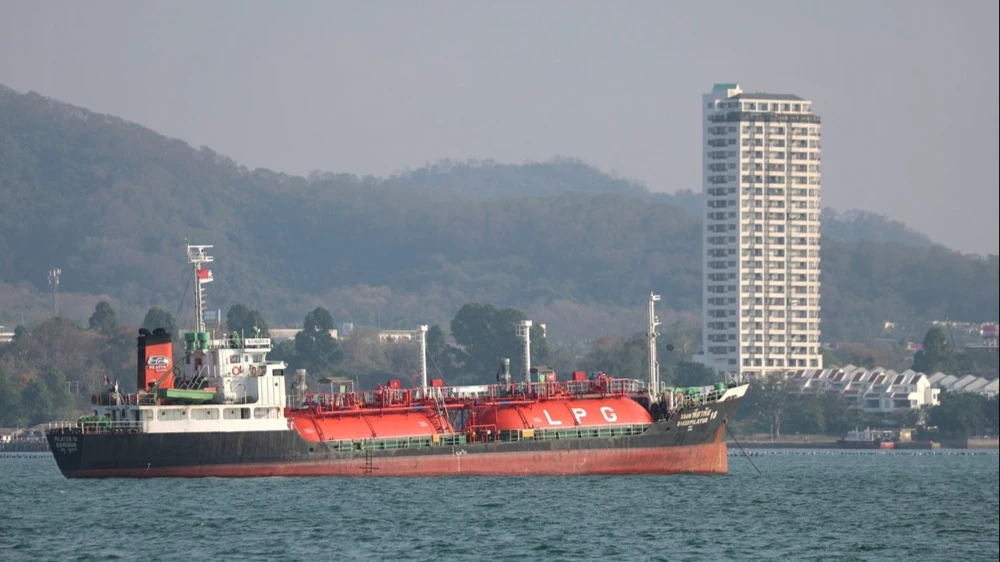
Brent crude oil futures were down more than 7% in trading on Monday / Photo: somkanae sawatdinak / Shutterstock.com
Three liquefied natural gas tankers and one oil tanker have passed through the Strait of Hormuz in recent days bound for China, Pakistan and India, Reuters reported. The increased shipping activity in the strait could be a sign that traffic on this critical shipping route is gradually reviving amid Iran-US talks to extend a fragile truce, the Financial Times noted. Investors' hopes of a deal between the parties led to a 7% drop in the value of Brent.
Details
The LNG tanker Fuwairit crossed the Strait of Hormuz on Monday and is expected to unload in Pakistan on Tuesday, Reuters writes, citing tracking data from LSEG and Kpler. The Bahamas-flagged vessel loaded the LNG at the Qatari port of Ras Laffan around March 28, the agency said. Japan's Mitsui O.S.K. Lines, which owns Fuwairit, declined to comment to Reuters.
Another LNG tanker Al Rayyan with a cargo from Ras Laffan was observed in the Persian Gulf on May 22, and is now outside the Strait of Hormuz between Iran and Oman, Reuters reported. The vessel will unload in China on June 27, according to LSEG and Kpler. QatarEnergy, which owns Al Rayyan, did not respond to an after-hours request for comment from Reuters.
The Al Hamra tanker operated by Abu Dhabi National Oil Company (ADNOC) was last seen east of the strait on April 19 and appeared in vessel tracking data off the coast of India on Ma 23, Kpler data showed. An ADNOC spokesman declined to comment to Reuters on the location, movements or routes of the company's vessels, citing corporate policy.
Finally, the VLCC Eagle Verona vessel, which left the strait on Saturday, is expected to reach the port of Ningbo in eastern China on June 12 to unload, LSEG and Kpler data showed. The Singapore-flagged vessel, chartered by Unipec, the trading arm of Asian refiner Sinopec, loaded nearly 2 million barrels of crude back around Feb. 26. The Eagle Verona was among seven vessels for which Malaysia was seeking transit authorization, sources told Reuters earlier. Five of those vessels have since left the strait, while two others remain in the Persian Gulf. Sinopec and Malaysia's state-owned shipping company MISC, which owns the vessel, could not be immediately contacted by Reuters for comment.
The ships joined a small group of supertankers that left the Persian Gulf in May on a transit route mandated by Iran, Reuters writes. Before the U.S. war with Iran, shipping traffic through the strait averaged 125 to 140 passages a day. About 20,000 sailors remain stranded on hundreds of vessels in the Persian Gulf, the agency notes.
What's up with oil prices
Brent crude futures for July delivery were down by more than 7% in trading on Ma. 25: the price fell to $96 per barrel. Investors are hoping for progress on the US-Iran peace deal. Markets ignored the comments of the Iranian Foreign Ministry spokesman, who said on Monday: despite the agreement on many topics, it does not mean that Tehran is close to signing a peace deal, writes Reuters.
Brent and U.S. WTI crude oil contracts were trading Monday at lows since Ma 7, the agency noted.
What the analysts are saying
"Even though the [U.S.-Iran] deal is not yet done, there seems to be hope that oil will start to flow through the Strait of Hormuz," Price Futures Group senior analyst Phil Flynn told Reuters.
Even if a peace deal is reached, analysts expect oil flows through the strait to return to normal levels to take months while damaged oil and gas facilities are repaired, Reuters writes. "The underlying supply deficit of 10-11 million barrels of oil per day will not disappear immediately, and markets will continue to reduce inventories until Middle East oil production recovers, which will take months," Jun Guo, an analyst at Sparta Commodities, told the agency.
"We continue to believe that the key factors for the oil market to watch should be physical oil flows; for now, flows through the strait remain limited," Reuters quoted UBS analyst Giovanni Staunovo as saying.
Markets have become less focused on the timing of conflict resolution and instead follow the tone of news headlines, Pepperstone research head Chris Weston noted in a conversation with Reuters. "The tone consistently points to some sort of settlement ... We've become very patient with the timing of a resolution," he said.
Last week, Barclays maintained its forecast for the average price of Brent crude for 2026 at $100 a barrel, although it noted that the balance of risks is tilted toward higher prices.
This article was AI-translated and verified by a human editor