An Unwelcome Measure: Why Kazakhstan Is Abolishing the Mandatory Sale of Foreign Currency Proceeds

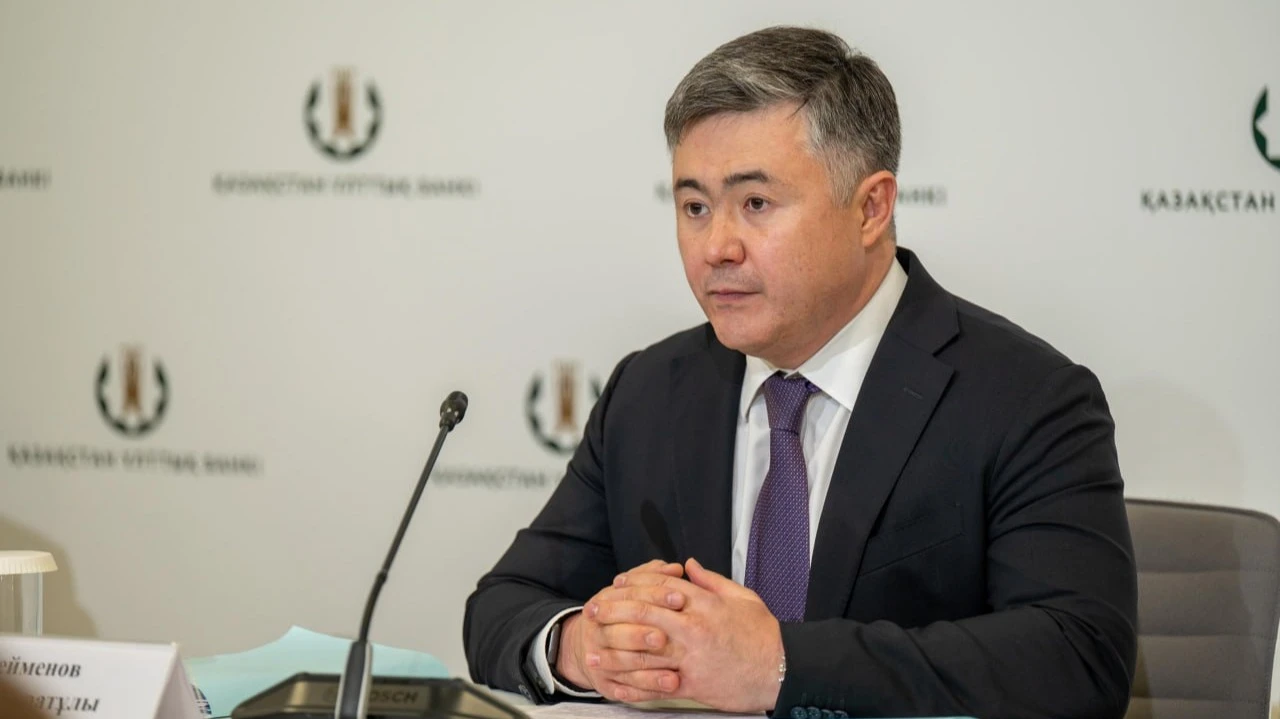
Timur Suleimenov, head of the National Bank of Kazakhstan, stated that there is “no crisis in the country, the tenge is stable, and the balance of payments is in order” / Photo: National Bank of Kazakhstan
Starting next week, the National Bank of Kazakhstan plans to eliminate the requirement for export companies to sell 50% of their foreign currency earnings.
“This was a crisis response measure, and we plan to lift it next week,” said Timur Suleimenov, chairman of the National Bank, at a press conference on Friday. “We always have it in our arsenal; when necessary, we can reinstate it.” Suleimenov noted that the decision to lift the measure was made because there is “no crisis in the country, the tenge is stable, the economy is very stable, and the balance of payments is in order.” According to him, the cancellation will not “fundamentally” affect the balance of supply and demand, since exporters still “have to sell their proceeds because their expenses are in tenge.”
In his view, this measure will not deter so-called “carry traders”—foreigners who invest in local securities and, thanks to a stable local currency and high interest rates, earn higher returns than those offered by dollar-denominated instruments. “As long as investors see that their interests are protected, they will feel right at home in this jurisdiction,” Suleimenov said. According to him, the share of such investments in Kazakhstan’s government debt is close to 8% and has never risen above 9%, whereas in other countries it reaches 12% and even 17%. “We welcome portfolio investments, but at the same time, we recognize that there are certain challenges. Therefore, if this figure remains around 10%, that is a balanced level.”
Suleimenov emphasized that the tenge is currently strengthening “without any intervention by the National Bank.”
Context
The mandatory sale of half of their foreign currency earnings by state-controlled export companies (referred to in Kazakhstan as “quasi-state-owned”) was introduced on November 19, 2024, amid a sharp depreciation of the Kazakhstani currency: while the dollar had fallen below 440 tenge in June, by November it had surpassed 500 tenge. Rising interest rates in the U.S. increased the appeal of dollar-denominated instruments, which hit all emerging-market currencies, and at the same time, oil prices began to fall, explained Aliya Moldabekova, deputy chair of the National Bank, at the time.
Starting on November 15, the National Bank had to sell more than $1 billion as part of its foreign exchange interventions and then gradually raise the base rate to 18%. The rise in the dollar exchange rate was not fully halted until October 2025, when it stabilized at around 550 tenge. Since then, the tenge has strengthened, and in May, the National Bank reported a slowdown in inflation and subsequently lowered the rate to 17 %.
What's Next?
Daniyar Orazbaev, an analyst at Freedom Broker, considers the National Bank’s decision a logical step. He points out that when a similar measure was lifted in September 2023, the tenge weakened only during the first two months, and over the following eight months, it was even stronger than before the mandatory sale of export proceeds was abolished. “In other words, lifting the measure at that time was a justified decision, and there was no sharp weakening of the tenge in the medium term,” he notes.
Dmitry Dolgin, ING’s chief economist for the CIS countries, agrees with him, noting that currency sales by sovereign players play a much greater role in supporting the tenge: These sales have totaled about $1 billion per month since the beginning of the year, and quasi-state-owned companies sold $423 million in June—which is about 5% of the local foreign exchange market’s turnover. “It is unlikely that the repeal will significantly affect the tenge in the medium term, but some players may interpret this statement as a signal that the government is uncomfortable with the tenge’s appreciation, and such verbal intervention could lead to short-term fluctuations in the foreign exchange market. Past experience shows that such measures are introduced when the dollar exchange rate exceeds 500 tenge and are lifted when it is close to 450 tenge.”
By the close of trading on Friday, July 10, the dollar had risen to 476.2 tenge on the KASE.
This article was AI-translated and verified by a human editor