The tenge has strengthened despite seasonal expectations: what's next?

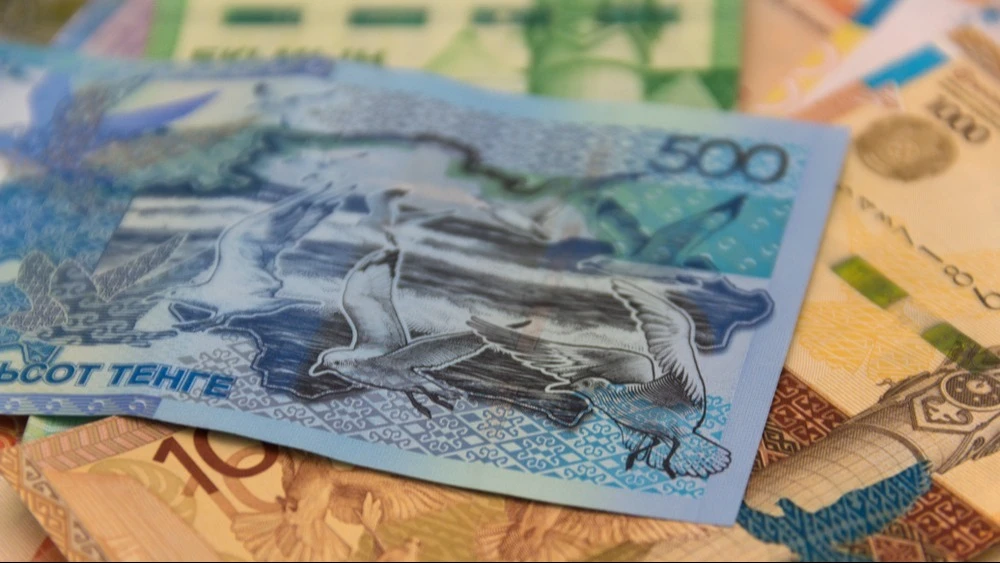
In June, the tenge exchange rate showed virtually no reaction to fluctuations in oil prices / Photo: Shutterstock.com
Despite expectations of the tenge’s traditional summer weakening, the national currency actually strengthened last week: from June 30 to July 3, the dollar exchange rate fell from 485 to 473 tenge. Among the reasons are an increase in the supply of foreign currency and the resumption of non-resident capital inflows into Kazakh government securities. However, analysts do not yet believe this represents a sustained trend.
A Quiet June
In May, the tenge weakened sharply, partly due to the National Bank’s reduction of the base rate from 18% to 17%. As a result, instead of a monthly average inflow of $200 million, the market saw an outflow of about $93 million. Another factor contributing to the tenge’s depreciation was the purchase of foreign currency for the pension fund in May. In April, after a hiatus of nearly a year, the National Bank purchased $502 million for the Unified National Pension Fund (UNPF). In May, $878.5 million was purchased for the UNPF—that is, about 13% of the monthly trading volume.
In June, the dollar exchange rate remained relatively stable, fluctuating for most of the month around 485–490 tenge per dollar. However, in the second half of the month, a trend toward the tenge’s appreciation emerged. This was driven, in particular, by the resumption of non-resident investment in Kazakh government securities: in June, their investments increased by 185.1 billion tenge (about $382 million), or 7.9% compared to May, reaching 2.5 trillion tenge (approximately $5.15 billion).
“June turned out to be a rather weak month in terms of foreign currency purchases by the National Pension Fund; the volume fell by a factor of 9.5 compared to May and by a factor of 5.5 compared to April. Since the National Bank does not disclose planned purchase volumes, as it does for other operations, this result came as quite a surprise,” says Freedom Broker analyst Daniyar Orazbaev. “As a result, June turned out to be quite strong in terms of net foreign currency sales—amounting to $1.26 billion, 60% higher than in May. “The National Bank likely did not want the tenge to weaken further in June and reduced its currency purchases for the Unified Pension Fund.”
What's next?
In June, the tenge exchange rate showed virtually no reaction to fluctuations in oil prices: since the last ten days of May, the price of a barrel of Brent crude had fallen almost continuously from above $110 to about $70—yet this did not prevent the exchange rate from remaining generally stable.
In June, year-over-year inflation fell to 10.3% from 10.4%—which generally keeps the prospect of a future rate cut on the table. However, the pace of the decline in inflation has slowed noticeably compared with the previous five months and has continued at an increasingly slower pace for the third consecutive month.
The main technical innovation in the National Bank’s operations in the foreign exchange market was the introduction of a new mechanism: now, given the irregularity of budget revenues and expenditures, transfers to the Ministry of Finance are allocated based on actual needs rather than preliminary requests. According to the National Bank, in June, the regulator purchased $460 million from the National Fund to finance these transfers. The regulator stated that these foreign currency funds will be sold evenly on the domestic market through the end of the year as part of the transaction mirroring mechanism.
“For the second month in a row, the National Bank has been reporting on certain transactions after the fact—first regarding the Unified National Pension Fund, and now regarding purchases for the Ministry of Finance; this practice did not exist before,” notes Ramazan Dosov, an analyst with the Association of Financiers of Kazakhstan.
However, aside from this technical detail, Dosov does not see any significant changes in trading volumes or expected pressure toward a strengthening or weakening of the tenge. “From a forecasting perspective, the market may have received a signal that, even if the dollar exchange rate rises above 490 tenge, it will do so without active intervention by the National Bank,” summarizes Daniyar Orazbaev.
This article was AI-translated and verified by a human editor