Answer vs solution: how an economic model of the psyche can help investors

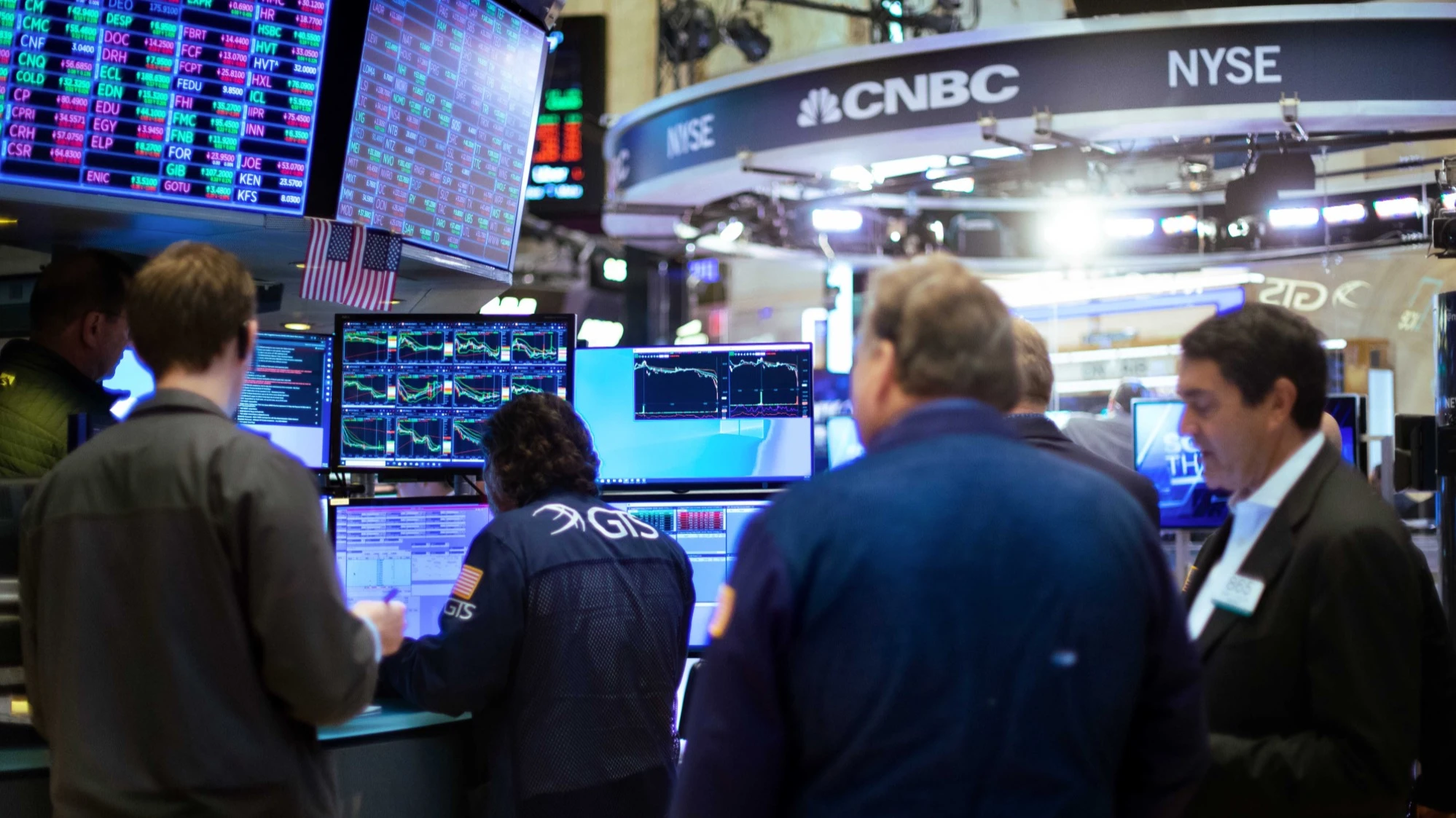
During periods of market turbulence, investors look for answers where decisions actually need to be made. Photo: NYSE / X
Investors are always looking for the "right answers", especially during times of market turbulence like now. Will a recession begin? Is it better to buy or sell? The problem is that most of these questions don't have an answer - they require a solution. And both factually and psychologically, finding an answer and making a decision are different things. How do you learn to make decisions in the face of uncertainty? An economic model of the psyche can help, writes Konstantin Kunakh, psychologist, author of the book "Suffer with reason" and the Telegram channel of the same name.
What irrational decisions hide
There are many ways to explain what happens in our psyche when we don't know what to do. One of the most effective and understandable approaches for people who are used to thinking rationally is the economic model of the psyche, that is, a way of thinking about it in terms of economics and even business - resources and their expenditure, transactions (even with oneself!) and, most importantly, the price a person pays for this or that action.
Economic principles are embedded in all the big schools of psychology, from Sigmund Freud describing the psyche in terms of utilizing a limited resource - libido energy - to Martin Seligman seeing depression as an economic imbalance of responsibility for successes and failures and finally Daniel Kahneman showing the economic division into systems 1 and 2 necessary to save mental effort.
Using this terminology, we can live much more efficiently using the same resources. And the very process of making a decision or avoiding it is well understood in this optic.
The basic tenet of the economic model is that a mentally healthy person is always internally rational.
How does this square with the actual observation that people behave irrationally all the time? The way out of the seeming contradiction here is in the word "intrinsically".
When a person makes an objectively bad decision that does not lead to their stated goals, they do so not because they are crazy, but because they either have misconceptions or actually have a different goal in mind. Very often, bad business or investment decisions are made because the person is actually solving the wrong problem. For example, instead of "maximize profits" his main objective is "avoid a drawdown", instead of "capture the market" - "don't be accused of a mistake", instead of "operationalize the task" - "leave yourself an escape route".
A close examination of behavior described in economic terms provides insight into what a person is actually striving for and what perceptions they are relying on.
When there's no answer to a question
In the face of uncertainty, the first thing to do is to separate the two different processes of finding an answer and making a decision. In everyday life, we often use these words synonymously. But in reality, they mean very different things.
The answer is a description of reality. It exists independently of us. It can be found, tested, and proven. For example, there is an answer to the question what the Fed Funds rate is now. The question of what tax breaks are in place for investors also has an answer. And the answer can be right or wrong.
The question, "What line of business should I take on?" cannot be "answered": there are too many uncertainties. And this is where a decision will be needed.
A decision is taking responsibility for an action. It is taken when no answer is possible, or even in spite of an answer.
No one "decides" how much fuel an airplane needs to get from point A to point B. It's a matter of calculation and fact. But someone has to decide whether to launch a scheduled flight between these points.
There were no formulas that "prompted" the development of the iPhone or gave an answer to whether houses should be electrified. Decisions are fundamentally made not on the basis of formulas.
The same thing is happening in investments. The question of whether bitcoin will continue to grow will be answered at some point, but only retrospectively. But whether to invest in it or not is a decision that is made in the moment. And decisions, unlike answers, are not "right" or "wrong", because the category of correspondence to reality does not logically apply to them.
They can be more or less effective. "I decided (not) to invest in bitcoin" is an acceptance of responsibility, not a statement about the outside world.
Why investors may be avoiding solutions
Behavioral economics has long described such effects. The research of Daniel Kahneman and Amos Tversky shows that people systematically avoid decisions that force them to take responsibility for risk. From a mental perspective, this makes sense. The simplest, most intuitive version of economics looks like this: save money, don't spend, avoid loss. Therefore, a human being as a creature who is not in a hurry to take on any kind of burden for no particular reason, naturally tries to avoid the weight of responsibility.
The easiest way to do this is to replace the solution with a search for the answer.
This can be seen not only in the marketplace, but also in business. Imagine a conversation in a company: "What is the client's deadline for a project?" - "Usually projects like this take us two months" - "But this particular project?" - "It's more complex. It may require more time." "So how much time do we say?" - "Well, we need a margin so we don't rush it. The average time on the market is three months." And so on.
What's going on here? Formally, there is a discussion, but there is no decision. One of the participants of the conversation tries to replace the solution with a set of facts - because there is no need to answer for a fact.
In the same way, an investor can endlessly read analytics, wait for confirmations and look for a signal that will tell him what to do. But in reality, this often means only one thing - the decision is postponed.
The price of inaction
To get out of the mode of waiting for an answer to appear that will eliminate the need to make a decision, another economic trick is useful: the price of the status quo. When people think about choices, they usually consider two options. There's option A and option B. Each has its own price and potential benefit. But this often misses the third option - doing nothing - which is exactly what is realized without a conscious choice to realize it.
While the investor is choosing between buying or not, his actual choice has already been made: the capital remains unmoved, and that too has a price.
Experts from The Motley Fool calculated the path of the "unlucky investor" for the last 60 years at the end of 2025. Even if he invested $10 thousand each time in index funds following the S&P 500 at the worst moments in the history of the market, he would still win over the long haul. And so, $10 thousand invested in October 2007, before the global crisis of 2008-2009, would have turned into $44.76 thousand. "Pandemic" investments of February 2020 would have turned into $20.45 thousand.
The economic model of the psyche proposes to evaluate the price of all scenarios, including the price of waiting. Sometimes the difference between options A and B is really small. But almost always the option "not to make an active decision" (i.e. not to invest at all) turns out to be the most expensive.
This article was AI-translated and verified by a human editor