Anthropic will focus on drug development. How can one profit from AI in the pharmaceutical sector?

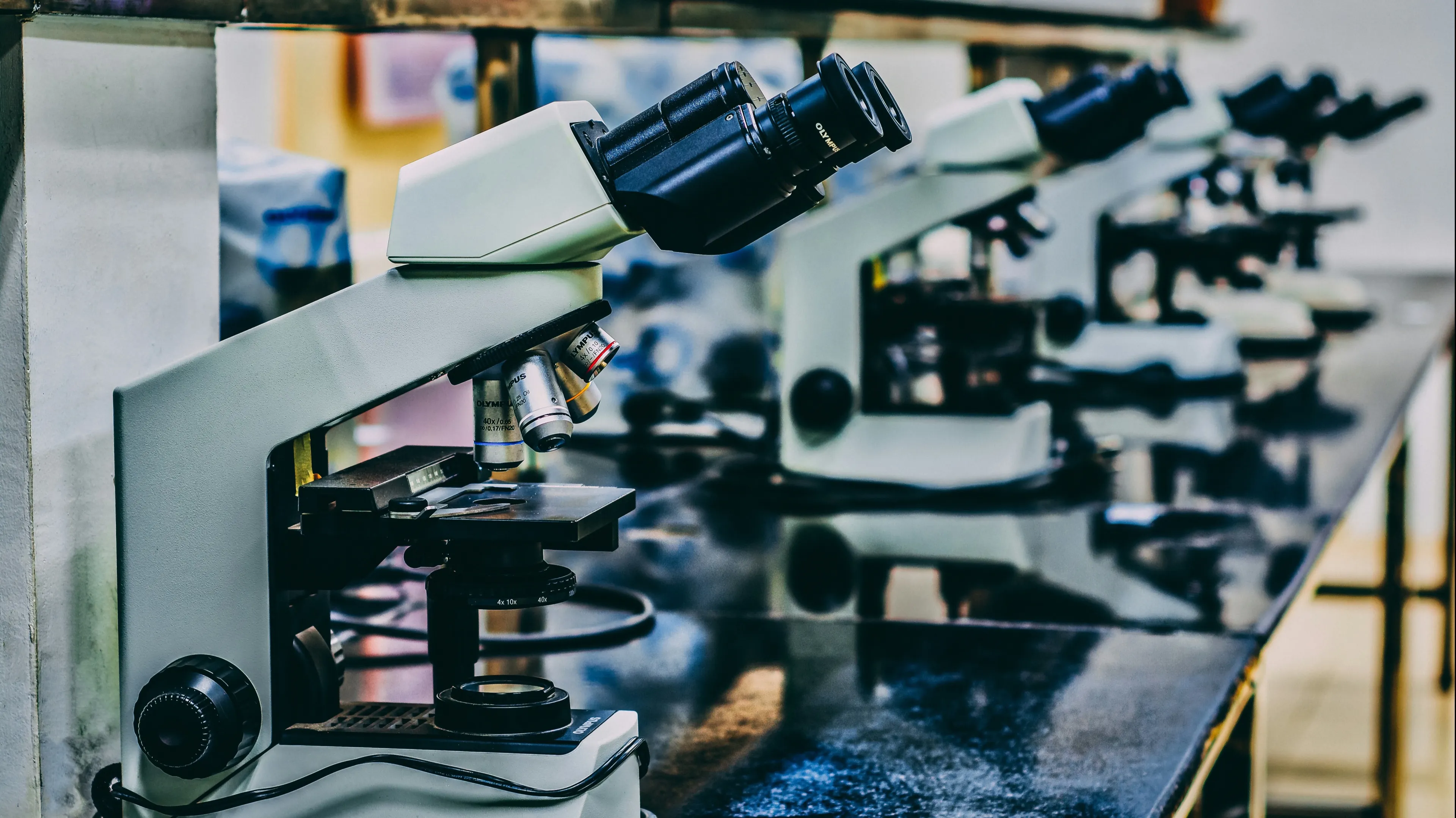
Anthropic unveiled Claude Science, an AI platform for scientific research, and also announced the launch of preclinical drug development programs. Photo: Ousa Chea / Unsplash.com
On June 30, Anthropic announced the launch of Claude Science —a full-fledged scientific AI platform—and simultaneously announced the launch of its own programs to develop new drugs. Will artificial intelligence be a breakthrough for the pharmaceutical industry, or are we witnessing yet another hype cycle ahead of the IPOs of major AI labs?
Patent Crash
The global pharmaceutical industry is facing one of the largest patent expirations in history.
According to GlobalData, the share of sales of patented drugs will fall from 12% in 2022 to just 4% by 2030. This means that 96% of the market will be open to competition from alternatives—generics and biosimilars.
According to various estimates, many cutting-edge drugs with combined annual revenue of $200–300 billion will lose their patent protection by 2030.
"More than half of the top 15 pharmaceutical companies are expected to face significant challenges as the industry approaches the 'patent cliff,'" says George El-Helou, a strategic intelligence analyst at GlobalData.
Drugs such as Keytruda (Merck), Opdivo (Bristol Myers Squibb), Dupixent (Sanofi), Darzalex (Johnson & Johnson), and dozens of other blockbuster drugs are under pressure. For the first time, not only small molecules but also highly complex biologics—monoclonal antibodies, which for decades have provided pharmaceutical giants with patent-protected revenue—will face pressure from biosimilars.
Under these circumstances, pharmaceutical companies are desperately seeking ways to accelerate their research and development (R&D) processes. Artificial intelligence seems like a natural candidate to come to the rescue in this situation.
“I’m optimistic about biotechnology. I think biotechnology is on the verge of a renaissance… ultimately driven by artificial intelligence,” said Anthropic founder Dario Amodei in an interview with Nihil Kamat in February 2026.
AI for Scientists
In April, he confirmed the seriousness of his intentions by purchasing $400 million worth of shares in Coefficient Bio—a startup that was less than a year old, with a staff of 10, but among them were people with experience in computer-aided drug design at the pharmaceutical giant Genentech. And finally, on June 30 in San Francisco, at an event for representatives of pharmaceutical and biotech companies, Anthropic unveiled Claude Science —a tool the company ranks alongside Claude Code and Claude Cowork, products that have already become practically the gold standard for software developers.
This isn’t just a chatbot—it’s a full-fledged research environment: more than 60 scientific databases, integration with Nvidia’s BioNeMo suite of AI tools, management of computations on high-performance clusters, and a special “reviewer agent” that verifies citations and calculations. What’s particularly important for scientists is that the developer promises full reproducibility and verifiability of every result, right down to the raw data and code.
Among other things, the company stated that it will not limit itself to the role of a tool provider: it is launching its own preclinical drug development programs , but only for neglected diseases that are of no commercial interest to traditional pharmaceutical companies.
By focusing specifically on “neglected diseases,” Anthropic avoids direct competition with Eli Lilly or Pfizer and also navigates the most challenging commercial and regulatory landscape.
This suggests that Anthropic’s primary goal is to demonstrate the value of Claude Science as an evolving product, rather than to fully launch a biotechnology business segment, according to Igor Klyushnev, co-founder of Freedom Holding Corp. and founder of Freedom On Air, Igor Klyushnev.
That's a smart move. On the one hand, Anthropic will gain direct experience in actual drug development—which is necessary to improve its own tools—and on the other hand, it won’t be competing with potential clients in the pharmaceutical industry for the most commercially attractive molecules.
As the Financial Express notes, Anthropic has set its sights on the drug development market, which is worth more than $100 billion—a highly relevant development for a company planning to go public this year.
Especially since the competition isn’t sitting idly by. In April, OpenAI released GPT-Rosalind —a specialized AI model for scientists that integrates with more than 50 tools. And two months earlier, the company’s CEO, Sam Altman, outlined a new potential way to monetize the business: he stated that OpenAI could invest in pharmaceutical projects that use its models to discover new drugs or treatments, in exchange for royalties on those discoveries.
Another Approach: More Practice
While Silicon Valley is just getting started, one company has been developing drugs using AI for 12 years. That company is Insilico Medicine, founded in 2014 by Alex Zhavoronkov—a graduate of Moscow State University and Queen’s University with a PhD in physics and a degree in biotechnology from Johns Hopkins University. It is currently listed on the Hong Kong Stock Exchange with a market capitalization of about 21.4 billion Hong Kong dollars (approximately $2.7 billion).
Unlike Anthropic, which is building a platform for pharmaceutical companies, Insilico is itself a pharmaceutical company powered by AI. Its Pharma.ai platform combines three components: PandaOmics for target discovery, Chemistry42 for generative molecular design, and inClinico for predicting clinical trial outcomes.
In 2023, the company launched a fully automated, AI-controlled laboratory in China. In 2025, it was further equipped with a humanoid robot for repairing and maintaining the equipment. In other words, the company is gradually shifting from pure computing to conducting experiments and “real-world” AI.
Insilico’s portfolio includes about 30 drugs at various stages of development. Its flagship drug is rentosertib, developed using AI to treat idiopathic pulmonary fibrosis. On July 7, the company announced that the drug had shown promising results and that it was beginning the final Phase III clinical trials.
“We’re reducing risk. Partners in the pharmaceutical industry are looking for certainty. This allows us to replenish our portfolios before patent expirations begin to impact profits, potentially bringing an end to the era of ‘desperate mergers and acquisitions,’” MedPath quotes Zhavoronkov as saying.
In March 2026, Insilico entered into a $2.75 billion deal (excluding royalties on future sales) with Eli Lilly to develop oral medications, and in June, it signed another deal for the same amount with South Korea’s SK Biopharmaceuticals.
However, it is important to understand that all these billions are still hypothetical. Under the standard procedure in the pharmaceutical industry, a small portion is paid up front, with the remainder due only after certain milestones in the drug’s development, registration, and commercialization are reached—milestones that may well remain a pipe dream.
Nevertheless, Klyushnev considers this a success and “a striking example of the industry’s growing interest in high-throughput drug discovery technologies.”
So, will artificial intelligence save the pharmaceutical industry from a patent crisis? Despite the enthusiasm of AI evangelists, investment experts are more cautious in their assessments.
"AI doesn't solve the main problem"
The cost of developing a new, original drug exceeds $2 billion, all because the required clinical trials are very expensive, and a huge number of attempts end in failure.
The main problem in the pharmaceutical industry is that 85–90% of drugs fail in clinical trials. And Ilya Yasny, a partner and head of research at the venture capital fund LanceBio Ventures, believes that even with the use of AI in the early stages of development, it is unlikely that anything can be done to fundamentally change this situation.
As an example, he cites the American company Recursion, which has been developing drugs using AI for quite some time. Ten years ago, they promised to advance 100 drugs to the clinical trial stage, but now they have only seven.
Yasny draws attention to the fundamental problem of a lack of training data.
Unlike LLMs, which have been trained on literally billions of text examples, in medicine the number of cases available to train AI on is only in the tens of thousands. A case refers to how well a drug performed after showing promising results in preclinical trials. But this is such a multidimensional and “noisy” data set that it generally cannot be used to effectively train a neural network.

AI, in its current form, may be of limited use in the early stages of development to quickly rule out incorrect options, but overall, when evaluating pharmaceutical companies, one should focus not on AI, but on actual preclinical and clinical data, the team, and the need, “in other words, conducting good old-fashioned due diligence,” concludes Ilya Yasny.
Igor Klyushnev generally agrees with him. He points out that the first drugs developed using AI technologies are not expected to hit the market until at least 2028, so AI development is unlikely to have a significant impact on the upcoming patent cliff.
No matter how technically advanced they may be, the latest AI tools will not be able to dramatically accelerate drug development without first overcoming real organizational, clinical, and regulatory constraints. These constraints are often overlooked by CEOs of technology companies as they make bold predictions about the future of AI in the pharmaceutical and biotechnology sectors. Nevertheless, we can expect the trend of increasing investment in AI startups focused on the biotech sector to continue, as well as a rise in M&A activity by mid-cap and large-cap players.

Among the promising companies in the AI-driven drug discovery sector, he highlights Absci, in addition to Insilico (whose stock has risen 218% since the start of the year), as well as Generate Biomedicines, which raised $400 million in its February 2026 IPO. This was one of the largest biotech offerings of the past year.
This article was AI-translated and verified by a human editor