Levi's raised its sales forecast due to demand for high-end jeans. Why did its stock price fall?
Levi's focus on its premium product line helped the company increase revenue despite a decline in consumer sentiment

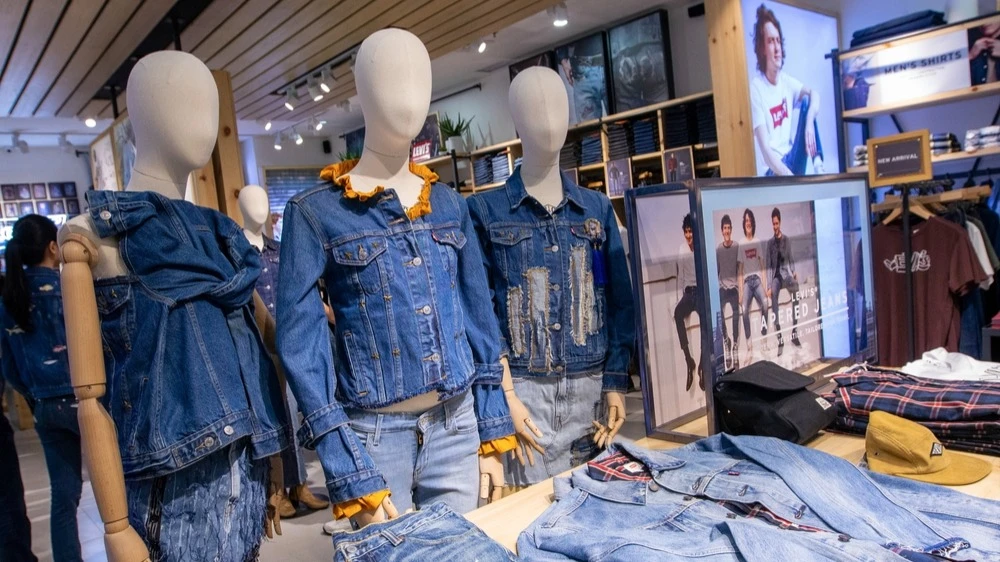
Levi's is actively expanding its women's apparel segment / Photo: Wisnu Gareng/Shutterstock.com
The Levi Strauss jeans brand has raised its annual revenue and profit forecasts: the company expects that high-end denim will continue to find buyers among affluent customers, even amid economic uncertainty that is holding back consumer spending. But the iconic brand’s stock plummeted: investors were disappointed by the cautious forecasts, which still factor in significant pressure from import duties, according to Seeking Alpha.
Details
In the second fiscal quarter, which ended on May 31, Levi's revenue rose 8% to $1.56 billion. Analysts surveyed by LSEG had expected $1.52 billion, according to Reuters. Sales in the Americas, the company’s main market, rose 9%; in Asia, they rose 10%; and in Europe, growth slowed sharply compared to both the first quarter and the previous year, to 4%.
Levi's now expects net revenue to grow by 7–7.5% in fiscal year 2026, up from its previous forecast of 5.5–6.5%. The company’s projections are based on the assumption that U.S. tariffs will remain at 30% for China and 20% for other countries. The company also raised its forecast for adjusted earnings per share to $1.46–1.52 from the previous $1.42–1.48; however, the midpoint of the range was slightly below market expectations, Reuters notes.
Strong quarterly results did not help the stock: in after-hours trading on July 8, it fell 5.5%. The main trading session that day ended with a 1.2% decline, bringing the price down to $24.4. Year-to-date, the stock is up 17.5%, but it still hasn’t reached its 2021 highs.
Going for Luxury
Following a change in leadership in 2023, Levi's began expanding its women's apparel segment—introducing new dresses, skirts, and tops—and investing in its own stores and online sales, which offer higher profit margins. As a result, revenue has been growing every quarter for two years in a row. Loose-fitting styles have become popular among affluent Gen Z shoppers, and this year’s new line of $300 jeans is being sold in more stores, according to Reuters.
CEO Michelle Gass says that the premium Blue Tab line has helped the company increase its market share in the high-end denim segment. Sales in the high-end price category rose 40% over the quarter, and Levi's now sees more opportunities there than before. “Today, it’s a relatively small business, but there’s no reason why it can’t become a $100 million or $200 million-plus business over time,” said Gass (as quoted by MarketWatch).
What Analysts Are Saying
Experts attribute the market’s negative reaction to overly high expectations. “Levi’s outlook is strong, but some investors seem to want even better numbers. In reality, their expectations are unrealistic,” Bloomberg quotes Neil Saunders, managing director of GlobalData, as saying. “Levi’s is showing steady growth, and it’s doing so in a challenging market.”
Half of Levi's sales come from its own stores and online channels, and the typical customer there is someone with a low-to-middle income, notes Michael Hunter, senior vice president of research and market analytics at Consumer Edge (the company tracks card spending at these locations in the U.S.). These customers are cutting back on discretionary spending: bills for gas and groceries have risen. In May, Gap and American Eagle Outfitters, which cater to the same audience, reported weakness in their women’s lines: demand for dresses, skirts, and pants has fallen, Reuters reports.
Context
Levi's had already raised its forecast in April, even though the market was concerned at the time that a U.S.-Iran war would drive up gas prices and hurt consumer spending. The conflict in the Middle East also drove up the cost of raw materials—such as polyester. In late February, the company’s CFO, Harmit Singh, said that the Middle East accounts for less than 1% of Levi’s business, and the volume of goods passing through the blocked Strait of Hormuz was “very, very insignificant,” MarketWatch notes.
This article was AI-translated and verified by a human editor