Bill Gates called for securing jobs for people to protect the labor market from AI
The billionaire struck a more serious tone compared to the impressions of AI he shared in 2023

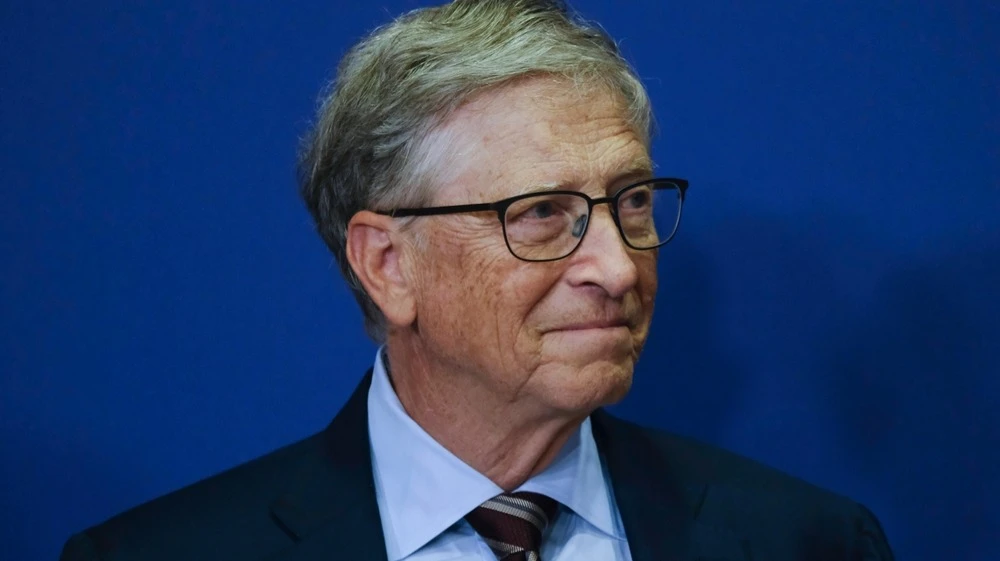
Gates Proposed Guaranteeing Jobs for People to Protect Against AI / Photo: Alexandros Michailidis / Shutterstock
Billionaire and Microsoft co-founder Bill Gates issued a stark warning about the threats artificial intelligence poses to employment and people’s living conditions. On August 26, he published an essay on his website about the dawn of a “turbulent era of AI”. The billionaire put forward three points regarding how the technology will affect the labor market, what threats it poses to society, and what preventive regulatory measures need to be taken.
Details
Bill Gates believes that companies are rapidly adopting AI without any well-thought-out plan in place to deal with the inevitable major disruptions.
“Even under the most favorable circumstances, the transition to this new era of artificial intelligence will be one of the most turbulent periods in human history,” he wrote. Gates stated that no one is preparing for this right now, and he sees no evidence that leaders, experts, and communities are adequately addressing these challenges.
A spokesperson for Bill Gates’ investment firm, Gates Ventures, told the WSJ that the Microsoft co-founder decided to speak out at this particular moment because he believes there is virtually no time left to prepare for the transition. In his essay, Gates addressed political leaders: “You have a chance to act now, before unemployment spikes, communities suffer, and public trust is eroded.”
Three Theses by a Billionaire
— Artificial intelligence will soon affect the jobs of both “white-collar” and “blue-collar” workers. A significant portion of the billionaire’s essay is devoted to employment: he notes that entry-level and mid-level positions are at the greatest risk of being eliminated. According to him, AI will soon affect manual labor as well, and the scale and speed of these changes set this process apart from past transformations in the labor market. While the transition from agriculture to office work took generations, sectors such as law, customer service, software development, and manufacturing will feel the impact of AI within a decade.
A society with a much larger number of unemployed people will need a stronger social safety net, he added. As factories closed, opioid-related deaths rose in many regions: “Imagine similar pressure on ‘white-collar’ and ‘blue-collar’ workers across the country.”
— Critical thinking is more important than ever, and it is under threat. Gates emphasized that AI could become an “echo chamber” (a space where people are exposed to opinions that reinforce their own beliefs), which could have a profound impact on children. Chatbots are addictive, can serve as a source of comfortable communication without unnecessary difficulties, and undermine critical thinking.
“This would be the worst possible time for people to lose their critical thinking skills. In an era of deepfakes and disinformation that can be tailored specifically to you, the ability to distinguish truth from falsehood is becoming an essential life skill,” he wrote.
He also highlighted the risk of cyberattacks on power grids, hospitals, and banks. Fraud and surveillance will become widespread. AI will also enable authorities to use lethal force without human intervention, Gates wrote.
— Taxes are part of the solution. Bill Gates has called for taxes on AI tokens and bots. This could slow companies’ drive to replace human labor. Such levies could also fund a social safety net to retrain professionals whose jobs will disappear. He noted that these revenues could offset the decline in income tax revenue—which will decrease due to lower employment—so that governments can continue to provide services.
He called on governments around the world to cooperate on regulatory issues, specifically emphasizing that the United States and China need to work together. Gates compared these efforts to global coordination on nuclear weapons, aviation, and the protection of the ozone layer.
Context
This message strikes a more measured tone than Gates’s 2023 essay on artificial intelligence, in which he wrote that he was as excited about this revolution as he was about the advent of the internet and personal computers, notes The Wall Street Journal. Although the latest piece highlights the enormous potential of artificial intelligence to benefit society—citing advances in energy, healthcare, and agriculture—he emphasized the serious consequences that could result from mismanaging this transition period.
This article was AI-translated and verified by a human editor