Secret billionaires, Altman's portfolio, and Mars: 6 revelations from Musk's trial against OpenAI
Jurors could rule as early as Monday in the first major artificial intelligence case

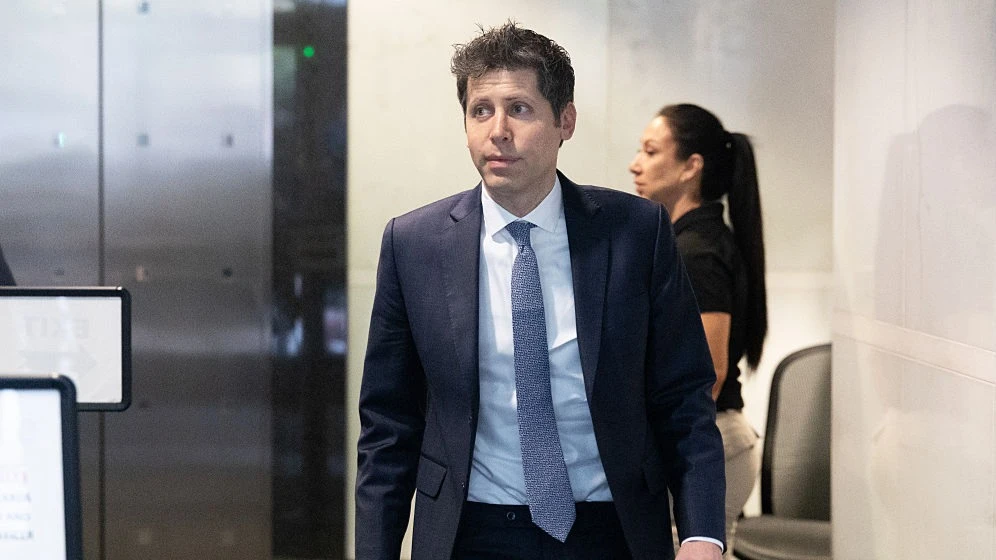
OpenAI CEO Sam Altman in court over Elon Musk's lawsuit / Photo by Benjamin Fanjoy/Getty Images
The future of one of the world's most expensive startups will soon be decided in California. A court in Oakland is preparing to rule on Elon Musk's lawsuit against OpenAI, which will either open the way for the artificial intelligence developer to go public with a potential valuation of $1 trillion, or derail its commercial ambitions and lead to a forced change of management, the Financial Times reports. The three-week trial, which was the first major trial in the AI tech industry, uncovered personal diary entries and correspondence and questioned several billionaires, including Musk, the world's richest man. Here are six things we learned during the hearings.
OpenAI has made some employees very rich
The trial has revealed two new billionaires at once, who have not been included in the Forbes list until now. OpenAI President Greg Brockman, who has held key positions in the startup since its founding, said in his testimony that his stake could be worth $30 billion. Brockman hinted at his desire to become a billionaire in his diary, which was read out in court. Now he has enough money to become one of the world's 100 richest people according to Forbes.
For his part, OpenAI co-founder and former chief scientist Ilya Sutskever disclosed in his testimony that he owns a $7 billion stake in OpenAI. Sutskever left OpenAI in 2024 and founded the AI lab Safe Superintelligence, which is valued at $32 billion.
Where Sam Altman invested.
The CEO of OpenAI does not own a stake in the business directly, but through various venture investments he has accumulated capital of $3.4 billion, according to Forbes. His portfolio includes several startups that have made deals with OpenAI, which could potentially make him personally richer.
Altman's portfolio was revealed in court by Musk's defense. In total, there are nine companies in it. Stakes in startups that cooperate with OpenAI are worth more than $2 billion in total:
- $1.7 billion: a stake in Helion Energy, which is trying to build the world's first fusion power plant;
- $633 million: shares of fintech startup Stripe;
- $258 million: a stake in biotech startup Retro Biosciences, which is looking for a way to extend human life.
Altman was also an investor in the Reddit platform that partnered with developer ChatGPT, but sold a stake by the end of 2025. His other investments include AI chip maker Cerebras, which recently went public, human resources software developer Degree (aka Lattice), AI device maker Humane, developer Software Applications, and AI pharmaceutical company Trialspark, known as Formation Bio.
Altman confirmed in court that he had suggested to OpenAI's board of directors that they consider partnering with Helion, but insisted that he had recused himself from key negotiations that decided on the partnership. In early Ma, the U.S. House of Representatives Oversight Committee launched a probe into Altman's potential conflicts of interest, requiring him to disclose details of his personal investments.
Musk donated Tesla electric cars to OpenAI employees
In 2017, Musk gave OpenAI co-founders Greg Brockman and Ilya Sutzkever new Tesla Model 3s. In court, the billionaire said he paid full price for them without receiving any discounts for his status as CEO of the company.
Brockman said in his testimony that he perceived Musk's gift as an attempt to win his favor. The electric cars were delivered shortly before a meeting to discuss the future of OpenAI. At the beginning of the meeting, Sutzkever, according to the OpenAI president, gave Musk a return gift - a personally drawn picture of Tesla. Nevertheless, the meeting did not go further. Musk demanded that he be given full control of OpenAI's commercial division, which they had discussed creating to attract investors. Sutzkever and Brockman objected, insisting on sharing control.
According to Brockman's description, Musk became angry and did not restrain himself. "He got up and started thrashing around the table. I actually thought he was going to hit me," the OpenAI president recalled. He said Musk demanded Brockman and Sutzkever leave under threat of cutting off funding, took the painting he had been given as a gift and left the meeting.
Musk wanted to explore Mars with AI money
Musk needed control of OpenAI's commercial business in part to finance the colonization of Mars, Brockman also said. According to him, the Tesla founder said he needed to raise $80 billion to build a self-sufficient city on the planet.
Microsoft was afraid of becoming "IBM" in the OpenAI deal
Microsoft, which began investing in OpenAI in 2019, feared the AI startup would eventually overshadow its biggest investor, top executives' correspondence revealed in court has revealed. Here's how Microsoft CEO Satya Nadella described that fear: "I don't want us to end up as IBM and OpenAI as Microsoft."
In the 1980s, IBM struck a deal with then little-known Microsoft to develop the DOS operating system for its personal computers, CNBC recalls. IBM's mistake was that the contract allowed Microsoft to retain intellectual property rights to the software it developed and do business with other PC manufacturers. As a result, the software was widely distributed. Microsoft later began selling licenses for its Windows operating system to device makers, cementing its key role in information technology.
Nevertheless, Microsoft took a risk, and that investment "has paid off," CEO Satya Nadella said in a deposition. According to court filings, the largest software maker, having invested $13 billion in OpenAI, aimed to earn $92 billion. Microsoft now owns about 27% of OpenAI worth just over $200 billion, the FT points out.
Grok is partially trained by ChatGPT
In court, Elon Musk actually admitted that his artificial intelligence company xAI partially used ChatGPT technologies to train his chatbot Grok. This is known as distillation, a process whereby an older AI model is used to train a new model that replicates its capabilities, often at a much lower cost than it would have taken to create the original model from scratch.
"In general, all artificial intelligence companies [do it]," Musk said when asked by an OpenAI attorney if xAI trained xAI Grok based on ChatGPT.
OpenAI is trying to combat the use of its artificial intelligence models to create third-party solutions. Therefore, Grok's training was apparently conducted using fake accounts, Fortune notes.
Context
The jury in the case will begin deliberating on Ma 18 and could reach a decision as early as Monday, the Financial Times reports. The decision they make will not be binding on the judge.
Musk is demanding the removal of OpenAI's CEO and president, whom he accuses of unjust enrichment. He claims they broke their promise to put the interests of humanity above profit and "purposefully manipulated" him into donating $38 million. After Musk resigned from OpenAI's board of directors in 2018, the startup, in his version, abandoned its nonprofit mission with the complicity of Microsoft. Musk is demanding that OpenAI and Microsoft be required to hand over $150 billion to OpenAI's nonprofit entity and that OpenAI's restructuring be canceled, which would jeopardize its IPO plan.
OpenAI and Microsoft deny the allegations. In court, OpenAI's defense argued that Musk himself wanted to turn OpenAI into a for-profit company that he could fully control.
Legal analysts believe the proceedings are more likely to end in Musk's defeat, writes Fortune editor Jeremy Kahn, who covers artificial intelligence. He bets that Musk will prefer to settle the case at the last minute. For the Tesla founder, the main thing is not victory, his goal is to sow doubts among investors about the sustainability of the new commercial structure of OpenAI, making it difficult to prepare for the IPO and, possibly, to achieve disclosure of information compromising the management of OpenAI, Kahn believes. After all, Musk himself, shortly before the hearing, promised to make Sam Altman and Greg Brockman "the most hated people in America."
This article was AI-translated and verified by a human editor