OpenAI head doubts that AI will lead to a "labor market apocalypse"
According to Sam Altman, he expected the worst for white-collar workers, but his gut let him down

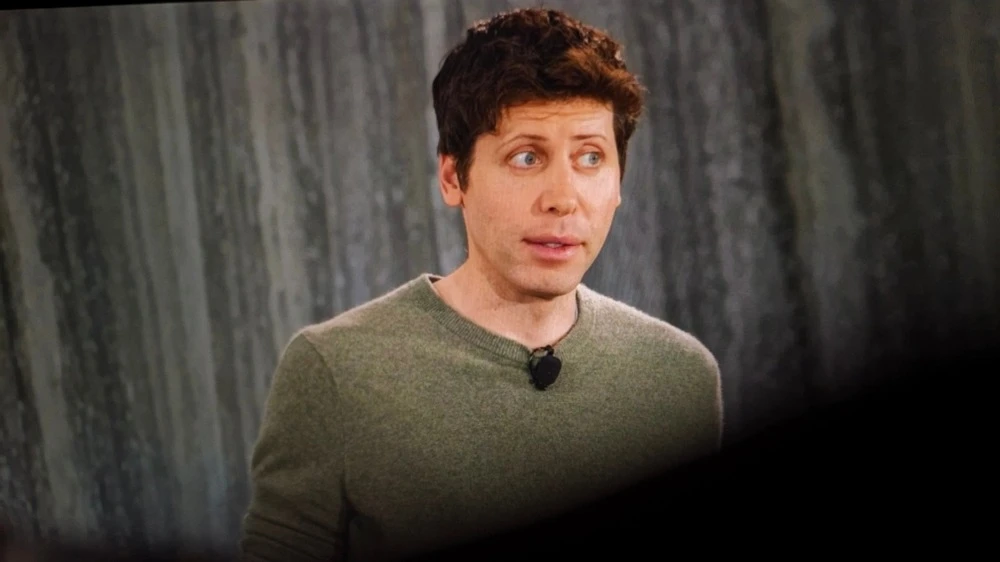
The introduction of artificial intelligence will not lead to a global "apocalypse in the labor market," says the head of OpenAI / Photo: FotoField / Shutterstock.com
The rapid development and implementation of artificial intelligence will not lead to a global "apocalypse in the labor market," said OpenAI CEO Sam Altman, his words reported by Reuters.
Details
Altman admitted that he was initially concerned about the impact AI would have on global employment levels. He said he and other company executives were "about right" in their technology predictions that OpenAI made when they launched ChatGPT in 2022. But in terms of social and economic impacts, he admitted, they were "badly wrong."
"I don't think we're in for the kind of labor market apocalypse that some companies in our field are claiming or talking about," Altman said, speaking via video link at the Commonwealth Bank of Australia (CBA) conference in Sydney. "I'm glad I was wrong in that regard. I thought by now the impact on the elimination of entry-level white-collar jobs would be more widespread than it actually turned out to be," he told CBA head Matt Comyn. The OpenAI CEO added that he now has a better understanding of why that didn't happen, and that his intuition simply failed him on this point.
"People say to me, 'Oh, you could save the world from unnecessary fear-mongering, despondency and panic.' But my reasoning at the time was, 'I can see that this is a real risk and we should probably talk about it' - and that risk could still materialize," he added.
Altman said he realized that even though AI is playing an increasingly active role in many industries and professions, there is still a "human component" to employment that cannot be replaced and supplanted by artificial intelligence. He said he used AI to respond to messages on messenger Slack and via email, but eventually went back to answering some of them himself.
Altman did not provide specific employment figures, however, he has previously commented on potential job cuts across entire industries due to the development of AI, Reuters writes.
Context
Already several global companies, including British financial conglomerate HSBC, U.S. tech giant Amazon, international banking group Standard Chartered and CBA, Australia's largest bank, have announced that some jobs within their structures are being replaced by artificial intelligence, Reuters noted.
Chris Ola, co-founder of one of the leaders in the AI field - startup Anthropic (creator of chatbot Claude) - warned at an event at the Vatican on Ma. 25 that there is a "real possibility" that AI will displace human labor "on a very large scale." If that happens, he said, supporting laid-off humans will become "a moral imperative of historic proportions."
Pope Leo XIV, in his first 43,000-word encyclical (message to the faithful), called on the world's governments to slow down the pace of AI development and heavily regulate the industry.
This article was AI-translated and verified by a human editor