The Old World on New Chips: How Nvidia Is Driving the Industrial Revolution in Europe
Jensen Huang Unveiled Nvidia's Expansion Plan for Europe—From Self-Driving Cars and Humanoid Robots to New Data Centers

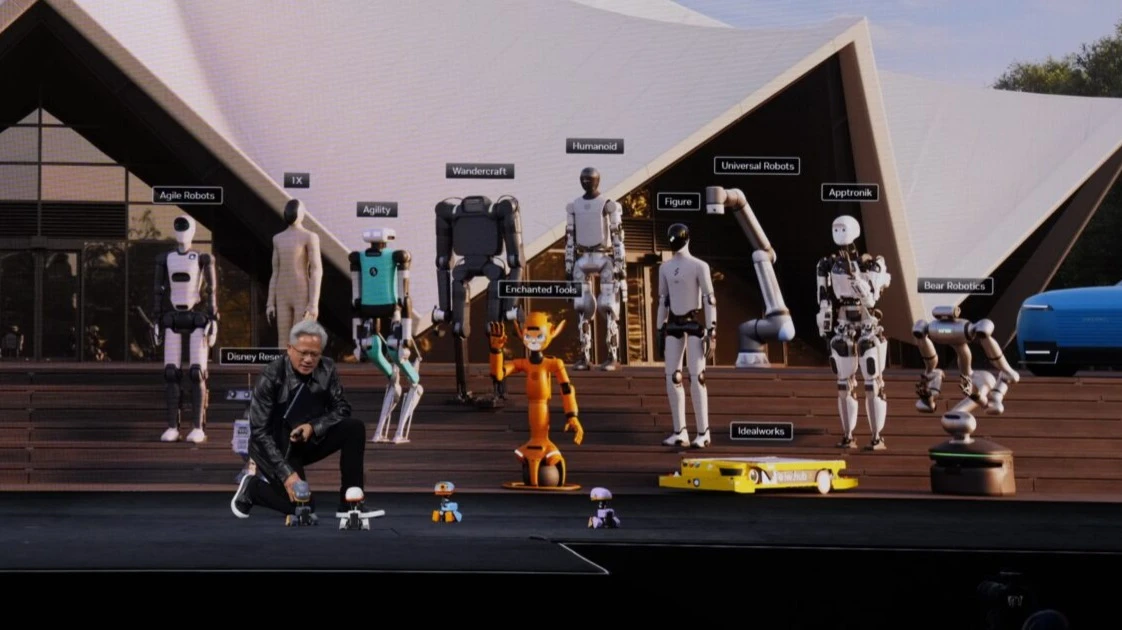
Nvidia is looking for ways to expand its chip market beyond the U.S. and China / Photo: Nvidia
Europe must develop its own artificial intelligence rather than settle for the role of a consumer, said Nvidia CEO Jensen Huang at the GTC conference in Berlin. He proposes developing the entire industry necessary for this within the region—from energy and data centers to AI models and applications.
For Nvidia, this is an opportunity to expand its chip market beyond the U.S. and China amid growing investor concerns about the financial health of data center operators, Axios reports. Over the past year, Nvidia has announced plans to invest nearly $10 billion in European startups and partnership projects, and the number of its partners in Europe has exceeded 12,000. In the week leading up to the conference alone, the company announced investments in more than ten startups from the UK, France, and Germany: including the medical platform Doctolib, the robotics startups Genesis AI and Agile Robots, the biotech companies Boltz and Prima Mente, the satellite manufacturer Reflex Aerospace, and others.
From factories to robotaxis: Where Nvidia Is Looking for New Chip Customers in Europe
Huang believes that artificial intelligence could transform European industry—if autonomous agents take over the operational management of factories and engineering design. Siemens is already using Nvidia systems to launch new products. The French IT company Dassault Systèmes uses algorithms to refine automotive manufacturers’ blueprints.
Self-driving cars could become a major market for Nvidia—an area the company has been working on for more than a decade. The company is developing the Hyperion platform, which integrates computing systems, sensors, and software for autonomous driving. At a conference in Berlin, Huang announced that new models from Volkswagen, JLR, Volvo, and Mercedes-Benz will be compatible with this platform. In the future, these self-driving cars will be able to connect to ride-hailing services, including the European taxi service Bolt.
"This market is just beginning to take shape: every year, people drive about one trillion miles. A significant portion of these passenger-kilometers will shift to robotaxis charging one to two dollars per mile. The business potential is enormous, but the industry suffers from extreme fragmentation. By offering the open Hyperion platform as an industry standard and bringing key players together around it, we are creating a massive virtual fleet that any automaker can seamlessly connect to.”

The next stage in the adoption of autonomous systems will be humanoid robots. Huang believes that Europe can take a leading position in this industry: local companies specialize in precision engineering, electronics, and the manufacture of complex equipment. In this market, Nvidia is already collaborating with the German company Agile Robots: in Berlin, Huang unveiled the Agile ONE SN—a humanoid robot powered by Nvidia software. Essentially, it is a ready-made “robot exoskeleton” equipped with motors, sensors, and processors—companies can use it as a foundation to build their own robots tailored to specific manufacturing tasks. This will reduce the time required to configure equipment from several weeks to just a few days. Deliveries of the Agile ONE SN will begin in 2027.
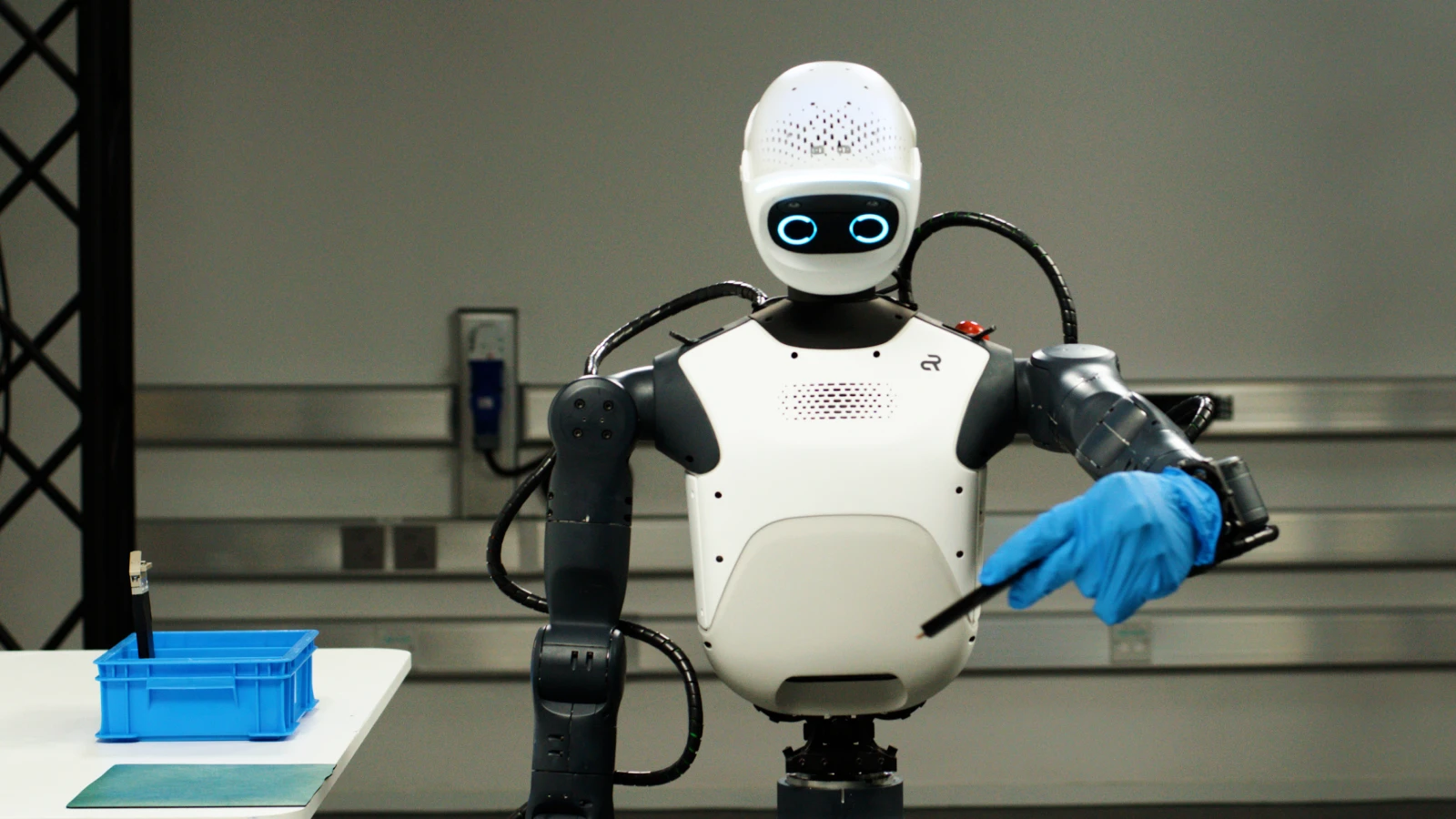
Agile ONE SN robot with Nvidia software / Photo: Nvidia
Currently, the bulk of Nvidia’s computing power is purchased primarily by hyperscalers. Projects in the automotive industry, industrial design, and robotics are expected to open up new markets for the company, says Huang: he anticipates that European automakers and manufacturing plants will generate their own demand for chips and transform themselves into AI companies.
“And this is where the fundamental factor for success lies: for Europe to truly benefit from AI and build a self-sufficient AI economy, end markets and applied industries must begin to adopt these technologies on a massive scale. The automotive industry with autonomous vehicles, industrial manufacturing with robotics, the pharmaceutical industry with drug discovery, or the financial services sector—all of these sectors must transform into AI-driven enterprises. Absolutely every single one of them.”

New Old Capacities for European AI
The European AI revolution will require new computing power: Nvidia proposes accelerating the construction of data centers; at the conference, Juan presented the DSX Pod system. Server racks equipped with the new Vera Rubin processors are assembled and tested at the factory and delivered to customers as ready-to-use monoblock units. Currently, on-site cable installation and equipment setup take months, delaying the facility’s launch. With a 1-GW data center costing $50 billion per quarter, the wait costs operators $10 billion in lost revenue, Huang emphasized. He estimates that prefabricated modules will reduce the time required to bring capacity online from four to five months to just one.
In addition, Huang hopes to transform cell towers into a distributed infrastructure for AI.
“There are about 100,000 such sites worldwide, and the combined capacity of these distributed centers in Western countries alone reaches 100 GW. Over time, they will evolve into a unified, decentralized infrastructure for artificial intelligence, and we are already actively developing this partnership with European companies.”

Nvidia, in collaboration with Finland’s Nokia, is developing equipment that enables the company’s graphics processing units to be used in mobile networks. The companies have already made the first commercial phone call using the new technology on the T-Mobile network. Now Nvidia plans to integrate AI into the technology to improve the efficiency of radio frequency usage. In the future, telecom operators will be able to use existing infrastructure for AI computing and provide this computing power to customers.
"It’s important to understand that artificial intelligence will affect absolutely everything we produce. Every industry is being transformed, and entirely new ones will emerge as a result. Just as electricity did in its time, AI represents a new industrial revolution, and we are at its very beginning.”

This article was AI-translated and verified by a human editor