"Value Is More Important Than Volume": Why Jefferies Expects Kazatomprom Shares to Rise 69%

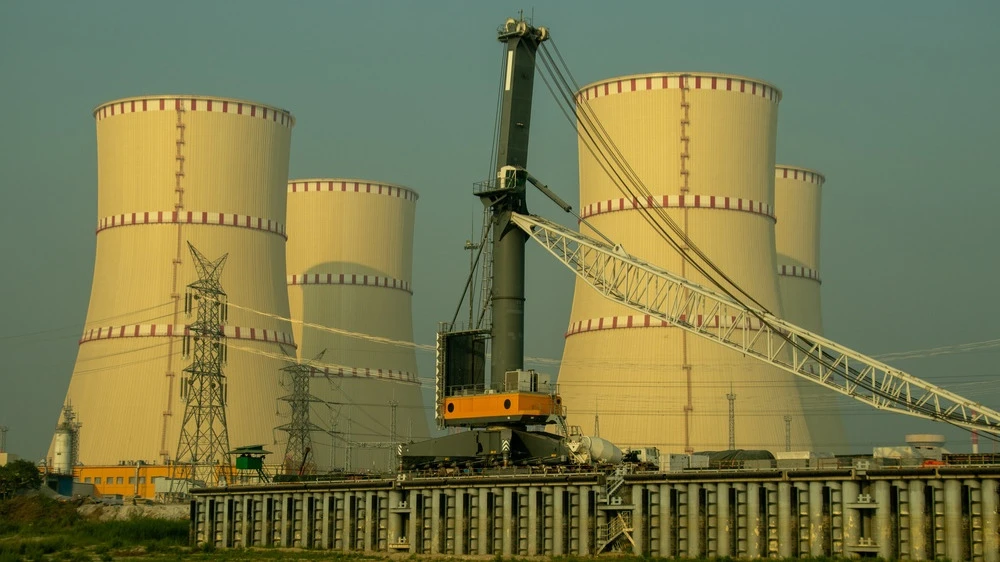
Investment bankers believe nuclear stocks will soon rebound. Photo: Shutterstock.com
The American investment bank Jefferies expects Kazatomprom’s stock to rise by 69%. The bank recommends buying the company’s stock, anticipating that the price will rise to $106 if the uranium shortage intensifies. “Production discipline is a conscious choice by the company; we expect this strategy to increase return on invested capital (ROIC) and reduce volatility over the next cycle,” the report states.
The Shift Toward Asia
The company’s production will remain at the same level or even decline in the coming quarters as its previous supply commitments expire. However, significant free cash flow ($9.8 per share) and the expected zero net debt by year-end may allow Kazatomprom to increase its share of production (particularly in joint ventures) over the next few years.
Market prices for uranium remain a key factor for Kazatomprom’s securities. Jefferies expects them to remain stable or rise over the next few quarters (and years), given the demand for fuel for new reactors. A shift in the contract mix will support the company’s results in 2027 if prices exceed $90 per pound, and in 2028 if they exceed $75 per pound. A shift toward more profitable Asian contracts could amplify this effect.
To meet its current obligations, the company may begin to draw down its reserves. According to analysts, Kazatomprom will not purchase additional uranium on the spot market, and if shipments through Russia remain disrupted for an extended period, swap deals “could become a way to circumvent any structural problems.” Switching to alternative routes will increase transportation costs by approximately 10%.
Three Scenarios
The main benefit for Kazatomprom in 2027–2028 is access to increasingly affordable local financing, with savings of 1–2 percentage points, which will enable the company to invest $6–6.5 billion by the end of 2028. According to analysts, this could involve either building its own refining facility or establishing a joint venture—a decision on which could be made as early as the end of 2027.
They also expect a decision on Kazatomprom’s international expansion by the end of 2028—this will depend on whether or not the company decides to develop local production, though the authors do not explain exactly how. At the same time, analysts note that the uranium market is highly volatile, and in their view, the likelihood of price spikes is already adding up to 40% to the company’s reserve estimate.
In addition to the baseline scenario, the authors of the review consider two other possible scenarios. In an optimistic scenario, if prices resume their upward trend from current levels—similar to what happened in the fall of 2021, when the spot price rose from $30 to a new stable level of $50—then “Kazatomprom” shares could rise to $132. Under a negative scenario—specifically, if U.S. interest rates rise by 1 percentage point, Kazakhstan’s sovereign spread widens by 1 percentage point, and a premium is added for geopolitical and sanctions risk—the price of the depositary receipts could fall as low as $48.
Major investment banks have long been predicting a rise in uranium prices; in particular, Bank of America analysts have been expecting prices to surge to $135 per pound since the summer. However, prices have remained at $90 since August.
Context
In early September, Jefferies initiated coverage of several nuclear energy companies, forecasting capital expenditures related to nuclear power of approximately $55 trillion through 2100. At that time, Kazatomprom received a “buy” rating and a price target of $106 per depositary receipt, with a projected 42% increase in the stock price. However, over the course of a month, the company’s shares fell in price by more than 15%, and the upside potential rose from 42% to 69%.
On Tuesday, October 20, Kazatomprom’s GDRs on the LSE fell 0.65% from the previous close to $61.2. On the KASE, the company’s shares lost 5.65% over the course of the day and were trading at 27,400 tenge ($60.8 at the current exchange rate of the National Bank of Kazakhstan).
This article was AI-translated and verified by a human editor