Computing Power Goes Public: Why Investors Should Consider GPU Rental Futures

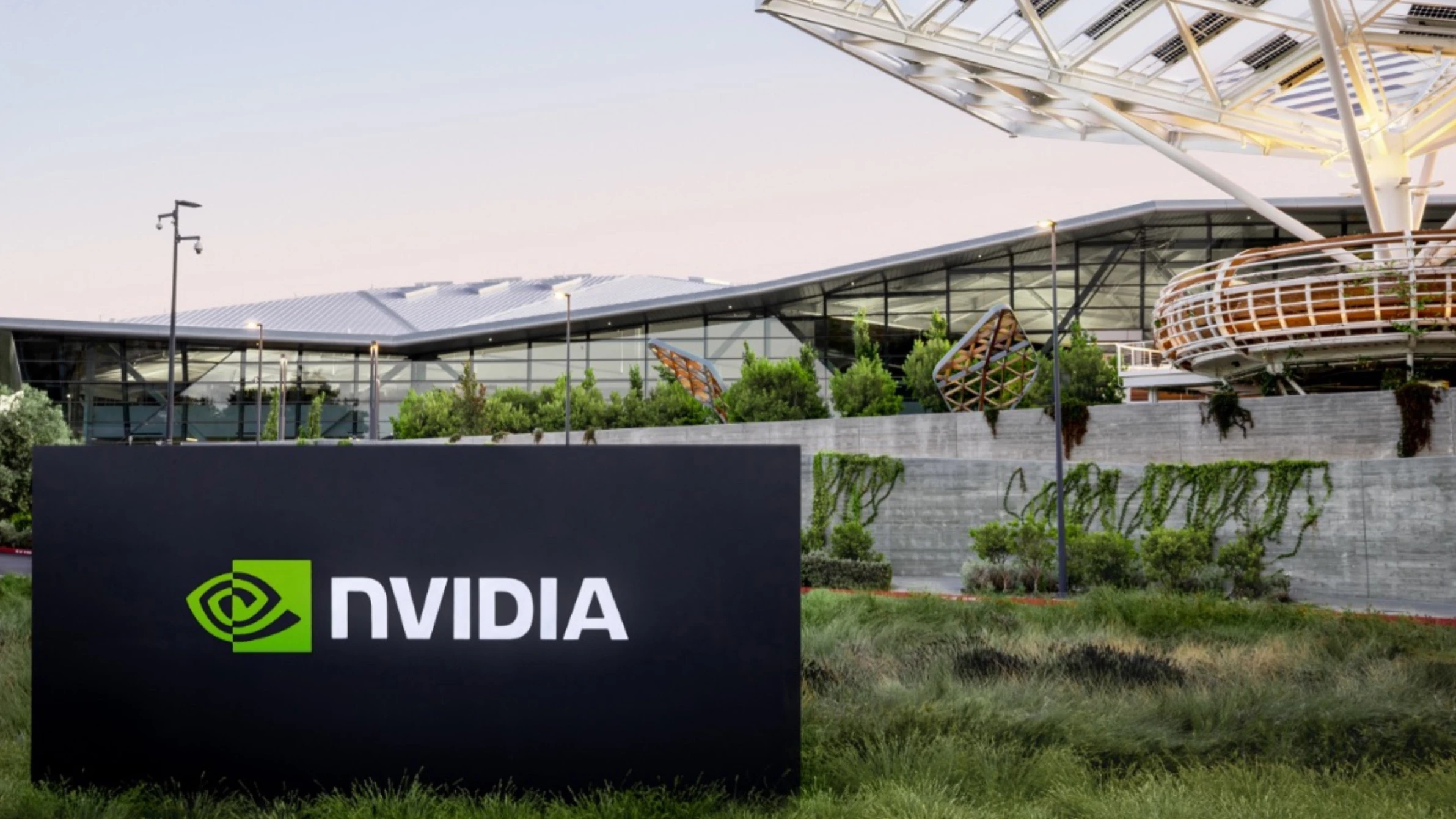
In October, the CME Group plans to launch trading on NYMEX for two index futures that track the hourly rental cost of Nvidia graphics processing units. Photo: Nvidia / X
We’ve grown accustomed to measuring the artificial intelligence boom in terms of billions of dollars in capital expenditures, Nvidia’s revenue, and the number of new data centers. But one of the key resources of the new economy—computing power—still lacks a clear market price, a kind of benchmark like the price of Brent crude on the commodities market. Trading in computing power futures is scheduled to begin in October. Evgeny Shatov, a partner at the investment firm Capital Lab, discusses how this could change the AI market.
Futures for AI
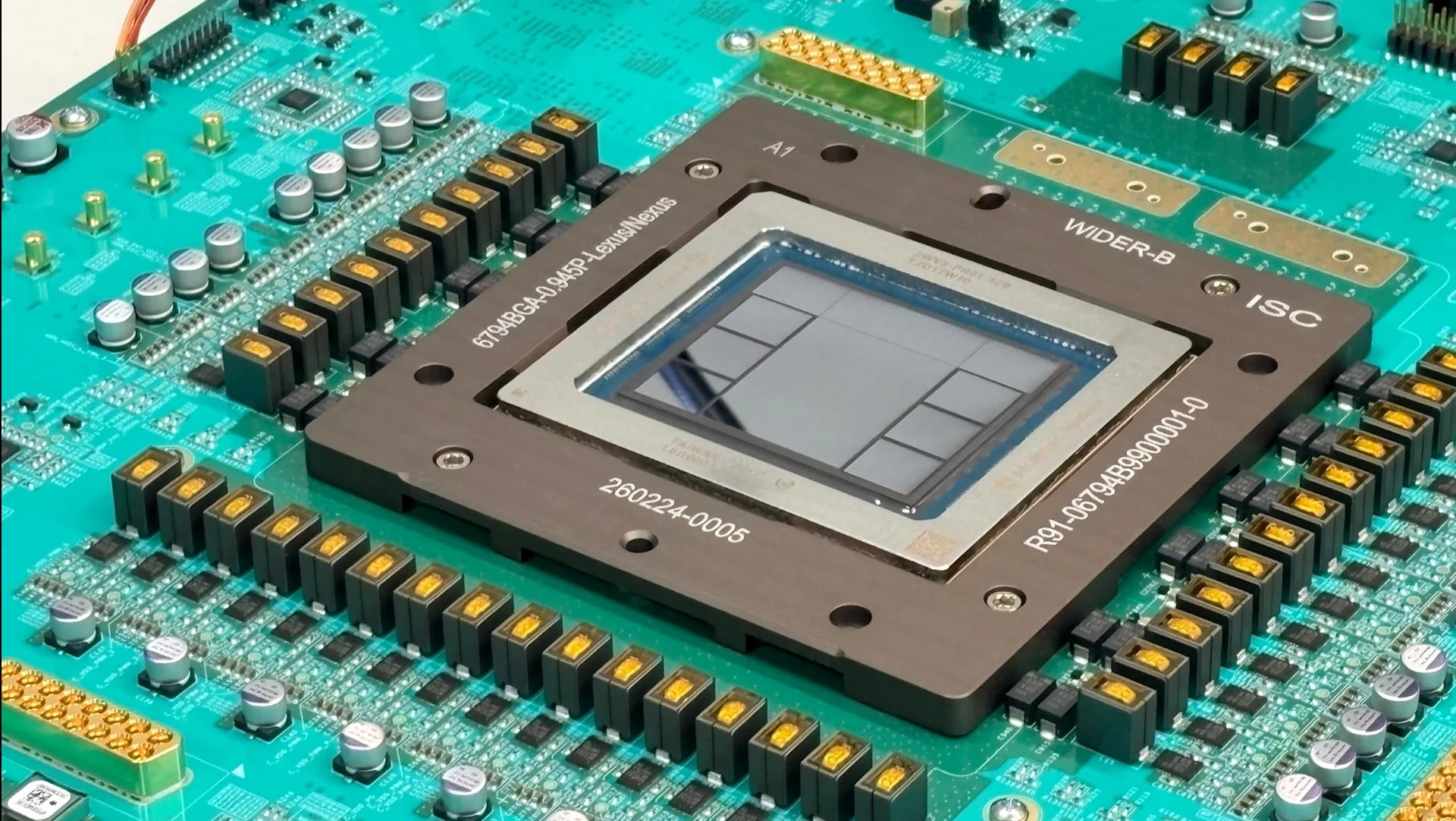
On October 5, CME Group, the world’s largest derivatives exchange, plans to launch two index futures on NYMEX that track the hourly rental rates for Nvidia’s H100 and Blackwell B200 graphics processing units. The indices are published by Silicon Data. Trading will begin subject to regulatory approval.
Each contract corresponds to one month of GPU rental. Payments will be made in cash: no party supplies hardware to the other; instead, the parties exchange the difference between the contract price and the index value.
At first glance, this is a niche story from the world of derivatives. But its significance is far greater than it seems at first glance: the market is taking its first serious step toward transforming computing power from an expense item for technology companies into a financially measurable and tradable resource.
What can futures be used to hedge?
Today, the computing power rental market lacks transparency. Prices vary depending on the provider, region, contract term, and hardware configuration. As a result, two companies may rent computing power based on the same type of GPU at very different prices.
For example, according to Silicon Data, in mid-August, the rental price for an H100 from neo-cloud providers such as CoreWeave and Nebius was about $2.7 per GPU-hour, while for hyperscalers—AWS (Amazon’s cloud division), Microsoft Azure, and Google Cloud—was about $7.3.
The difference is not solely due to the cost of the GPU itself: hyperscalers sell computing power along with a broader range of cloud services, guarantees, and enterprise infrastructure.
Silicon Data calculates rental cost indices for various GPU models on a daily basis, adjusting prices to comparable terms based on configuration, performance, cluster size, and geography. Essentially, this is the equivalent of Brent or WTI for the computing power market: a single benchmark against which prices can be compared.
Based on these indices, a buyer can compare a provider’s offer with market rates; a data center owner can assess the equipment’s return on investment; and a bank or investor can evaluate the project’s financial model.
But the next important step is to create a way to lock in that price for the future. The logic here is the same as that of an airline hedging against fuel costs. The buyer of computing power protects themselves against rising costs, while the seller protects themselves against falling revenue.
If an AI company knows that it will need a large amount of computing power in six months, its risk is that rental costs will rise. It can buy futures. And if computing power becomes more expensive, the additional costs in the spot market are partially offset by the profit on the position.
However, there is one caveat: futures hedge against price fluctuations, not availability. A profit on the contract does not guarantee that the desired cluster will be available at the right time.
For a data center owner, the risk is the opposite. They purchase thousands of GPUs today in anticipation of future rental revenue, but supply may increase, more powerful processors may become available, and the rental rate for older equipment will decline. By using futures, the operator can hedge a portion of its future revenue.
The risk of changes in lease rates in the AI market is very real. According to estimates by the Boston Consulting Group (BCG), the H100 rental rate fell from a peak of about $8 in early 2024 to $1.96 by the end of 2025, and then rose again to $2.64 by April 2026. According to Silicon Data, annual H100 contracts rose in price from approximately $1.7 per hour in October 2025 to $2.65 by March 2026—an increase of more than 50% over five months.
New AI Cycle Indicator
But this story is also of interest to a wider range of market participants.
One of BCG’s scenarios projects that spending on AI infrastructure will total approximately $3.6 trillion between 2026 and 2030. For lenders funding this massive project, it’s not just how much GPUs cost today that matters, but also how much revenue they will generate in a few years and how quickly they will depreciate.
The new futures should be viewed not as a tool that will solve the financing problem on its own, but as the first element of a broader financial infrastructure surrounding the computing power market. The better a bank or investor understands a data center’s future revenue and the cost of its equipment, the more accurately it can assess risk, and the cheaper capital potentially becomes.
BCG estimates that with $3.6 trillion in investment in AI infrastructure between 2026–2030, the emergence of a reliable futures market for computing power could reduce total borrowing costs by approximately $116 billion over 4.5 years—about $26 billion per year. This is a model estimate, not a guaranteed result.
There is another important implication for investors.
Today, the state of the AI market must be assessed based on indirect indicators: capital expenditures by Microsoft, Amazon, Alphabet, and Meta; Nvidia’s sales; data center utilization; and electricity demand.
The futures market for computing power will serve as an additional indicator that can signal changes in supply and demand before corporate earnings reports are released.
If participants are willing to pay a premium for computing power a year from now, this may indicate that they expect a shortage. If future rates are lower than current ones, the market may be pricing in an increase in supply, the obsolescence of a specific generation of GPUs, or a decline in demand for them.
Silicon Data is already publishing a forward curve based on futures lease rates. As of July 19, the 36-month lease rate for the H100 was approximately $2.38 per hour, compared to a spot price of $2.72, for the A100, $1.40 versus $1.65; and for the B200, $5.17 versus $5.62.
This data should not be considered a direct forecast of the spot price. Computing power cannot be stockpiled, so the relationship between today’s price and tomorrow’s price—which is common in many commodity markets—does not apply here. It is more important to monitor not the difference between spot and forward rental rates themselves, but rather how the spread between them and the entire forward curve change over time.
Unpredictability Remains
Such futures have their own limitations.
First, GPUs are difficult to standardize. One H100 chip is not always economically equivalent to another, since its final performance depends on the network, cluster configuration, and location. This gives rise to basis risk: the actual cost of computing for a specific company may not move in line with the index.
Second, the technology cycle is very short. The H100 is being replaced by the B200, and then new generations of accelerators are introduced. A contract for a specific GPU model can quickly become obsolete.
Third, the market has yet to settle on a single pricing standard. In May and July, the ICE Exchange announced plans to launch its own GPU futures—based on the Ornn and NATIVX indices. Perpetual contracts for GPU rentals are already being traded on the offshore platform AX. It remains unclear which index will become the “Brent” of the computing power market—that is, the benchmark for the industry.
And the key issue is liquidity. Futures become a true market benchmark only when they are regularly used by AI companies, data center owners, banks, funds, and market makers.
In any case, it is important to note that a market for futures contracts is emerging around computing capacity, hedging instruments are being developed, and financial institutions are beginning to factor this data into their lending decisions for AI infrastructure.
If the new contracts gain sufficient liquidity and the trust of market participants, a fully-fledged financial ecosystem could emerge around computing power, complete with its own benchmarks, forward curve, and derivatives.
And this is a much bigger story than the launch of two GPU futures from Nvidia.
This is not an investment recommendation.
This article was AI-translated and verified by a human editor