Corrections are 'pay-to-play': Wall Street advises buying US stocks despite war

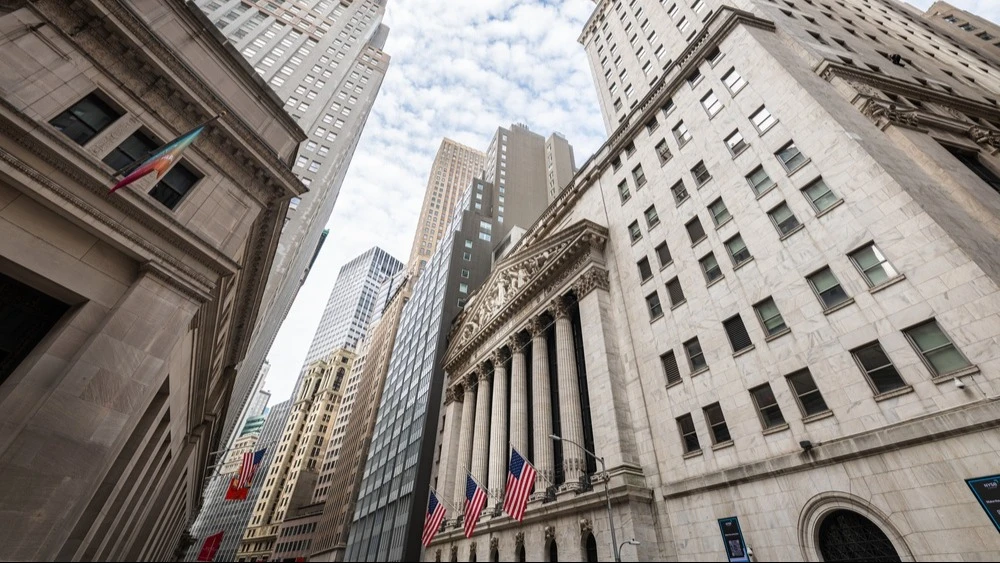
Analysts have urged investors to return to equities amid a sell-off in the US stock market despite war in the Middle East / Photo: Andres Garcia Martin / Shutterstock
Despite the ongoing war in Iran and rising geopolitical risks, Wall Street strategists are urging investors to keep buying U.S. stocks, Bloomberg writes.
This month's declines in the S&P 500 and Nasdaq 100 indices have worsened market sentiment, with conflict in the Middle East pushing oil prices up and heightening inflationary concerns. But analysts at CIBC Capital Markets, Truist Advisory Services and Barclays recommend ignoring what they call "short-term volatility" and point to attractive company valuations and solid earnings forecasts.
Details
- Recognizing the uncertainty surrounding Iran, Christopher Harvey, head of equity strategy at CIBC Capital Markets , recommends that investors "begin to enter the market gradually and methodically." In particular, he pays attention to the shares of Google's parent company Alphabet, iPhone maker Apple, chipmaker Nvidia and military and civilian AI developer Palantir.
"The overall situation in the stock market now is such that it is worth walking rather than running, but the starting shot has been fired," he said.
The S&P 500 is headed for a fifth straight week of declines, having lost nearly 6 percent since the start of the Iran war. The index is on its way to its worst month in the last year, Bloomberg calculated. On Friday, March 27, the decline in U.S. stocks continued at the opening of trading.
The selloff has dropped the S&P 500 nearly 1,000 points below the target level that a CIBC Capital Markets strategist had set for the index at the end of 2026 (7,450 points). Such an assessment implies a rise in the S&P 500 by about 15% if his forecast comes true and the major risks associated with the war are not realized, Bloomberg points out.
- Truist Advisory Services also recommends clients to use drawdowns on the American market to buy shares of large companies. However, at the same time, analysts advise to keep a part of funds in cache in case of further market decline due to geopolitics.
"If you have cash, you shouldn't wait for the perfect moment because it could come on the back of news that you just don't have time to react to. If there is a real sell-off, there will be an opportunity to act more aggressively," said Keith Lerner, the firm's chief investment officer and chief market strategist.
He recommends preparing for a possible rebound in the markets by gradually and prudently building up positions in quality stocks of large U.S. companies. "The risk-return ratio improves as the market declines," he said, adding that declining stock prices are a "price of entry" for investors to enter securities at more attractive prices. "It's important for investors to remain cautious rather than trying to act heroically," Lerner emphasized.
- Barclays gives similar recommendations to clients: there analysts called the growth of the stock market after geopolitical crises a "strikingly stable trend". "History speaks for itself," they emphasized. For example, the S&P 500 added 2.5% in the three months after the terrorist attacks of September 11, 2001. After the outbreak of the second Gulf War in 2003, the index rose 13%. And since the beginning of the conflict between Russia and Ukraine in 2022 - increased by 60%, analysts Ajay Rajadhyaksha and Amrut Nashikkar pointed out.
In the current situation, the U.S. stock market is supported by what experts call "acyclical investment cycle," Bloomberg writes - it is about capital investments in AI, as well as spending by companies and governments on defense and energy, analysts say. Against this backdrop, U.S. corporate profits are expected to grow 15% this year at Barclays - the biggest increase since the end of the COVID-19 pandemic, Bloomberg writes. "There is a whole wall of anxiety, but it is worth overcoming," Barclays believes.
- The trading division of JPMorgan Chase on Wednesday, March 25, also raised its assessment of the U.S. stock market from tactically "bearish" to "neutral", writes Bloomberg: the bank's head of global market analytics Andrew Tyler said he is forming a "shopping list". His team is betting on the energy sector and shares of large technology companies.
What's in the markets
At the time of publication, the broad index of American shares S&P 500 loses about 1%. Technology Nasdaq Composite, which entered the correction zone the day before - fell by 1.4%. The Dow Jones blue-chip index is down 1.13%. The index of small and medium capitalization companies Russell 2000 is falling by 1.1%.
Brent crude oil rose 3.6% to trade above $111 per barrel. U.S. WTI crude futures rose 4% to $98.3.
This article was AI-translated and verified by a human editor