Downgrade game-1789: how a relocant from Geneva made money before the French Revolution

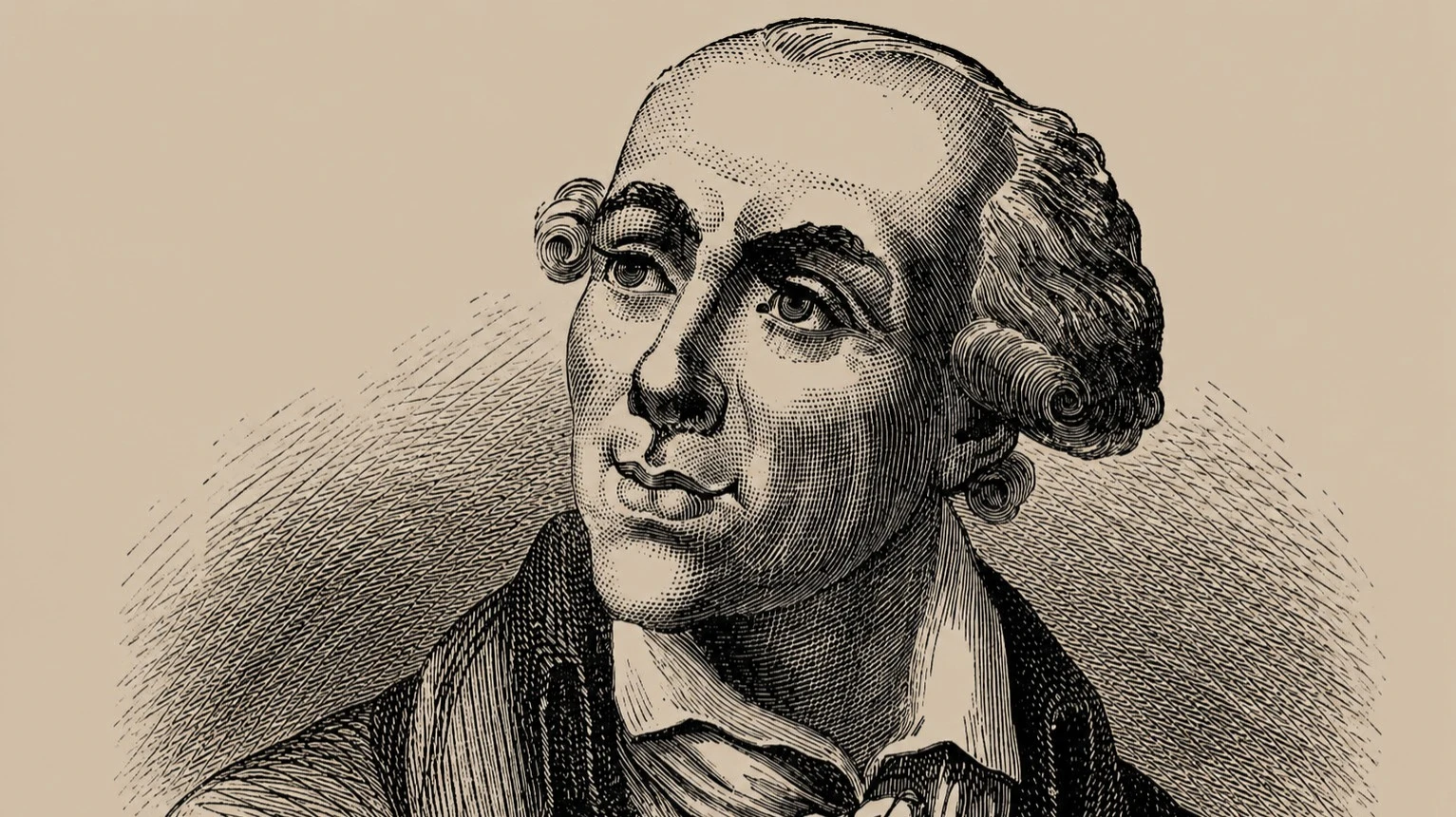
In a few years, Etienne Clavier, an émigré from Geneva, increased the amount of assets under his management from thousands to millions of livres. Photo: Fine Art Images/Heritage Images/Getty Images
In December 1793, during the revolutionary terror in France, the financier and politician Etienne Clavier committed suicide the day before his trial. A few years before, the relocatee from Geneva, who had been actively using borrowed money, had rapidly made a fortune on the Paris stock exchange and become finance minister of the revolutionary government. The surviving account books of Clavier allow us to trace almost day by day how the stock exchange boom, public debt and corruption scandals prepared the political crisis that culminated in the fall of the French monarchy.
The fat 70s: the economy on the eve of the French Revolution
Textbooks usually sparingly explain the economic causes of the Revolution as a financial crisis brought on by the rampant spending of the French nobility and the expenditures to support the revolution in the United States. But the Revolution did not begin amid economic collapse. On the contrary, the 1770s and 1780s were a period of booming trade, credit and stock speculation, writes UCLA professor Lynn Hunt. Trade with the United States intensified, slave plantations in the Caribbean colonies were generating large revenues, and the reopening of the shipping East India Company expanded trade opportunities. The crown's debt did grow, but was comparable to Britain's national debt.
The problem was not the national debt, but how the government tried to resolve its budgetary difficulties. In 1781, Finance Minister Jacques Necker published the Compte rendu au Roi, an annual report on the state of the treasury, and called for consolidation of the national debt and accountability to the public. The report became a sensation and the subject of much discussion in the press. King Louis XVI soon dismissed Necker. His successor, Charles-Alexandre de Calonne, began to encourage investment in public credit instruments and companies. The state bank Caisse d'escompte issued 3 million livres in new shares, a new joint-stock company to supply water to Paris and two new insurance companies were founded, and a new version of the East India Trading Company opened in 1785.
Thus began a large-scale speculative boom. Traders from other European countries began to arrive in Paris in the hope of getting rich quick.
One of them was Etienne Clavier, a political émigré from Switzerland, one of the leaders of the suppressed revolution of 1782 in Geneva. He arrived in Paris in 1784 and was 49 years old.
A relegated player
From 1781 to 1789, Clavier kept detailed ledgers and registers of investments.
Clavier is a bear investor. His strategy was to undermine the public's confidence in companies - and get stock prices to fall before his futures contracts matured. At one point, he even uses the Reddit of the day - pamphleteers. He supplies information about the companies whose stocks he speculates on to the influential publicist Count Honoré de Mirabeau s and other journalists.
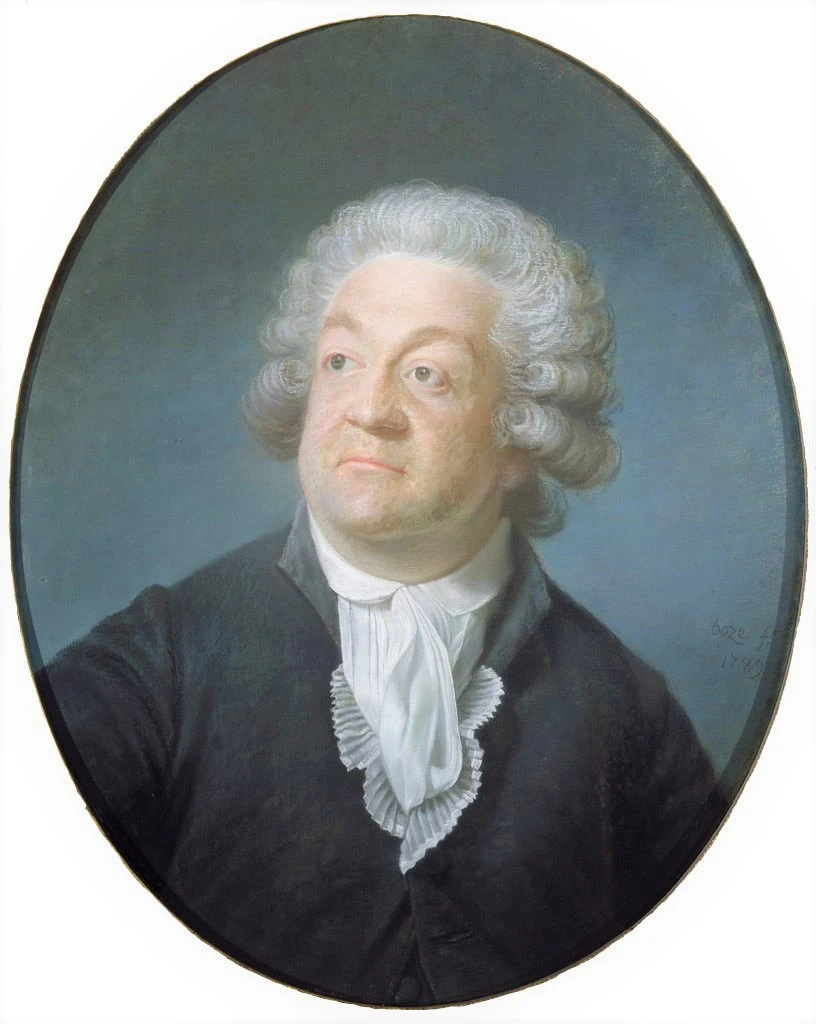
Portrait of Honoré de Mirabeau (1789). Artist Joseph Bose
From 1785 to 1788, 12 such sensational pamphlets are published. Already in the first year the scheme brings Clavier a good income. Because of publications about the bank Caisse d'escompte that reduces dividend payments, after the pamphlet about the Madrid bank of St. Carl shares fall by 60% - from 800 to 320 livres, and publications about the water company in Paris drop the value of securities by 44%.
The record of April 1, 1786, shows the scale of Clavier's transactions - government bonds and stocks are among his assets of more than 4.5 million livres. It also accounts for 53 commercial bills of exchange received from two dozen bankers. The scope of the financial network is enormous: from January 1785 to July 1786, Clavier sent 526 letters to 83 addressees in 25 European cities.
Etienne Clavier rapidly transforms from a modest financier in one of the largest speculators of his time: before arriving in France, he operates thousands, maximum tens of thousands of livres. In August 1785, the volume of operations soars to almost 137 thousand livres, and then increased almost avalanche-like. In less than two years, the turnover of his accounts grows to more than 10 million livres. Clavier finances his operations mainly with borrowed funds - commercial bills.
To estimate the scale of these sums, the annual income of the richest noble families of France could reach 50 thousand livres a year. There were no more than 250 such families in the whole country.
Too Big to Fail: how the new East India Company was saved
Clavier invests almost a third of his assets in Compagnie des Indes, the new East India Company. It has a capital of 20 million livres and is state-supported, with a seven-year monopoly from the Ministry of Finance on trade with countries beyond the Cape of Good Hope.
Clavier's liabilities are about 44% greater than his assets: about 6.5 million livres. Of these, he owed 393,000 livres on shares in the East India Company.
At which point the company finds itself at the center of a scandal. The stock is unprecedentedly popular and yields 5.7% by the middle of 1785. The government makes an additional issue for 17 million livres, expecting to attract additional funds for trade and private capital. The effect is the opposite: the stock begins to fall in price. To stop the fall in quotations, Finance Minister Calonne allocates 11.5 million livres from the treasury to a syndicate of speculators: they were supposed to buy shares and support the market. But the state intervention quickly turns into a private scheme. The syndicate members make deals with deferred delivery of shares and together with the Abbe d'Espagnac, the company's largest shareholder, try to gain control over the future settlement of these securities.
The scale of the scheme is absurd: through the contracts, d'Espagnac gains control over more than 51,500 shares, although the company issued a total of 37,000 securities. In other words, there are more obligations to deliver shares on the market than shares themselves.
Here again the scandalous pamphlets of the Comte de Mirabeau come into play. In March, he reveals the manipulations to the public and accuses the head of the Ministry of Finance Calonne personally. As a result, the scheme with the East India Company looks not as a rescue of the market, but as the use of public money in the interests of a narrow group of insiders. The scandal at the same time saves Clavier's bearish contracts from d'Espagnac's price monopoly.
An internal investigation reveals a complete mess of contracts.
The public is increasingly convinced that, as historian Trevor Jackson puts it, "the Paris stock exchange is one big gambling den, and all the public financiers who trade on it are crooks and thieves."
Calonne loses about 25 million livres from the public treasury. That's 5% of the gross national income. In April, he is dismissed and sent into exile.
Short v. Monarchy
Clavier invested most of his assets in government bonds and annuities (annuities) - more than 2.2 million livres out of 4.5 million, with another 105,000 livres in shares in the state bank Caisse d'escompte.
"High interest compensates for the risks," he writes in April 1786 to banker Peter Stadnitzky, one of his biggest creditors, explaining why he prefers to invest in government debt.
French securities brought noticeably higher yields than bonds of other European countries. In the Netherlands, borrowers paid 2.5-3% per annum, in Great Britain - 3-3.5%, while the French crown had to offer investors 4.8-6.5% - several defaults did not go in vain for France.
The main perpetual bond of the state since 1745 was the so-called Emprunt d'octobre - "October loan". It is by it that historians trace the dynamics of long-term government bond yields. In 1784, when Clavier arrived in Paris, the average yield on the "October loan" was 5.82%. Just five years later, the year the revolution began, it rose to 6.47%.
A Foreign Agent in the Convent: How a Stock Speculator Became Minister of Finance of the Revolution
By 1788, interest payments and debt repayments accounted for more than half of the French crown's total expenditures. Former finance ministers Necker and Calonne waged "pamphlet wars" arguing over which of them had driven the treasury into deficit. Public confidence in the financial solvency of the state was rapidly declining.
In order to revise the tax collection system, the king convenes an assembly of the States General, which, as is commonly believed, begins the process of revolution and leads directly to the overthrow of the monarchy. But the new revolutionary government still has to deal with the issue of debt.
Etienne Clavier becomes one of the architects of this solution.
In 1792 Clavier temporarily assumes the post of Minister of Finance in the transitional government, where he is invited by the Girondist faction. He is little popular, and the press refers to his "wrong" nationality and religion - he is a Protestant.
In 1793, political terror begins in the country. On June 2, the Paris Commune arrests twenty-nine deputies of the Girondist government and two ministers, one of whom is Clavier. He is kept under house arrest, interrogated, and accused of being a foreign agent. In October, he appears as a witness at a trial in which twenty-one Girondist politicians are sentenced to death. On December 8, 1793, Clavier, imprisoned in the Conciergerie, learns that he will face a revolutionary tribunal the next day. He commits suicide by stabbing himself in the heart with a table knife he had hidden during his last dinner. His wife, learning of his death, drinks the poison the next day. The Republic confiscates his property, securities, cash book and investment register, which will be preserved in Parisian archives and will fall into the hands of historians.
This article was AI-translated and verified by a human editor