Elon Musk's "Secret" Factory: Why Is He Investing in Gas Turbine Parts?
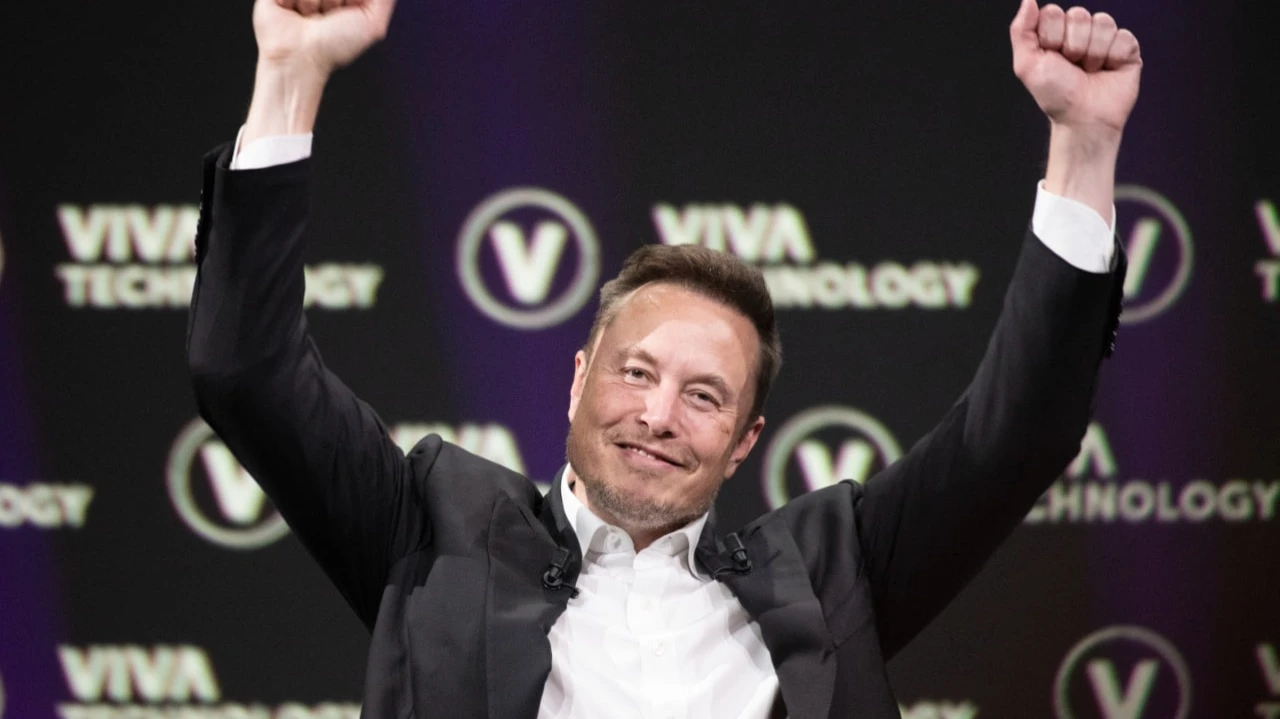
Elon Musk plans to create a self-sufficient power supply system for SpaceX’s AI business data centers. The company will build a factory to manufacture hard-to-find parts for gas turbines. Photo: Frederic Legrand - COMEO / Shutterstock.com
Elon Musk has found a way to profit from one of the main constraints of the AI boom—the shortage of electricity. His company, SpaceX, will launch its own production of hard-to-find parts for gas turbines, which are needed to quickly build power plants near data centers. While connecting to the grid takes years, gas-fired generation allows for faster access to the necessary power capacity. By establishing production of these components, SpaceX will be able to carve out a niche in a market where orders for equipment are already booked years in advance.
Musk's Secret Plans
In late August, Elon Musk wrote on X that SpaceX and Tesla are rapidly building solar power generation capacity of 100 GW per year, but, the billionaire acknowledged, natural gas-fired power generation will still be necessary for the next few years.
There is a problem here: the development of the natural gas power sector, which supplies power to AI computing facilities, is being hampered by a shortage of key gas turbine components—blades and hot-section guide vanes.
These components operate in a gas stream at temperatures of approximately 1,600–2,000°C. This is higher than the melting point of the nickel superalloys from which they are made. To withstand these extreme conditions, these components are equipped with internal air-cooling channels and thermal barrier coatings, and single-crystal casting technology is used in their production. This technology increases the alloys’ resistance to fracture under extreme loads.
Manufacturing these parts is technically challenging; only a few companies produce them. SpaceX wants to join their ranks.
The company is building its own foundry in Texas. Musk initially kept the construction project under wraps. But in late August 2026, journalists at The Information revealed his plans.
They noticed that the aerospace company was looking for specialists in single-crystal casting of parts for gas turbine hot sections. At the same time, AI infrastructure due diligence specialist Cory Trinetti not only tracked down registry records showing that SpaceX had purchased 830 acres (more than 3.3 square kilometers) of land in Texas, but also published satellite images of the site.
Musk then confirmed that the plant was set to begin operations.
By establishing our own foundry operations at SpaceX, we can accelerate the time to market for gas turbines by up to 18 months—a move that could be a game-changer.
The goal is more than ambitious. Currently, in the U.S., it takes up to three years to bring new gas-fired generation capacity (turbines and entire power plants) online in the case of small modular plants, and five years or more for large-scale projects.
No line
A data center in the U.S. typically becomes operational within a year or two, but the owner may have to wait anywhere from 3 to 7 years for it to be connected to the power grid. As a result, tech giants are increasingly turning to on-site power generation near their facilities.
Natural gas has been their lifeline—it accounts for more than 80% of all local power generation capacity currently under construction for data centers, according to Rabobank. According to Global Energy Monitor, the total capacity of announced natural gas projects in the U.S. to power AI infrastructure has reached 189 GW. These projects are at various stages—from announcements and design to active construction.
Microsoft has already signed agreements with Chevron and GE Vernova; Google is sourcing power from Crusoe Energy; Amazon is partnering with Pacifico Energy; and so on. In this regard, they are relying on their energy partners and are dependent on the manufacturers’ turbine production and delivery schedules.
According to Rabobank’s estimates, data centers in the U.S. consumed approximately 176 TWh of energy in 2025, and by 2030, they will require between 420 and 728 TWh. The expected increase in data center electricity demand alone is equal to the combined annual energy consumption of New York and California, the bank’s analysts note.
Unlike his competitors, Elon Musk decided not to wait in line but to create an autonomous gas supply system for his data centers.
What has he done so far?
To power the Colossus supercomputer and its associated AI cluster in Memphis, MZX Tech, a subsidiary of xAI, deployed 69 mobile gas turbines in Southaven, a satellite city of Memphis. This made it possible to immediately power the cluster and provided the capacity to scale computing power by launching Colossus 2.
However, environmental organizations claimed that some of the mobile units were operating without the necessary emissions permits.
Musk has reached an agreement with the Mississippi Department of Environmental Protection to phase out and remove all of these turbines from the site by July 2027. He plans to replace them with a permanent gas-fired power plant consisting of 41 turbines with a total capacity of 1.2 GW, equipped with emissions control and noise reduction systems.
xAI also plans to spend an additional approximately $2.8 billion over the next three years on the purchase of gas turbines, most of which are mobile units.
In addition, in 2026, Musk acquired Jacksonville-based APR Energy, which operates a fleet of mobile gas and diesel turbines—for an estimated $1 billion. This will give SpaceX access to a fleet of mobile power plants with a total capacity of more than 1.1 GW, according to Morgan Stanley analyst Adam Jonas.
The construction of the foundry will take Musk's "gas strategy" to the next level by providing him with in-house production of a complex and scarce component for gas turbines.
What exactly will Musk receive—and when?
Adam Jonas of Morgan Stanley wrote in August 2026 that the foundry could fully or partially meet the internal needs of Musk's entire business empire.
SpaceX’s AI division, like its space division, requires the same complex cast parts that are difficult to manufacture. After reviewing job openings in Texas, he concludes that the new facility will produce castings made of nickel superalloys with equiaxed, directionally solidified, and single-crystal structures. These parts are needed both for the turbo pumps of the Raptor rocket engines for Starship and for industrial gas turbines for data centers.
According to Morgan Stanley’s estimates, it will take SpaceX 2–3 years to develop mass production of single crystals “from scratch.” Therefore, for now, the company will continue to actively purchase off-the-shelf equipment.
Through acquisitions and M&A deals, SpaceX will be able to increase its own power generation capacity to 3–4 GW by the end of 2027. And the total capacity of Musk’s companies’ gas projects will approach 8 GW by 2029.
Launching its own production will allow SpaceX to avoid overpaying for scarce parts—according to a Wood Mackenzie forecast, prices for gas turbines will rise to $600 per kW by the end of 2027; since 2019, they have already increased by 195%.
Once mass production is up and running, Musk will be able to sell in-demand parts to third-party customers. According to Morgan Stanley’s estimates, this business has an EBITDA margin exceeding 15–20%.
Currently, the market for blades and guide vanes for the hot section of engines is controlled by several foundries. These include the privately held companies Precision Castparts and Consolidated Precision Products, and the publicly traded companies Howmet Aerospace and Doncasters, writes Adam Jonas. Howmet CEO John Plant said in August of this year that capacity at the company’s new plant is already almost fully booked.
Many major gas turbine manufacturers, such as Siemens Energy, GE Vernova, and Mitsubishi Heavy Industries, are also capable of casting single-crystal components, but even they source a significant portion of their required volume from specialized foundries.
Analysts at Jefferies hope that SpaceX's new project will help ease supply chain pressures and increase turbine production volumes.
But JPMorgan analyst Phil Buller disagrees. In his view, SpaceX will be entirely focused on meeting its own massive needs in the fields of space and AI in the coming years. Key manufacturers of blades and guides will not face pressure from a new competitor, he adds.
Nevertheless, following news about Musk’s foundry, shares of Howmet and Doncasters experienced a temporary dip. Over the course of the year, Howmet’s shares rose by more than 18%, while Doncasters’ shares fell by 4.7%.
This article was AI-translated and verified by a human editor