Tariffs, AI, and New Deals: What Investors Expect from the Meeting Between Trump and Xi Jinping

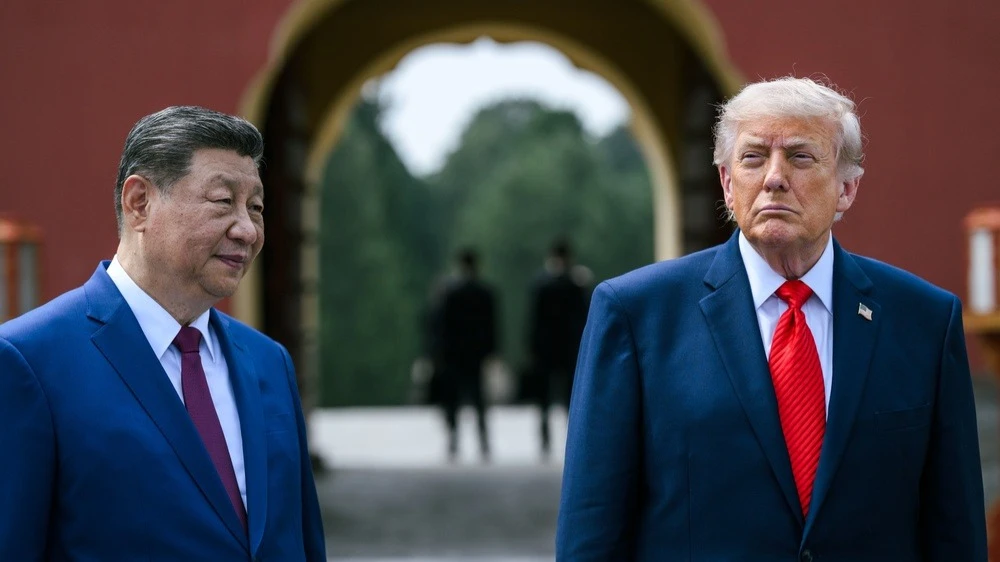
Investors are focused on the meeting between Donald Trump and Xi Jinping / Photo: Rawpixel.com / Shutterstock
Chinese President Xi Jinping will pay a state visit to the United States for the first time since 2015. According to the itinerary, on September 24, he will hold talks with Donald Trump at the White House and attend a reception to which the heads of major American tech companies—including Nvidia, Google, and OpenAI—have been invited. Barron’s outlined what investors expect from the meeting.
Trade Truce
Investors are focusing on the fate of the fragile trade truce, the so-called Busan Agreement. Under this deal, the U.S. and China suspended increases in mutual tariffs and the tightening of restrictions on the supply of critical minerals last year. The agreement expires on November 10. If it is not extended, the parties will be able to reinstate record-high tariffs on each other’s goods.
Despite the truce, tensions between the two countries have not completely dissipated, Barron’s notes. U.S. companies have not received the necessary quantities of rare earth metals, which fuels the view that Beijing is not fully complying with the agreements, the publication writes. China, for its part, believes that the expansion of U.S. restrictions on the shipment of products containing Chinese components runs counter to the spirit of the truce.
In addition, the parties disagree on the duration of the deal’s extension. Beijing is seeking a longer-term truce—until the end of Trump’s term. Washington, for its part, is hoping for an extension of up to six months—which would give the White House flexibility in meeting its obligations and conducting further negotiations, according to Barron’s.
Extending the deal for any period of time would allow investors to put their concerns about a trade war on the back burner. Conversely, a failure to reach an agreement at the summit could heighten market jitters, sparking fears of a new round of mutual trade escalation, the publication believes.
“This is an existential issue. The agreement must be extended; otherwise, we will no longer see friendly meetings between leaders,” said Kurt Tong, a former diplomat who is now managing partner of the geopolitical consulting firm The Asia Group.
Reduction in Tariffs
Trade measures may be the most concrete outcome of the summit: discussions about establishing a so-called trade council could pave the way for a reduction in tariffs on non-strategic goods totaling approximately $30 billion on each side, according to Barron’s.
The initiative will affect hundreds of product lines and several hundred companies, noted Veda Partners co-founder Henrietta Trease. At the same time, the effective tariff rate, which currently stands at 35% (including tariffs dating back to Trump’s first term), will drop to 20%. The tariff reductions are likely to affect consumer goods first and foremost, which will support U.S. retailers.
In addition, Treyze expects the U.S. to conclude a trade investigation into excess production capacity in more than a dozen countries, including China. The likely outcome of this will be the imposition of 7.5% tariffs, though this is unlikely to happen before the U.S. midterm elections, Barron’s notes.
New Transactions
In exchange for lower tariffs, China will most likely commit to purchasing more U.S. goods—specifically, agricultural products, as well as, possibly, Boeing aircraft or liquefied natural gas, according to Barron’s. Trump has made it clear that he is open to Chinese investment and may even allow Chinese companies to manufacture cars in the U.S. for sale on the domestic market, though this idea faces resistance from both parties, the publication notes. Any such deal could put pressure on the stocks of U.S. automakers while simultaneously boosting the share prices of companies such as the Chinese electric-vehicle manufacturer BYD, Barron’s warns.
Artificial Intelligence
Trump is striving to ensure that the U.S. stays ahead of China in the race for leadership in the field of AI. At the same time, both sides are considering how to address the new risks posed by the rapid development of the technology, according to CNBC.
“Leaders in both countries are alarmed by the growing cyber capabilities of AI models—and especially by agents that act autonomously to break free from control and hack websites,” Aalok Mehta, director of the Vadwani Center for AI at the Center for Strategic and International Studies, told the television channel.
Although growing concerns are bringing the two countries together, tensions in their relationship show no signs of easing, CNBC notes. Washington continues to restrict China’s access to Nvidia’s cutting-edge chips for artificial intelligence and accuses Chinese AI companies of using “distillation”—training models using more advanced American systems (Beijing rejects these accusations).
Mehta believes that the most likely areas for compromise between the U.S. and China could be common definitions and safety standards for powerful AI models, as well as the creation of an emergency communication mechanism for discussing cyber incidents.
Progress in cooperation on artificial intelligence depends on two factors, the expert noted: “First, cooperation must not undermine the ability of the United States and China to compete based on their technological advantages.”
The second condition, he said, would be a data verification mechanism. “Politicians are unlikely to take their opponents at their word, so we’ll have to find ways to guarantee the accuracy of the information circulating between the two countries. This implies having both technical verification tools and control mechanisms at the management level,” Mehta said.
This article was AI-translated and verified by a human editor