From Paper and Rubber Boots to AI: How Nokia Got Back on Investors' Radars

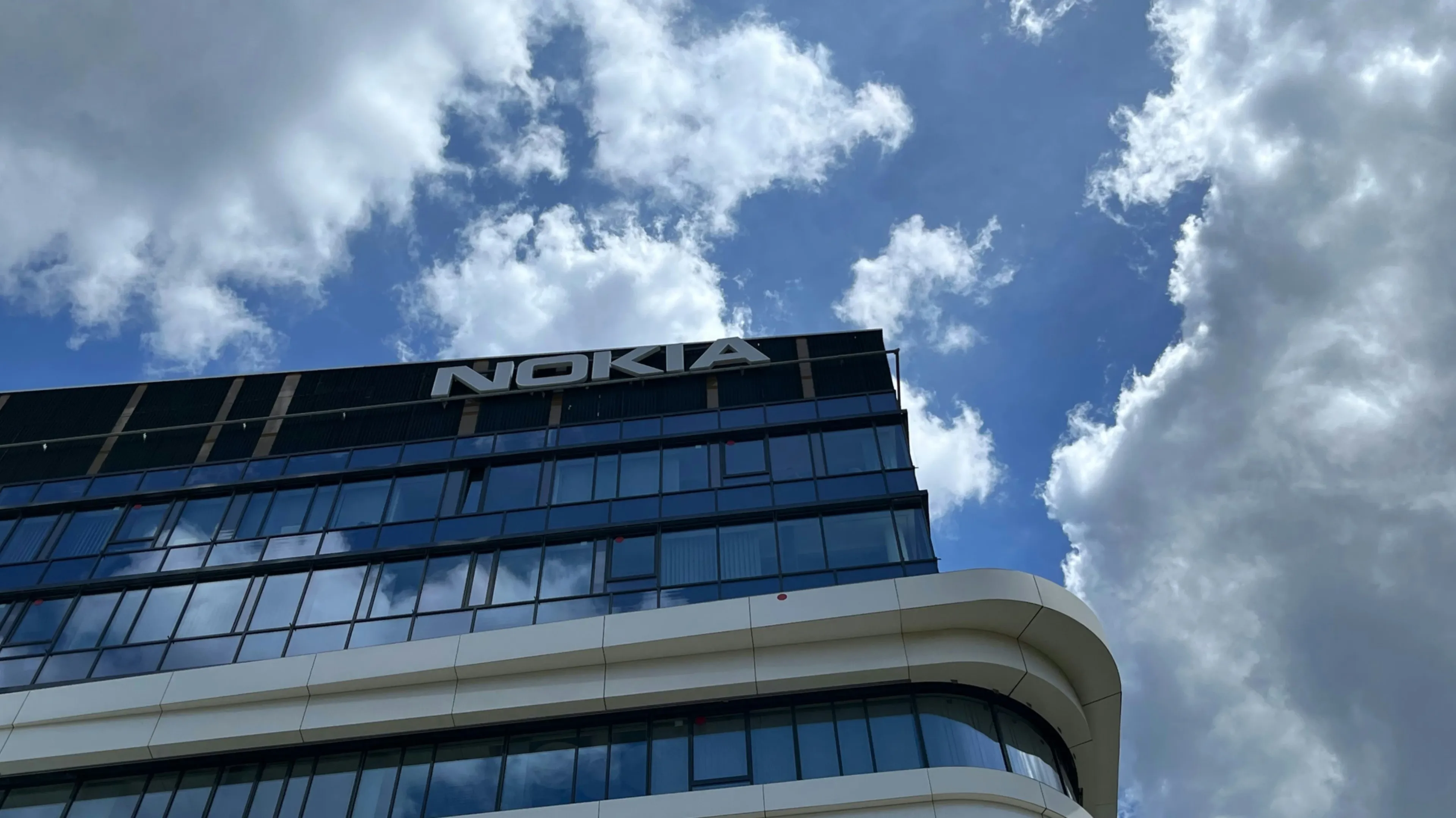
Nokia's stock price on the Helsinki Stock Exchange has risen by more than 130% over the past year / Photo: M. Rennim / Unsplash.com
On September 21, 2026, Nokia—a company that has become a textbook example of how to lose a leading market position by missing out on a new technological breakthrough— will return to the Euro Stoxx 50 index after an absence of nearly a year. Now, management wants to make a comeback by betting on the race for artificial intelligence. Analysts are confident in the company’s prospects.
Burning Platform
The Finnish company Nokia was founded in 1865— initially as a pulp and paper mill. In 1967, it acquired a rubber goods factory (which produced rubber boots and tires) and a cable manufacturing division—the latter can be considered its entry point into the telecommunications market. Later, Nokia, responding promptly to the demands of the times, began manufacturing electronics, walkie-talkies, televisions, and, of course, telephones.
A major breakthrough came in 1987 with the release of one of the world's first GSM phones, the Mobira Cityman 90, which weighed 760 grams and cost the equivalent of about €4,500 in today's money.
You probably know the rest: it’s hard to imagine anyone in the late 1990s and early 2000s who didn’t own at least one phone from the Finnish company. In 2007, Nokia cell phones accounted for nearly half of the global market, according to the BBC. However, that same year saw a significant event that was initially underestimated—Apple CEO Steve Jobs unveiled the first iPhone.
And that’s when the Finns’ business instincts failed them—they dismissed the touchscreen as a useless gimmick that, on top of that, drained the battery too quickly. Four years later, they came to their senses, but it was already too late: smartphones were taking the world by storm. In the high-end segment, the Finns were being squeezed out by the iPhone; in the budget segment, by Korean and Chinese Android devices.
"They're releasing new models faster than we can polish up our presentation," lamented Nokia's new CEO, Stephen Elop, in 2011.
At that time, he sent a letter to employees that would later become one of the most frequently cited corporate memos in the history of technology.
There’s a story about a man who worked on an oil rig in the North Sea. One night, he was awakened by a loud explosion, and the entire rig was engulfed in flames. In a matter of seconds, he ran to the edge of the platform and stopped, staring into the icy waters of the Atlantic. He could have stayed on the platform and surely perished. Or he could jump into the 30-meter-deep, icy darkness and, perhaps, survive. He jumped. Against all odds, he survived. We are standing on a burning platform, and we have only one choice: to jump.

The move turned out to be a misstep. Nokia chose Microsoft as its partner and began making smartphones running the Windows mobile operating system. Microsoft itself was going through a rough patch at the time, and the alliance between the two underdogs proved to be fatal.

In 2013, Nokia—whose share of the mobile phone market had plummeted to 15% (and whose share of the smartphone market was a mere 3%)— sold its mobile division to Microsoft for $7.2 billion. Three years later, Microsoft, in turn, sold it off, receiving just $350 million.
However, our brave imaginary Fink didn't drown after all.
"They're back!"
After selling its mobile division, Nokia retained Nokia Networks— a manufacturer of network equipment, fiber-optic cables, amplifiers, base stations, routers, and other essential equipment. This business is certainly not as high-profile as consumer products, and, judging by the financial statements, it is less profitable.
The company managed to stay afloat, but it didn’t particularly impress investors, alternating between profits and losses for more than a decade. The stock reacted accordingly—by mid-2012, it had hit rock bottom, falling below €2 on the Helsinki Stock Exchange, but by the end of 2012, it had stabilized at €3–5, and remained there until the end of 2025. TheStreet called them “a relic from another technological era”—which they seem to be, but their value hasn’t changed over the years.
But while everyone was focused on the “Magnificent Seven” tech companies, Nokia was quietly building networks around the world, conducting research and development, and forming partnerships. And in 2026, it suddenly made a breakthrough. In June, its stock soared above €12, nearly reaching an 18-year high. And over the course of the year, it rose by more than 130%.
“I think this is a success. They’re back. I can’t believe it. They’re finally back, and I have to give these guys credit for staying in the game, because, wow, I think there’s a lot of great technology there!” — said Jim Cramer, host of CNBC’s “Mad Money,” in April.
This happened because the company was propelled by a massive wave of investment in AI and new data centers. But, of course, it didn't happen by chance—Nokia had been working hard to prepare for this.
Treasures of India
In February 2025, Nokia acquired the U.S.-based company Infinera, a manufacturer of specialized indium phosphide (InP) optical chips, for $2.3 billion.
As it turns out, AI requires more than just powerful GPUs. AI models are trained and run on massive clusters—tens of thousands of processors that must exchange data at incredible speeds. This requires fiber-optic connections operating at speeds of 400 gigabits per second and higher. It is InP chips that deliver this speed. They are manufactured in specialized factories equipped with unique machinery—of which there are only a handful in the world.
Reuters estimated that this deal would help Nokia become the second-largest supplier in the optical networking market, with a 20% share, trailing only Huawei, which benefits from the minimal presence of Western companies in China.
In addition, in October 2025, Nvidia announced that it would invest $1 billion in Nokia and purchase its shares at a price of $6.01 per share (as part of a special rights offering).
As part of the deal, Nvidia and Nokia have formed a strategic partnership to develop AI-RAN—a technology that will combine AI with next-generation 6G mobile networks. Nvidia gained access to Nokia’s network infrastructure, while Nokia gained access to the American company’s specialized AI chips.
And besides, Nvidia, the “AI behemoth” with a market capitalization of $5.5 trillion, has thus made it clear that it believes in the Finnish company’s networking and communications technologies, which is also significant.
The results were not long in coming. In the first quarter of 2026, Nokia’s net revenue from cloud and AI customers grew 49% year-over-year. In the second quarter, it grew 105%, reaching €446 million.
Nokia CEO Justin Hotard said at the second-quarter earnings conference: “Demand remains strong, and supply continues to be the main constraint on the industry.” In other words, “We have what everyone wants, and they’re lining up to buy from us.”
Nokia’s market capitalization currently exceeds €50 billion. Nokia forecasts that the AI and cloud infrastructure market will grow by 27% annually through 2028—nearly twice as fast as the company had estimated in November 2025. David Herd, Nokia’s president of network infrastructure, said at the OFC conference in Los Angeles: computing power has increased approximately 60,000-fold over the past 20 years, while network capacity has increased only 30-fold. The AI boom is forcing network infrastructure to catch up—and product development cycles have shrunk from four years to 18 months.
Analysts are still taking a fairly cautious view of the company’s prospects, although they are generally optimistic. The average price target for the company’s ADRs on the New York Stock Exchange is nearly $13, which implies a 30% increase from the closing price on September 7. That said, 20 out of 32 analysts recommend buying the stock, six recommend “Hold,” and the same number recommend “Sell” or “Underperform.”
Of course, two quarters of growth in Nokia’s AI segment don’t yet amount to a victory. But the 160-year-old company has made an impressive comeback. It had already gone down in history as a textbook example of a technological failure. Perhaps Nokia is now poised to add new chapters to those textbooks—chapters about how to rise from obscurity.
This article was AI-translated and verified by a human editor