"I like to buy things that nobody else is interested in yet": An interview with Jim Rogers
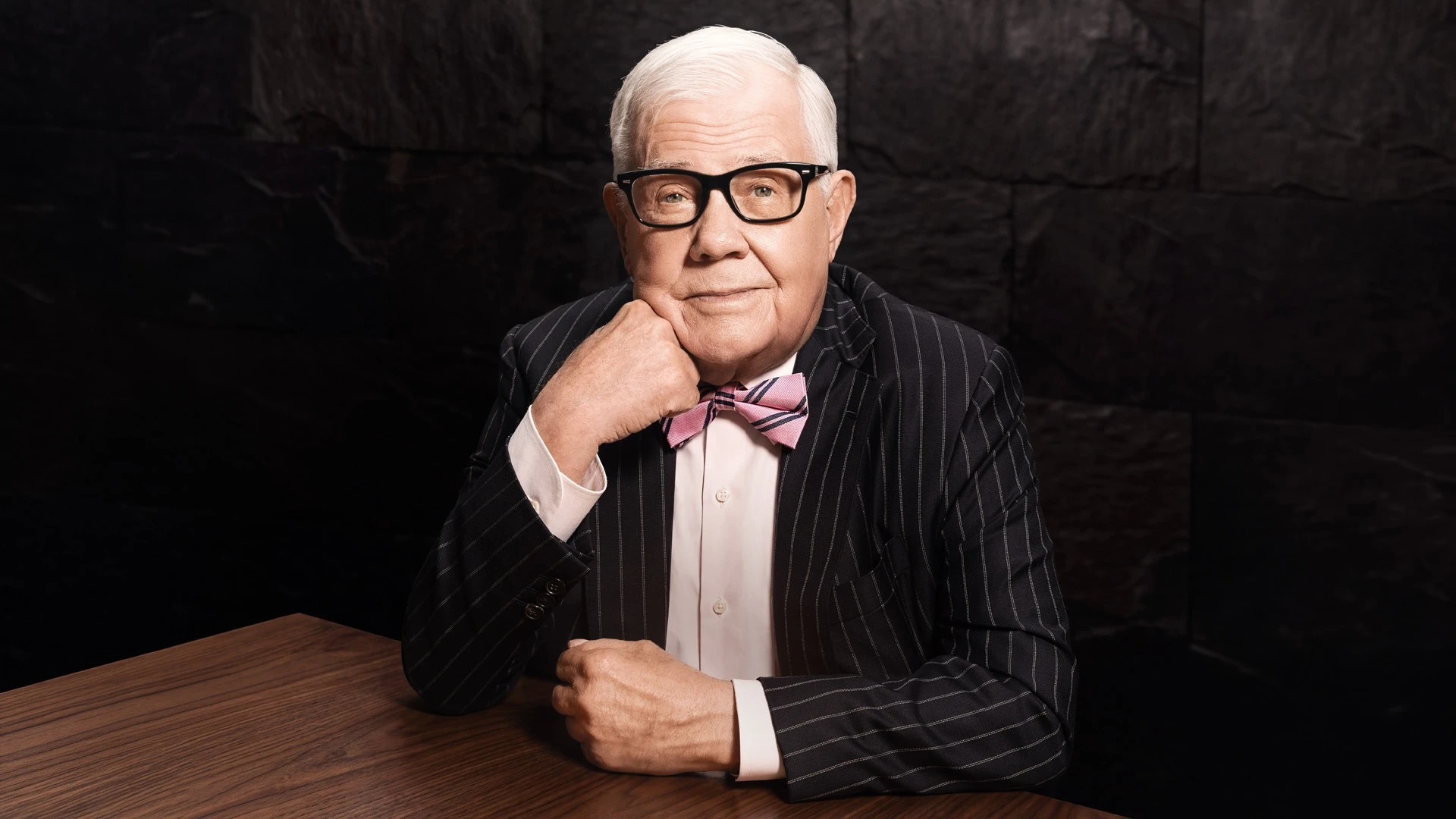
Rogers believes the artificial intelligence market is overvalued and is investing in entirely different assets / Photo: Rita and Anton Smirnov
George Soros’s partner at the Quantum Fund and legendary investor Jim Rogers, who traveled the world on a motorcycle, discusses investment principles, the oil market, and the most beautiful place on Earth. Rogers gave an interview to *Finansist* magazine, which we are publishing in its entirety.
Jim, can you tell us why you moved from the U.S. to Singapore almost 20 years ago?
I moved here in 2007 because I wanted my children to speak Chinese. New York isn't the best place for that. Singapore is a very comfortable place to live; everything here runs smoothly.
You have devoted most of your career to investing in the commodities market. Does the current period of rising oil prices and demand mark the beginning of a new commodities cycle?
I am optimistic about the outlook for commodity prices because, in the future, many will face supply issues for a variety of reasons. And when supply issues arise, this typically creates profit opportunities for those who understand how to invest in such assets. Therefore, if someone truly understands commodity markets, they will have a good chance of making money.
You’ve said on more than one occasion that investors should look for undervalued assets. Why is that? And what else is important to consider when investing?
The very first rule for any investor is to invest only in what you truly understand. If you want to be successful, don’t listen to other people, and don’t base your decisions on what’s written in the media.
In your opinion, what is the main misconception that investors have today regarding the global oil market?
Many people are convinced they understand what’s going on in this market. That, in fact, is the biggest misconception. You can make a fortune here—but only if you truly understand how this industry works, what factors influence it, and how they do so.
If you were starting from scratch today, how would you approach investing in the energy sector?
The most important thing when investing in oil is to understand its supply. Most people can grasp the demand side: virtually everyone in the world needs oil. In this regard, the market is stable, and perhaps only major wars or other serious disruptions that interfere with supply can throw it off balance. Understanding the supply side of the equation is not so simple.
First, you need to ask yourself the key question: Is a supply shortage expected? Depending on the answer, I would already start selecting the most suitable investment vehicles.
The easiest way to enter this market is to buy oil futures. You don’t need to be an expert in management, politics, or a host of other fields to do this. However, if you’re willing to conduct serious research and find an oil company whose stock is, for whatever reason, significantly undervalued (often due to political factors), then the potential returns may turn out to be significantly higher than when investing in futures.
Let’s step away from the topic of oil for a moment and talk about the stock market in general. Which sectors do you consider the most interesting for investment right now?
Right now, I don't have that many investments in stocks. I have some Chinese stocks, and some from Uzbekistan (it’s a small emerging market that interests me). But in most other countries, I don’t own any stocks right now because investors are too optimistic almost everywhere.
This makes me wary. There’s an unwritten rule: if the market seems too confident—and investors seem very pleased with how things are going—then it’s worth asking what exactly is happening in the market right now and what the implications might be going forward.
Does that mean now is the time to sell stocks?
I can’t say for sure, but I believe that now is not the best time to buy, especially when it comes to overvalued assets. The fact is that the global stock market has been rising almost continuously since 2009, and this is extremely rare in world history. Perhaps the “bull” trend will indeed continue. President Trump says, “Don’t worry, everything will be fine.” But history shows that situations where everything is going well for everyone at the same time are extremely rare. That’s why I prefer to view what’s happening with a certain degree of skepticism and ask myself questions. Every investor must make their own decisions, but personally, I always try to keep the lessons of history in mind.
What questions are you asking yourself right now?
The most important question is very simple: what exactly can provide the markets with drivers for further growth? Most stocks have risen significantly in price since the last corrections. Under these circumstances, it is essential to understand whether there is a real reason why a particular company’s stock could rise even further. Perhaps there is such a reason. For example, a corporation might discover a new, massive oil field. Once upon a time, the British discovered oil in the North Sea, and oil company stocks skyrocketed.
If you know of an issuer with such significant potential for future growth, it could indeed be a tremendous investment opportunity. But I’m not aware of any such cases at the moment. Most of the largest oil fields were discovered long ago. Today, it’s especially important to do your own research and look for the real drivers of future growth, rather than buying certain stocks just because they’ve been rising in price for quite some time.
What about the technology sector and artificial intelligence? Do you think a bubble is forming in this market that might burst soon?
Over the past few centuries, humanity has gone through similar phases time and again. Electricity was once a revolutionary technology. Railroads appeared in the 19th century. Then came automobiles, and later, computers. Each time, people realized they were facing an invention capable of changing the world, and this truly led to the creation of enormous fortunes.
When a promising new technology emerges, it generates tremendous enthusiasm. Everyone starts saying that this is the technology that will change the world. And, as a rule, that’s exactly what happens. But then a huge number of competitors enter the industry, supply increases sharply, profits across the entire sector decline, and many companies focused on this segment cease to be highly attractive for investment.
Again, whether it’s oil or technology, you can make good money if you understand the market better than most of its participants. They often think there’s an easy way to profit from trading on the stock market. Over the years, I’ve come to realize that it’s actually very difficult.
In your opinion, how significant will the impact of artificial intelligence be on the stock market and the global economy?
Artificial intelligence will change virtually everything we know. But I’m not the only one who thinks so. That’s exactly why the stock prices of AI-related companies have already risen sharply. These days, all a company has to do is add “AI” to its name, and its stock starts to rise; it was the same before the dot-com crash in the early 2000s. Internet companies’ stock prices initially rose, peaked, and then crashed sharply when the speculative bubble of the late 1990s burst.
In the artificial intelligence sector, just as with dot-coms, you have to be very cautious. Personally, I don’t think there are many cheap or undervalued AI-related companies left on the global market today. Everyone understands that this is a promising industry, which means that most of these expectations are already reflected in the prices.
Does a potential bubble have a significant impact on your investment decisions? Do you invest in AI companies?
I’ve noticed that the artificial intelligence market is already overvalued, so I’m drawn to completely different assets. I like to buy things that nobody else is interested in yet. If you come along and start talking about some investment idea, and those around you respond in surprise, “Are you out of your mind? Who on earth needs that?”—that’s where the real interest lies for me. Throughout my entire investment career, I’ve rarely made money by buying things that the whole world is already raving about.
In your opinion, what should investors do when a crisis begins?
Crises can present a great opportunity to make money. When you find yourself in a country going through a difficult economic period, you feel it right away. People are desperate. Everyone is scared. Companies are going bankrupt. Everyone wants to sell their assets. It’s precisely at times like these that the best opportunities often arise. But they only work if you’re able to stay calm.
When everyone around you is shouting, “Sell! You’re crazy if you don’t sell!”—it’s very easy to start doubting yourself. But if you can pause and say to yourself, “Wait a minute. This company is still vital to the country. It provides people with electricity or fulfills some other critical function,” then a crisis can be an excellent opportunity to buy a new asset.
You travel a lot and have written a number of books on the subject, in which you convey the idea that personal experience is more important than theory. What can an investor learn from traveling that they can’t learn from books?
Travel offers one of the best educations you can get. Every new country teaches you something important. For starters, you have to figure out on your own where to eat, where to stay, and how life works there. That alone provides a wealth of experience.
As soon as you cross the border into a new country, you very quickly begin to understand how honestly business is conducted there, whether there’s a black market, and how the economy works. The black market, for example, can reveal a lot about a country. I’m not saying whether that’s good or bad. I’m simply saying that its existence is an important source of unique information.
Is there a place that stands out in your memory?
I always tell people: you absolutely must visit Samarkand, Uzbekistan. It’s one of the most amazing places I’ve ever seen. Registan Square in Samarkand—that vast architectural complex with its majestic mausoleums… It’s one of the most breathtaking places on Earth, and I’ve been to many countries.
I remember that the second or third time I went there, I brought my girlfriend at the time with me. I deliberately blindfolded her because I wanted her to see this place for the first time in all its grandeur. We walked up to the square, I took off her blindfold, and she just froze. She said, “Oh my God... Look at that!”
The problem is that most people have never even heard of this place. They’ve never been there and, most likely, never will. But if they do end up there, I think they’ll be just as amazed as I was. So the next time you’re in Samarkand, take a closer look around. And then tell your friends that you know a crazy American who considers Samarkand one of the most amazing places in the world, right up there with the Taj Mahal or the Grand Canyon in the U.S.
Source: *Finansist* magazine, No. 3 (43), 2026. “Guest of the Issue: Jim Rogers.”
This article was AI-translated and verified by a human editor