"Fuel and energy complex, metals and defense industry are in the lead": what to buy during the US-Iran war
The risk/return ratio for buying out drawdowns in equities does not yet look compelling, Barclays has warned

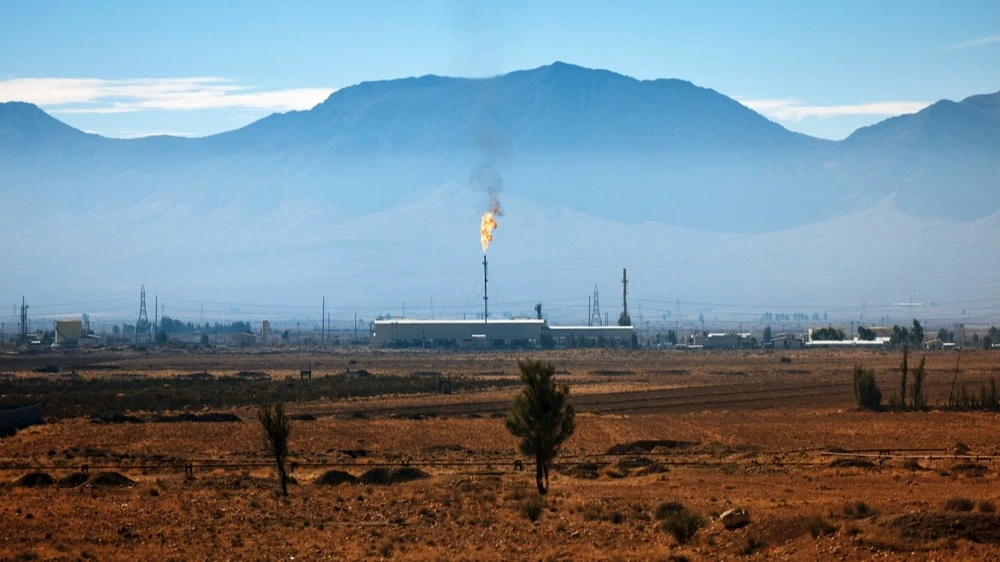
A month-long suspension of Middle East gas supplies through the Strait of Hormuz could more than double gas prices in Europe, according to Goldman Sachs / Photo: Evgeniyqw/Shutterstock.com
Stock and commodity markets started the week with a drop in risk appetite after the US and Israeli strikes on Iran. Investors fear disruptions in energy supplies and a spike in global inflation. Against this background, oil, gas, gold, safe haven currencies, as well as shares of energy and defense companies rose in price. At the same time, the securities of passenger and cargo air carriers fell due to the risks of closing the sky and rising fuel costs.
Analysts of leading banks and investment companies believe that the Iranian crisis should be over in a few weeks, but it may drag on. During the period of uncertainty, they recommend to make point investments in gold and to be careful when buying out drawdowns in the stock market.
Oil and gas
- "Our base case scenario is that Iran's leadership changes, either the regime changes enough to end the war within 1-2 weeks, or the U.S. decides to de-escalate after seeing a change in leadership and pushing back Iran's missile and nuclear program in the same timeframe," Citigroup analysts wrote. The bank expects benchmark Brent crude to trade in the $80 to $90 range this week due to ongoing risks to energy facilities and the virtual stoppage of transit through the Strait of Hormuz. In case of a blow to the Middle East oil infrastructure, prices could soar to $120 per barrel, Citi said, estimating the probability of such a scenario at 20%.
- "[If] the disruptions in the Strait of Hormuz last longer, more than a few days, up to weeks or months, then we definitely think a $100 a barrel scenario is possible," Jorge Leon, head of geopolitical analysis at Rystad Energy, said on Bloomberg TV. The impact of OPEC+'s decision to increase production could be very limited, as most of those additional barrels would also have to pass through the strait, he said.
- Even though OPEC+ announced plans to increase production in April, the cartel's additional volumes and spare capacity will be out of reach if the waterway remains closed, agreed Wood Mackenzie senior vice president for oil markets Alan Gelder. If tanker traffic in the Strait of Hormuz is not quickly restored, oil prices could exceed $100 a barrel, he warned.
- The actual stoppage of shipping in the strait is "largely preventive" as insurers have warned of policy cancellations and premium increases, JPMorgan Chase said. But risks could increase if Iran's leadership loses control of the Islamic Revolutionary Guard Corps, raising the possibility of surprise attacks on energy assets in the region. "If the conflict lasts more than three weeks, Gulf Cooperation Council oil producers will exhaust storage capacity and be forced to halt production," wrote JPMorgan Chase analysts including Natasha Kaneva and Lyuba Savinova.
- Any direct attempt by Iran to permanently close the Strait of Hormuz is likely to be short-lived because the country lacks the naval strength to accomplish such a task, said FGE NexantECA chairman emeritus Fereydoun Fesharaki. "It's just a fear factor," he said on Bloomberg TV. - The Islamic Revolutionary Guard Corps Navy is a minor force compared to what the U.S., British and French Xi can bring to bear." According to Fesharaki, the conflict is likely to be resolved within four weeks; he also called the Iranian regime a "paper tiger." Oil prices probably peaked as early as the morning of March 2, he added.
- Goldman Sachs estimates that a one-month suspension of supplies through the Strait of Hormuz could more than double gas prices in Europe. Although winter is coming to an end there, the region needs to import large volumes of LNG this summer to replenish supplies before the next heating season. After tanker traffic across the strait stopped, gas futures soared 25 percent, something that hasn't happened since August 2023, Bloomberg reports.
Precious metals
- "Now more than ever, portfolios should be built with sustainability in mind - using both gold and investments in sectors that governments deem strategically important," JPMorgan Private Bank investment strategists Madison Faller and Eric Vitenus wrote to their wealthy clients.
- Paul usually wins when global capital markets panic and investors act on the principle of "risk premium first, fundamentals later", Franklin Templeton noted. In the current situation, the investment company recommended to clients "selective" investments in gold, rather than the game on the decline of the entire stock market.
Stock market
- "Energy and metals stocks will lead the way, along with real estate and utilities - the more classic defensive sectors. Defense stocks will also be supported due to increased demand for their products. Non-essential goods and services stocks will be outsiders due to rising oil prices, which will hit airlines and retailers," said Integrity Asset Management portfolio manager Joe Gilbert.
- Barclays strategist Ajay Rajadhyaksha warned against rushing to buy any drawdowns. Investors are accustomed to geopolitical escalations that quickly subside, but the Iranian crisis is at risk of dragging on, he wrote. "The risk/reward ratio doesn't seem convincing," the expert said. - If stocks pull back enough - say, by more than 10% on the S&P 500 index - it will probably be time to buy. But not now.
- "Investors need to keep thinking about the difference between front-page risk and bottom-line risk," advised Charles Schwab & Co.'s head of macroeconomic research and strategy. Kevin Gordon. - Unless this conflict has a significant subsequent impact on economic growth or corporate earnings, any negative stock market reaction is likely to be short-lived.
Defense Stocks
- The war in the Middle East gives investors another reason to invest in the defense sector. "The market will play this off as a positive for European defense stocks," said MWB Research analyst Jens-Peter Rieck, while stressing that "any movement [in quotes] is likely to be dictated by sentiment rather than revisions to corporate earnings expectations."
The drive for increased military funding may now spill over to the Middle East, says Jefferies analyst Sheila Kahyaoglu. According to her, U.S. defense contractors can count on a significant portion of new contracts from this region, which already provides a significant share of their exports.
Tourism and transportation
- "The immediate impact will be on airline stocks and the travel sector as we see news of airspace closures over the Middle East, as well as possible cancelations of flights routed to Europe through that airspace," stated CA Indosuez Wealth Asset Management strategist Francis Tan.
- Jefferies' Kahyaoglu estimates that a change in the 2026 fuel price forecast for every 5% change in fuel prices would cost Delta Airlines and United Airlines a 5-10% change in profits, and 35% for American Airlines, Bloomberg reported. However, North American carriers have "minimal" direct exposure to Middle East travel, with Air Canada having the highest exposure at 1.1% of its capacity, the analyst added.
- Closure of airspace in the Middle East threatens the margins of cargo carriers such as FedEx, UPS and DHL, as bypassing air routes will lead to higher fuel costs, emphasizes Lee Klaskow of Bloomberg Intelligence. On the other hand, problems with transportation through the Red Sea and the Suez Canal will allow AP Moller-Maersk and other container carriers to raise freight rates, the expert added.
Context
The Wall Street Journal reported on Tehran's attempts to resume dialog with the U.S. through Oman. That "they [the Iranians] want to talk" was also reported by US President Donald Trump. However, the head of Iran's Supreme National Security Council, Ali Larijani, denied this: "We will not negotiate with the United States," he said on social network X.
This article was AI-translated and verified by a human editor